



Why Control Is Your Core's Best Friend
Rushing through core exercises is a common mistake. When you move too quickly, you rely on momentum rather than muscle, which not only reduces the effectiveness of the exercise but also increases your risk of injury. Slow, controlled movements force your deep
core muscles, like the transverse abdominis, to engage and stabilize your spine. This stability is crucial for everything you do, from lifting groceries to improving your posture and preventing lower back pain. Focusing on control helps build true functional strength, allowing for the efficient transfer of force between your lower and upper body, which enhances performance in nearly all physical activities. Think of it as building the foundation of a house; without a solid, stable base, anything you build on top is at risk.
The Plank: Master the Stillness
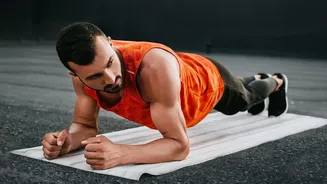
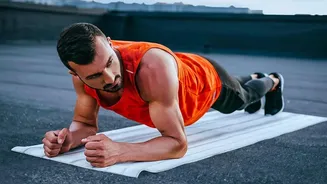
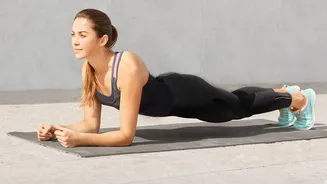
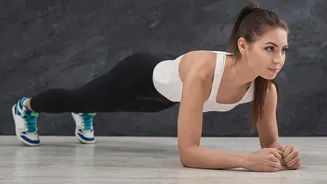
The plank is a classic isometric exercise that challenges your entire core. The goal isn't just to hold the position, but to hold it with perfect form. Start on all fours, then extend your legs back, resting on your forearms or hands. Your body should form a straight line from your head to your heels. Avoid common mistakes like letting your hips sag toward the floor or hiking them up into the air. To ensure control, actively engage your core by imagining you are pulling your belly button towards your spine. Squeeze your glutes to help keep your lower back from arching. If you can't maintain form, it's better to hold a shorter, perfect plank, or modify by dropping to your knees, than to hold a longer, sloppy one.
The Dead Bug: Coordinate and Stabilize
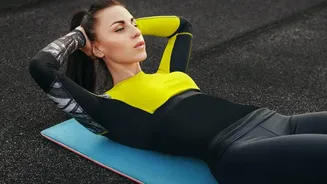
This exercise might have a strange name, but it's one of the best for teaching your core to stabilize your spine while your limbs are in motion. Lie on your back with your arms extended toward the ceiling and your knees bent at a 90-degree angle over your hips. The key is to press your lower back gently into the floor throughout the movement. Slowly lower one arm and the opposite leg toward the floor, going only as low as you can without your lower back arching. Exhale as you lower, and inhale as you return to the starting position with control. If this is too challenging, start by only moving your legs (tapping your heels to the floor) or only your arms.
The Bird-Dog: A Lesson in Balance
The bird-dog is another excellent exercise for promoting core stability and balance. Start on all fours, with your hands directly under your shoulders and your knees under your hips. Engage your core to keep your back flat—imagine you have a glass of water on your lower back that you don't want to spill. Slowly extend one arm straight forward and the opposite leg straight back, keeping your hips and shoulders level with the ground. A common mistake is to arch the back or raise the leg too high. The focus should be on creating a long, straight line from your fingertips to your heel while resisting any rotation in your torso. Hold for a moment before returning to the start with control.
The Glute Bridge: Activate Your Posterior Chain
A strong core isn't just about your abs; your glutes and hamstrings are integral parts of your core's support system, often called the posterior chain. The glute bridge targets these muscles effectively. Lie on your back with your knees bent, feet flat on the floor about hip-width apart, and your arms by your sides. Engage your core and squeeze your glutes as you lift your hips off the floor until your body forms a straight line from your shoulders to your knees. Be careful not to over-extend and arch your lower back; the power should come from your glutes. Hold the top position for a second or two, squeezing your glutes tightly, before slowly lowering your hips back down.