





The Core Change: What is the New Fee?
Starting October 15, 2026, a Merchant Discount Rate (MDR) of 0.4% will be applied to certain UPI payments made to businesses, but only on transactions exceeding ₹2,000. This MDR is not a new tax from the government. Instead, it is a processing fee that
merchants pay to payment service providers, like banks and payment apps, for facilitating the transaction. The government and the National Payments Corporation of India (NPCI) have been clear: this charge is to be borne by the merchant, not the customer. Banks have been instructed to ensure businesses do not pass this cost on to consumers by adding it to their bills. For very large transactions, the fee is capped at a maximum of ₹300, which applies to payments of ₹75,000 and above.
Who Actually Pays? And Who Gets Paid?
The merchant is the one who pays the 0.4% MDR. When a customer makes a UPI payment of, for example, ₹3,000, the merchant will receive that amount minus the MDR of ₹12. This fee doesn't go to a single entity. It is distributed among the various participants in the UPI ecosystem, including the customer's bank, the merchant's bank (the acquirer), and the UPI app provider (like PhonePe or Google Pay). The primary reason for introducing this fee is to create a sustainable revenue model for these companies. For years, the costs of operating the massive UPI infrastructure have been borne by banks and fintech firms with little direct income from it, a model supported by government incentives to drive adoption. This change is designed to ensure these players have a financial incentive to continue investing in the system's security, innovation, and reliability.
Are All Payments Above ₹2,000 Affected?
No, and this is the most crucial detail. The new MDR applies only to a specific slice of transactions. The vast majority of UPI payments will remain completely free for everyone involved. Person-to-Person (P2P) transfers—like sending money to a friend or family member—are completely exempt, regardless of the amount. Furthermore, all Person-to-Merchant (P2M) transactions up to ₹2,000 will continue to have zero MDR. Since over 95% of all merchant UPI transactions fall below this threshold, most daily payments will be unaffected. Small vendors are also protected; merchants who receive up to ₹1 lakh per month through UPI are exempt from the fee, which helps protect small businesses and street vendors. Additionally, some key sectors have special, lower rates. Payments for fuel, railway tickets, telecom bills, and insurance will attract a flat fee of just ₹5 for transactions over ₹2,000, not the 0.4% rate.
Why Was This Change Necessary?
UPI's success has been built on its zero-cost model, which encouraged millions of Indians to adopt digital payments. However, this phenomenal growth created a sustainability problem. The complex infrastructure required to process billions of transactions securely and instantly costs a significant amount to maintain and upgrade. Without a direct revenue stream from these transactions, the burden fell heavily on banks and payment companies. Industry experts have argued that for the UPI ecosystem to remain innovative and secure, the companies that run it need a viable business model. The introduction of a modest MDR on higher-value commercial transactions is seen as a way to ensure the system's long-term health without impacting the average user. It aligns UPI more closely with other payment systems like debit and credit cards, which have long had MDRs, though the new UPI rate is significantly lower than typical card fees.
What This Means for Digital India
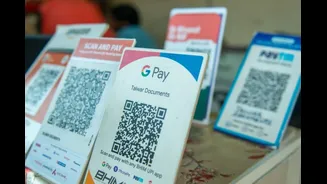
For the average consumer, nothing changes. UPI remains a free, fast, and convenient tool for most daily needs. You can continue to scan QR codes at your local shop or pay friends without worrying about extra charges. For larger merchants, this introduces a new operational cost. While the 0.4% fee is relatively low, businesses will need to factor it into their accounting. Some worry that merchants might try to discourage UPI for high-value payments or subtly build the cost into their pricing over time, though they are officially prohibited from charging customers extra. Ultimately, this move represents a maturation of India's digital payment revolution. It's a step away from a fully subsidised system towards a self-sustaining one, aiming to balance widespread accessibility with the financial realities needed to power one of the world's largest real-time payment networks.