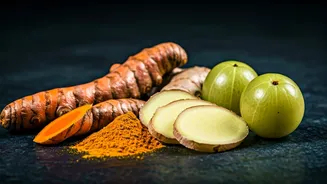









Turmeric: The Golden Healer
This vibrant yellow spice is a cornerstone of Indian cooking for good reason. Turmeric contains curcumin, a powerful compound with potent anti-inflammatory and antioxidant properties. [2, 5] During the monsoon, when the body is more susceptible to infections,
adding turmeric to your milk, curries, or soups can enhance your immune system's ability to fight off pathogens. [5, 17] Its natural antiseptic and antibacterial qualities make it an essential ally for staying healthy during the damp, cool weather. [22]
Ginger and Garlic: The Dynamic Duo
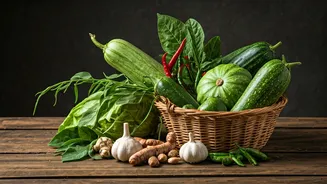
This pair is a classic remedy for monsoon-related illnesses like colds and flu. [2] Ginger is renowned for its anti-inflammatory, antiviral, and antibacterial benefits, making it effective at soothing a sore throat and alleviating nasal congestion. [2, 4] Garlic contains allicin, a compound with powerful antimicrobial properties that boosts the production of infection-fighting white blood cells. [5, 6] Incorporating both into your daily meals, whether in teas or curries, can significantly bolster your body's defenses. [2, 5, 22]
Seasonal Fruits: Nature's Vitamin Boost
The monsoon offers a bounty of delicious and nutritious fruits. Jamun, pears, plums, and pomegranates are particularly beneficial. [17, 19] Jamun is excellent for digestive health and helps regulate blood sugar levels. [10, 21] Pears are rich in vitamin C and fibre, which support immunity and digestion. [10, 12] Pomegranates are packed with antioxidants that help fight infections. [3] These seasonal delights are not just tasty but also provide essential vitamins and minerals needed to combat monsoon health issues. [17]
Yogurt: The Gut Guardian
Digestive issues are common during the rainy season. [7, 11] Yogurt and other fermented foods like buttermilk are rich in probiotics, which are beneficial live bacteria that support gut health. [2, 7, 22] A healthy gut is crucial for a strong immune system, as it plays a key role in producing antibodies. [5, 14] Including fresh curd or yogurt in your diet helps maintain the balance of good bacteria, improves digestion, and protects against common gastrointestinal problems. [3, 8]
Corn: The Classic Monsoon Snack
A roasted bhutta, seasoned with lemon and spices, is a quintessential monsoon experience. [9] Beyond its delicious taste, corn is a healthy choice, packed with fibre that aids digestion and feeds good gut bacteria. [9] It also contains folic acid and Vitamin B, which are great for hair health, and antioxidants that support good vision. [16, 20] Low in calories and versatile, corn can be enjoyed boiled, steamed, or roasted, making it a perfect guilt-free snack for rainy days. [9]
Lentils and Pulses: The Protein Powerhouse
A balanced diet is incomplete without adequate protein, and lentils (dals) are an excellent source. According to celebrity nutritionist Rujuta Diwekar, pulses should be a staple in the monsoon diet. [20] They are packed with essential amino acids, vitamins, and fibre that support overall health. [20] For maximum benefit, it's recommended to soak and sprout pulses before cooking and to consume a variety of them mixed with grains and millets. This ensures a steady supply of nutrients to keep your body strong. [20]