





A Mission of Remarkable Success
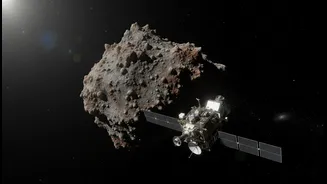
To understand the significance of the Torifune flyby, it’s important to remember Hayabusa2’s incredible journey. Launched in 2014, its primary mission was to visit the asteroid Ryugu, a nearly kilometre-wide, carbon-rich space rock. The spacecraft not
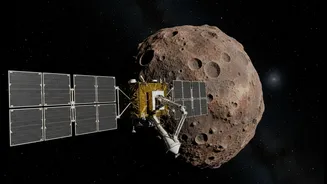
only studied Ryugu from orbit but also deployed rovers and even created an artificial crater to collect pristine subsurface material. In December 2020, it successfully returned these precious samples to Earth, providing scientists with a direct look at the building blocks of our solar system. The samples contained organic molecules and water-bearing minerals, offering profound clues about the origins of life. With its primary mission complete and fuel to spare, the Japan Aerospace Exploration Agency (JAXA) sent Hayabusa2 on a bold extended mission.
Torifune: A High-Speed Test
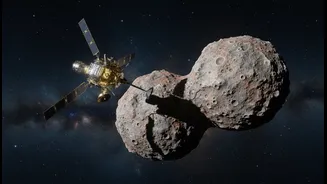
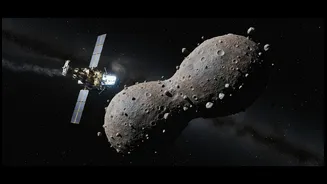
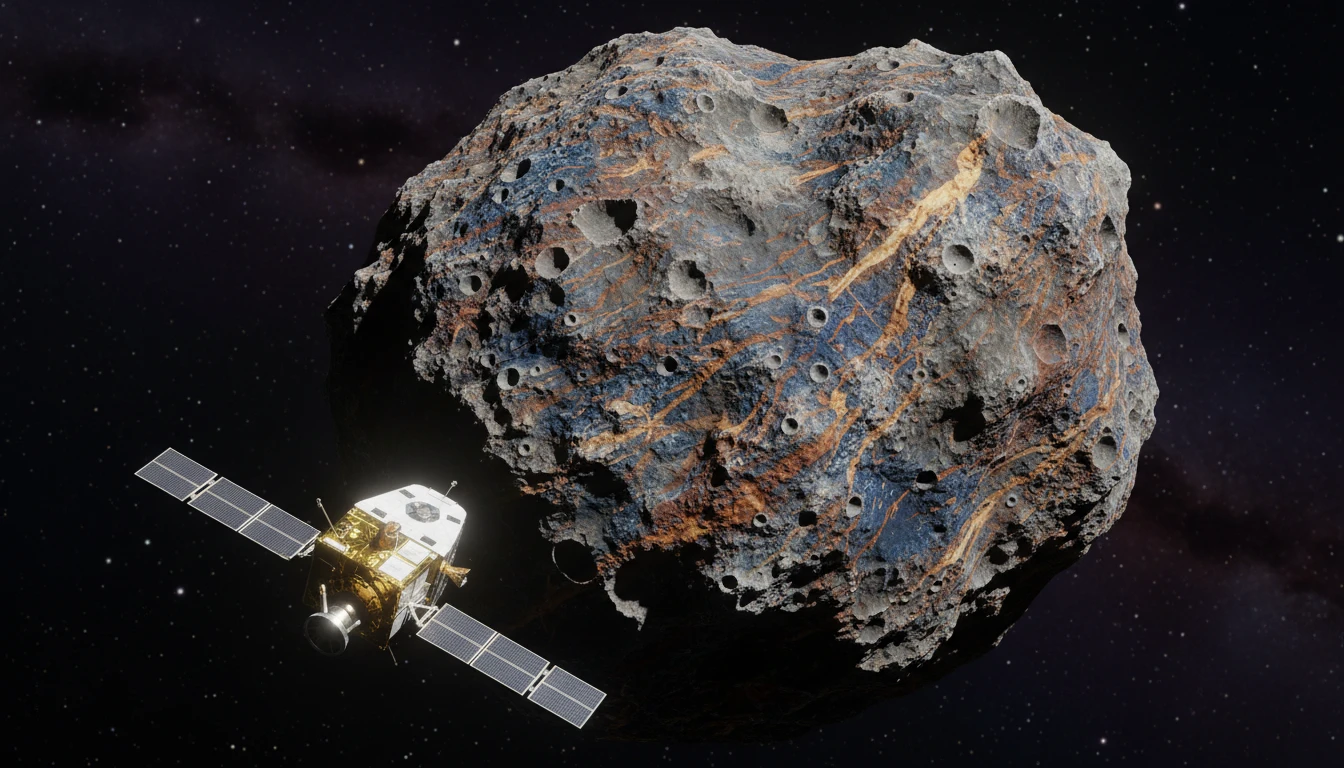
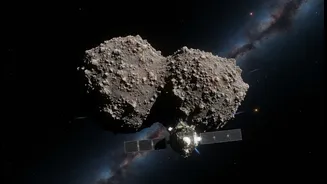
The flyby on July 5, 2026, was the first major event of this new mission phase. The target was 98943 Torifune, a 450-metre-wide, near-Earth asteroid. Travelling at a relative speed of 5 kilometres per second, Hayabusa2 zipped past the asteroid at a distance of about 800 metres from its centre. This was a risky and challenging manoeuvre, as the asteroid’s exact path was only confirmed days before the encounter, requiring last-minute adjustments. The flyby served as a crucial test of high-speed navigation and observation techniques that are vital for future exploration and, more importantly, for planetary defense. Close-up images have already revealed Torifune is a 'contact binary,' appearing as two distinct lobes joined together, a shape only hinted at by ground-based telescopes.
For the Space Enthusiast: An Epic Saga Continues
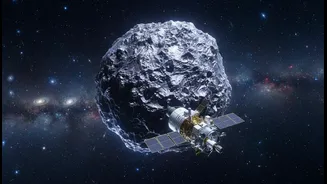
For the general space reader, the Hayabusa2 mission is a compelling story of ingenuity and discovery. After the triumphant Ryugu sample return, many missions would have ended. Instead, this plucky spacecraft continues to explore, pushing the limits of what's possible. The Torifune flyby adds a new, thrilling chapter. The stunning images and data provide a fresh look at a previously unseen world, satisfying the curiosity that drives public interest in space. It's a real-time adventure that keeps audiences engaged with the ongoing quest to explore our cosmic neighbourhood. This extension transforms a successful mission into a long-running saga of deep space exploration.
For Students: A Masterclass in STEM
The Hayabusa2 mission is a living textbook for students. The Torifune flyby provides a practical case study in physics, engineering, and computer science. Teachers can use the mission's challenges—navigating to a small, dark object at high speed, performing autonomous operations, and analysing data—to illustrate complex scientific principles in a tangible way. JAXA's public outreach, including the contest to name Torifune, involves the next generation directly in the mission. More profoundly, missions like this are a powerful inspiration. They demonstrate the power of science and engineering to answer fundamental questions, encouraging students in India and around the world to pursue careers in science, technology, engineering, and mathematics (STEM).
For Scientists: A Planetary Defense Proving Ground
For planetary scientists, the flyby’s value is immense and practical. The primary scientific goal is to prepare for the mission's final target: 1998 KY26, a tiny, rapidly spinning asteroid just 11 metres wide that Hayabusa2 will reach in 2031. Such small objects are incredibly difficult to track from Earth but can still pose a significant threat. The Torifune encounter allowed JAXA to test the high-precision guidance and last-minute trajectory correction capabilities essential for intercepting a potentially hazardous object. This experience directly contributes to planetary defense strategies, building on the knowledge gained from NASA's DART mission. It’s about learning how to find, track, and ultimately interact with asteroids that could one day be on a collision course with Earth.