

More Than Just Abs
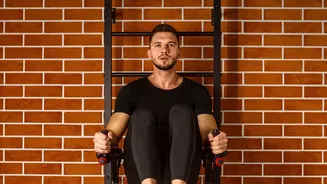
Before we jump into the exercises, it’s important to understand what your core is. It’s a complex group of muscles that wraps around your entire torso, including your abdomen, lower back, hips, and pelvis. Every movement you make, from bending to tie
your shoes to lifting groceries, involves your core. A strong core improves posture, enhances balance, reduces the risk of injury, and can even alleviate lower back pain. This routine is designed to build functional strength that supports your daily life.
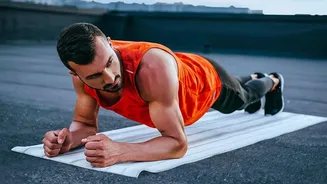
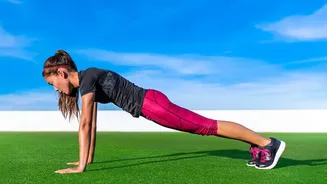
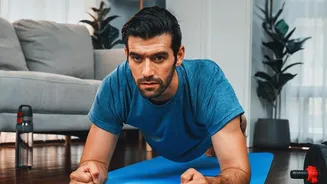
The Foundation: The Plank
The plank is a powerhouse exercise for building stability across your entire core. Unlike crunches, it puts less strain on your spine. How to do it: Start on your forearms and toes, keeping your elbows directly under your shoulders. Your body should form a straight line from your head to your heels. Avoid letting your hips sag or rise too high. Engage your abdominal muscles by imagining you are bracing for a punch to the stomach. Keep your head in a neutral position, looking at the floor just ahead of you. Hold this position, breathing steadily. Beginners can start by holding for 15-20 seconds and gradually increase the time as they get stronger.
For Stability: The Dead Bug
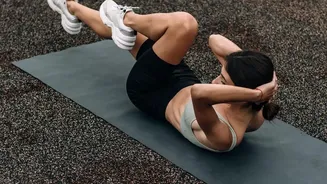
The dead bug is one of the most effective exercises for developing core control without stressing the back. It teaches your limbs to move independently of your torso. How to do it: Lie on your back with your arms extended towards the ceiling and your knees bent at a 90-degree angle over your hips (a 'tabletop' position). Press your lower back gently into the floor. Slowly lower your right arm and left leg toward the floor simultaneously, exhaling as you go. Go as low as you can without letting your lower back arch. Inhale and return to the starting position with control. Repeat on the opposite side with your left arm and right leg. That's one rep. Focus on slow, deliberate movements.
For Coordination: The Bird-Dog
This exercise is excellent for improving stability, coordination, and targeting the muscles in your back and glutes, which are a key part of your core. How to do it: Start on all fours in a tabletop position, with your hands directly under your shoulders and your knees under your hips. Keep your spine neutral. Extend your right arm straight forward and your left leg straight back at the same time, forming a straight line. Keep your hips and shoulders square to the floor, avoiding any rotation. Hold for a moment before returning to the start with control. Repeat on the other side. This movement enhances core stiffness, which protects your spine.
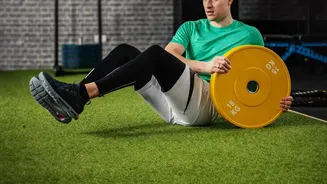
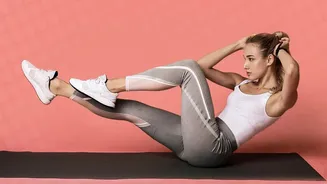
For The Obliques: Bodyweight Russian Twist
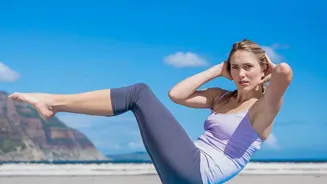
The obliques are the muscles on the sides of your abdomen, and they are crucial for rotational movements. How to do it: Sit on the floor with your knees bent and feet flat. Lean back slightly until you feel your abs engage, creating a V-shape with your torso and thighs. For a beginner-friendly version, keep your feet on the floor. For more of a challenge, lift your feet off the ground. Clasp your hands in front of your chest. Twist your torso from side to side in a controlled manner. Your head and hands should move together. Exhale as you twist to one side and inhale as you return to the center.
Your Weekly Routine
Consistency is key for seeing results. You don't need to spend hours to build a stronger core. Aim to perform this routine three to four times a week. For each exercise, try to complete 2-3 sets. For timed exercises like the plank, hold for 20-60 seconds per set. For repetition-based exercises like the dead bug and bird-dog, aim for 10-12 reps per side. For Russian twists, aim for 15-20 twists per set. Rest for about 30-60 seconds between sets. Remember to listen to your body and focus on maintaining proper form over speed or the number of repetitions.