

An Enduring, Epic Storm
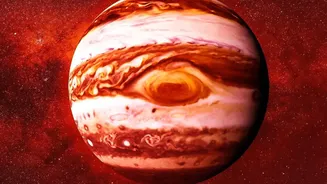
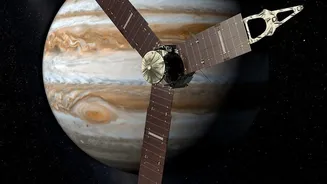
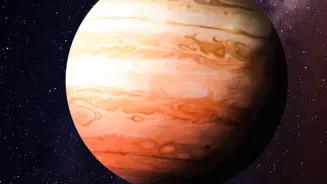
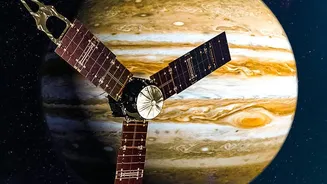
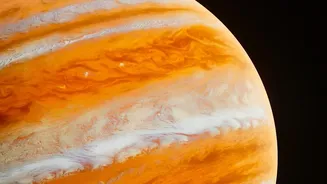
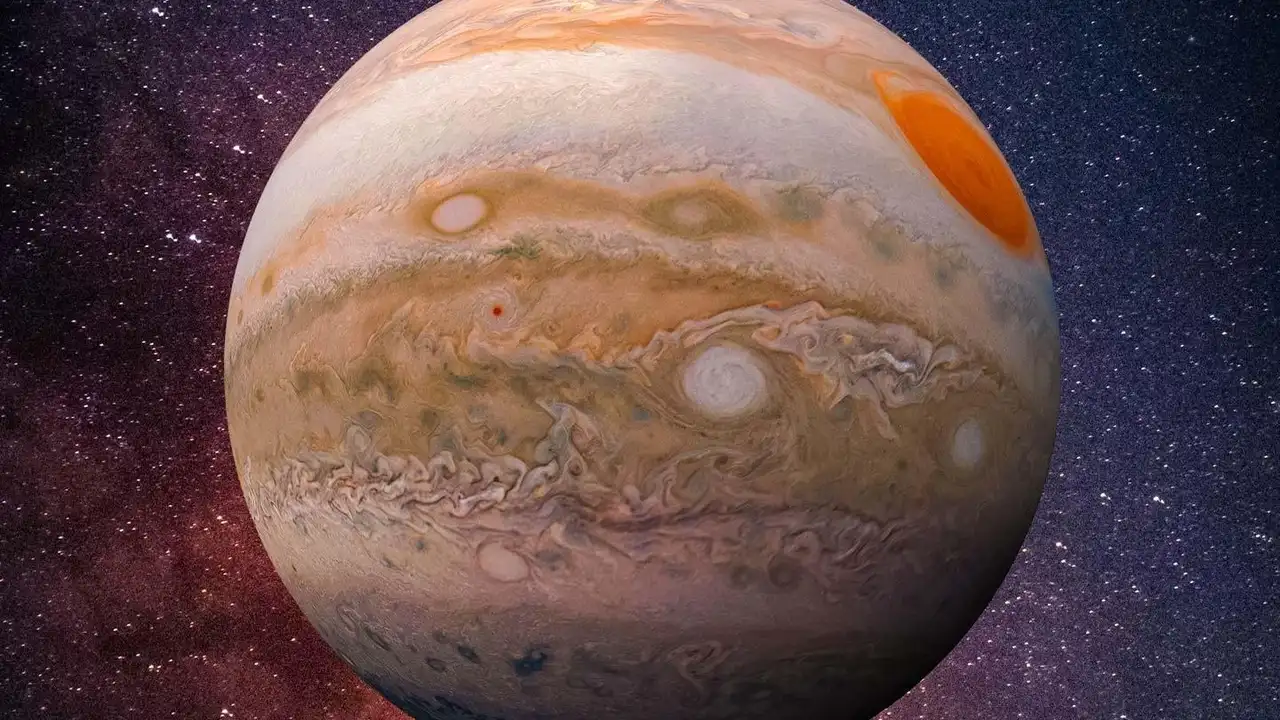
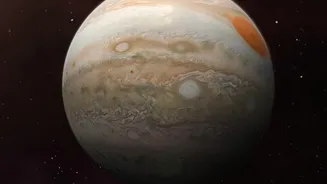
For at least 150 years, and possibly much longer, astronomers have tracked a gigantic, crimson-coloured anticyclone in Jupiter's southern hemisphere. Known as the Great Red Spot, this storm is a high-pressure system so large it could comfortably swallow
Earth. Its winds whip around in a counter-clockwise direction, with speeds in the outer regions exceeding 400 miles per hour. For centuries, it was considered a 'permanent spot,' a seemingly eternal feature of the gas giant's turbulent atmosphere. This longevity makes it a natural laboratory for planetary scientists hoping to understand the mechanics of atmospheric dynamics on a scale unimaginable on Earth.
A Storm of a Different Shape
Despite its long history, the Great Red Spot is undergoing a noticeable transformation. Recent observations have confirmed a long-term trend: the storm is shrinking. For years, scientists have noted that the spot is becoming smaller and more circular than the elongated oval shape it once had. At one point, the storm was estimated to be as wide as three Earths, but recent measurements show it is now just over 1.3 times the diameter of our planet. While the rate of shrinkage appears to have slowed from a previous period of rapid change, the overall trend continues, raising questions about the storm's future.
New Views Reveal Surprising Behaviour
Thanks to advanced instruments like the Hubble Space Telescope's Wide Field Camera 3, we have an unprecedented view of the changes. Recent image captures have uncovered details never seen before, including a strange, wispy filament rotating within the storm's core. Even more unexpectedly, astronomers have found that the storm itself seems to oscillate in size, jiggling slightly as it moves through Jupiter's atmosphere. These new findings suggest the storm is far from a stable, unchanging vortex. The colour is also evolving, appearing more orange than red, with its normally intense core becoming less distinct.
Winds of Change
It's not just the size and shape that are in flux. Long-term monitoring of the storm between 2009 and 2020 revealed a curious trend in its wind patterns. While the winds in the storm's inner regions are slowing down, the wind speeds at its outer boundary have actually increased by up to 8 percent. This complex interplay of internal and external dynamics adds another layer to the puzzle. Scientists are working to understand what these changes signify for the storm's power source and long-term stability. The observations challenge previous assumptions and currently lack a clear hydrodynamic explanation, highlighting just how much is still unknown about the forces at play.
Why We Watch Jupiter's Weather
Monitoring Jupiter isn't just about one storm. Programs like NASA's Outer Planet Atmospheres Legacy (OPAL) provide yearly portraits of our solar system's outer planets, helping scientists track changes in their winds, clouds, and atmospheric chemistry over time. By studying the most extreme storm system in our solar system, researchers can place weather phenomena on Earth, like hurricanes, into a broader cosmic context. These observations help refine theories about how giant planet atmospheres behave beneath their thick cloud layers, offering clues to how these massive worlds formed and continue to evolve. Every new image brings hints that something exciting is happening, reshaping our understanding of the gas giant next door.