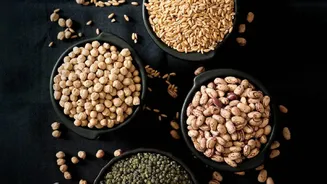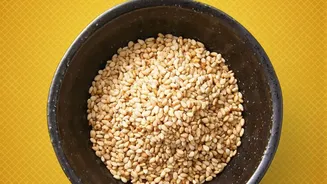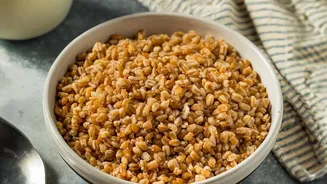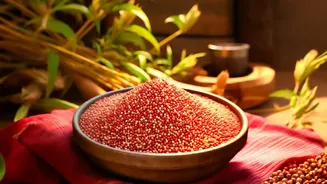



Ancient grains are a fantastic addition to any healthy diet, but they can be frustratingly tricky to cook. Ever ended up with a pot that's somehow both mushy and crunchy? A simple, traditional step can change everything.
The Enduring Appeal of Ancient Grains
From nutty farro and chewy spelt
to versatile millet and protein-packed quinoa, ancient grains have found a permanent place in modern kitchens. These are grains that have remained largely unchanged for centuries, prized for their robust flavours and impressive nutritional profiles. They often offer more fibre, protein, and minerals than more common refined grains. Yet, for all their benefits, they share a common challenge: their tough outer layers can make even cooking difficult. This often results in a disappointing texture where the outside of the kernel becomes soft and overcooked long before the inside is tender, leaving you with an uneven and unappetizing dish.
The Science of the Soak
The secret to perfectly fluffy, evenly cooked ancient grains isn't a new gadget or complicated technique, but rather an ancient practice: soaking. When you soak tough, whole grains, you're essentially giving them a head start on the cooking process. The water slowly penetrates the hard outer bran, hydrating the entire kernel from the outside in. This pre-hydration is key. Unsoaked, a dry grain hits boiling water and the exterior immediately begins to soften and gelatinize, while the core remains hard and dry. By soaking, you ensure the entire grain is evenly moisturized before heat is ever applied. This allows the grain to cook uniformly, preventing the dreaded mushy-on-the-outside, hard-on-the-inside result. The process also helps to soften the grain's structure, which naturally reduces overall cooking time.
More Than Just Great Texture
While a better bite is a great reward, the benefits of soaking go even deeper. Many whole grains contain a compound called phytic acid, which can bind to minerals like iron, zinc, and calcium, making them less available for your body to absorb. The soaking process helps to neutralize a significant portion of this phytic acid. Soaking activates an enzyme called phytase, which breaks down the phytic acid, unlocking more of the grain's inherent nutritional value. Many people also find that soaked grains are easier to digest. The process helps to break down complex starches and proteins that can sometimes cause discomfort or bloating.
A Simple Guide to Soaking Grains
Integrating this step into your routine is surprisingly simple. For most hard ancient grains like farro, spelt, kamut, and wheat berries, an overnight soak is ideal. Place your desired amount of grain in a bowl, cover it with at least double the volume of water, and let it sit on the counter for at least 8 to 12 hours. For an extra digestive boost, you can add a tablespoon of an acidic medium like lemon juice or apple cider vinegar to the water, which can help further break down phytic acid. After soaking, simply drain the grains and rinse them well before cooking according to your recipe, often with a reduced cooking time. Smaller grains or pseudo-cereals like quinoa don't require a long soak but always benefit from a thorough rinse to remove their bitter-tasting natural coating called saponin. Millet and buckwheat can benefit from a shorter soak of a few hours if you have the time.
Which Grains Benefit Most?
While nearly all whole grains can be soaked, the ones that show the most dramatic improvement in texture are the larger, tougher varieties. These are the grains with a substantial bran layer that resists water penetration. Grains that love a long soak include: Farro (Emmer, Einkorn, Spelt), Wheat Berries, Kamut (Khorasan Wheat), Rye Berries, and Hulled Barley. These grains become significantly more tender and cook much more evenly after a good soak. For something like amaranth, soaking overnight helps achieve a better porridge-like consistency. Ultimately, it’s worth experimenting. If you've struggled with a particular grain in the past, soaking is a simple, effective troubleshooting step that can transform your results.