








Prepare Your Apartment Before Arrival
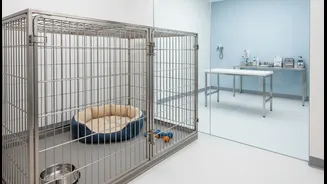
The key to a smooth introduction begins before your kitten even comes home. The primary goal is to establish security and separate territories. Designate a “safe room” for the kitten that your dog cannot access. This room should be equipped with everything
the kitten needs: food, water, a litter box, toys, and a cozy hiding place. This space allows the kitten to acclimate to the new smells and sounds of the apartment without the stress of a face-to-face encounter. For your dog, set up what some trainers call a “success station,” an area like a playpen or a gated-off corner where they can relax and enjoy their own space, separate from the kitten's zone. This initial separation is not punishment; it’s a foundational step for building a calm environment for both pets.
The Power of Scent Swapping
Dogs and cats navigate their world through scent. Before they ever see each other, let them meet through their noses. Swap their bedding or blankets for a few days. Let the dog sniff the kitten’s blanket in its bed, and place the dog’s blanket in the kitten's room. This allows them to gather information about each other in a non-threatening way. You can also feed them on opposite sides of the closed door to the kitten’s safe room. This technique helps each pet build a positive association: the scent of the other animal is linked to something enjoyable, like mealtime.
The First Visual Introduction
After a few days of separation and scent swapping, it’s time for the first supervised, visual meeting. This should be brief and controlled. One of the safest methods is to use two stacked baby gates in a doorway. This allows them to see and smell each other more directly, but prevents any physical contact. Keep your dog on a loose leash during these initial viewings. Reward both pets with high-value treats for calm behavior. If the dog is fixated, whining, or barking, or if the kitten is hissing or hiding, end the session immediately and try again later. The goal is for them to see each other and remain relaxed. Rushing this stage is one of the biggest mistakes owners make.
Reading Their Body Language
Understanding how dogs and cats communicate is critical for a safe introduction. For the dog, signs of relaxation include a soft body, a loose wagging tail, and the ability to look away from the kitten. Red flags include staring, a stiff body, whining, or barking, which can indicate an unhealthy level of focus or prey drive. For the kitten, a relaxed posture and slow blinks are good signs. Hissing, a puffed-up tail, and flattened ears are clear signals of fear or agitation. Never force an interaction if either animal is showing signs of stress. Kittens can be especially vulnerable, so constant supervision is mandatory in the early stages to prevent accidental harm, even during play.
Designing a Shared Apartment Space
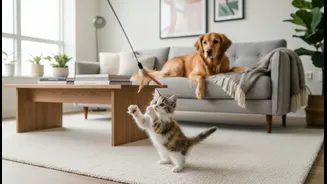
In a compact apartment, vertical space is a kitten’s best friend. Ensure the kitten has plenty of high places to retreat to, like cat trees, shelves, or the top of sturdy furniture. These perches act as safe zones where the kitten can observe the dog from a distance without feeling cornered or threatened. Keep the kitten's food, water, and litter box in an area the dog absolutely cannot access. This not only gives the kitten a sense of security but also prevents the dog from engaging in undesirable behaviors like eating cat food or bothering the kitten at its litter box. Each pet needs their own designated areas for eating and sleeping to minimize conflict.
From Supervision to Cohabitation
As the pets become more comfortable, you can move to face-to-face interactions in the same room, always with the dog on a leash. Keep these sessions short, positive, and full of praise and treats for peaceful coexistence. Gradually increase the duration of these supervised visits. The entire process can take anywhere from a few weeks to several months; there is no set timeline. Never leave them unsupervised together until you are completely confident that they are safe and comfortable with each other. Patience is your most important tool. Rushing the process can set you back and create lasting fear or aggression.