







Know the Official Sleeping Hours
The most common point of friction on a long train journey is the timing for using berths. To bring clarity, Indian Railways has set official sleeping hours for all reserved coaches. According to railway rules, passengers can use their berths for sleeping strictly
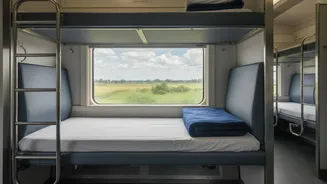
between 10 PM and 6 AM. This eight-hour window is the designated period when a middle berth passenger has the undisputed right to unfold their berth and sleep. Before 10 PM and after 6 AM, the middle berth is expected to be folded down to allow all passengers in the bay—primarily those on the lower and middle berths—to sit comfortably on the lower berth. This rule was clarified in a railway board circular to minimise disputes that frequently arise from passengers wanting to sleep outside these designated hours.
The Art of Polite Coordination
While the 10 PM to 6 AM rule provides a clear guideline, the reality of train travel often requires a degree of flexibility and communication. The headline says it best: coordination is key. If you are the middle berth passenger, it’s courteous to give your fellow travellers on the lower berth a friendly heads-up around 9:45 PM that you'd like to set up your berth soon. This gives them time to finish their dinner or prepare for the night. Conversely, if you're on the lower berth, being accommodating can make the journey pleasant for everyone. Remember, during daytime hours, the lower berth functions as a shared seating area for passengers of the lower, middle, and even upper berths. A little mutual understanding prevents the awkwardness and resentment that can build in a confined space.
What to Do When Disagreements Arise
Despite clear rules, conflicts are not uncommon. Someone on the lower berth might want to lie down all day, or a middle berth passenger might refuse to fold their berth after 6 AM. In such situations, the first step should always be a polite conversation, gently reminding them of the railway norms. If this fails and the passenger remains uncooperative, avoid escalating the argument yourself. The designated authority in this situation is the Travelling Ticket Examiner (TTE). You have the right to call the TTE to mediate the dispute. The TTE is empowered to enforce the official sleeping time regulations and resolve the conflict. Approaching the TTE ensures that the issue is handled formally and prevents a personal squabble from ruining your journey.
Exceptions and Special Considerations
The rules are designed for the average traveller, but Indian Railways also encourages passengers to show consideration for those with special circumstances. The official circular asks passengers to cooperate with sick persons, people with disabilities, and pregnant women if they need to rest or sleep beyond the permitted hours. If a fellow passenger is visibly unwell or is an elderly person who needs to lie down, exercising a bit of compassion is the right thing to do. This is not an enforceable rule but a matter of basic human decency that contributes to a more positive travel environment for everyone. Good etiquette means being mindful that not everyone's journey is the same.
Etiquette for a Smoother Journey
Beyond the berth timings, general etiquette can significantly improve the shared experience. If you have the middle berth, ensure it is properly secured with its chains or supports when in use and folded away neatly during the day. Don't use it as a luggage rack when folded. For all passengers, it’s important to be mindful of noise levels, especially after 10 PM when lights should be dimmed and conversations kept low. Avoid talking loudly on the phone or playing media without headphones. Keeping your luggage stowed properly under the lower berth or in the designated racks also ensures that the limited space is used efficiently and doesn't become a hazard or an inconvenience for others. Ultimately, a train coach is a temporary community, and small acts of consideration make all the difference.