






Your Tires: The First Line of Defence
On slippery, winding ghat roads, your tires are the single most important safety feature. Their condition determines your car's ability to grip the road, steer accurately, and brake effectively. During the monsoon, the risk of aquaplaning—where a layer
of water builds between the tires and the road, causing a total loss of control—is significantly higher. Poor tire condition is a leading cause of monsoon-related accidents, turning a scenic drive into a dangerous situation. A few simple checks before you leave can make all the difference.
Tread Depth: The Key to Grip
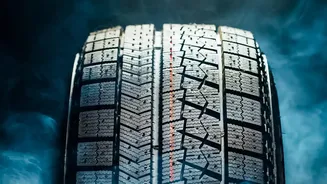
Tire treads are designed to channel water away from the contact patch, allowing the rubber to maintain its grip on the road surface. When treads are worn down, they can't clear water effectively, leading to a higher risk of skidding. While the legal minimum tread depth in India is 1.6 mm, for monsoon driving, experts strongly recommend a depth of at least 3 mm for optimal safety. You can easily check this with a one-rupee coin; if the outer silver band is fully visible when inserted into the groove, your tires are likely unsafe for wet conditions and need replacement.
Tire Pressure: The Understated Safety Factor
Tire pressure affects how your vehicle handles, brakes, and resists aquaplaning. Always inflate your tires to the pressure recommended by your vehicle’s manufacturer, which can be found on a sticker on the driver’s side door jamb or in the owner's manual. Do not use the maximum pressure figure written on the tire's sidewall. Both under-inflated and over-inflated tires are dangerous on wet roads. Under-inflation causes the center of the tread to lift, reducing grip, while over-inflation reduces the size of the contact patch. Check the pressure when the tires are cold for an accurate reading.
Understanding Fog Lights
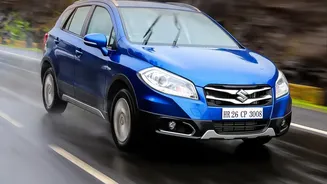
Fog lights are not just for fog; they are crucial in any low-visibility situation, including the heavy rain and mist common in ghats during the monsoon. They are mounted low on the bumper to cast a wide, flat beam of light that illuminates the road surface directly in front of the car, reducing the glare that regular headlights cause by reflecting off water droplets or fog. Their primary purpose is to help you see the road markings and, just as importantly, to make you more visible to other drivers.
White vs. Yellow: Which Fog Light is Better?
The debate between white and yellow fog lights is a long-standing one. Science suggests that yellow light is more effective in rain and fog. Shorter-wavelength light, like white or blue, tends to scatter more when it hits water droplets, creating glare that can blind the driver. Yellow light, with its longer wavelength, penetrates the moisture better with less reflection, improving contrast and reducing eye fatigue. While modern white LED fog lights are very bright, yellow lights often provide better usable visibility in the specific conditions of a monsoon ghat drive.
When and How to Use Fog Lights Correctly
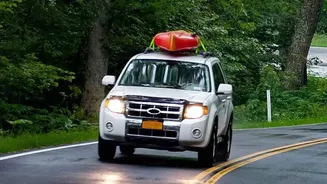
Using fog lights improperly can be as dangerous as not using them at all. The rule is simple: only use them when visibility is severely reduced, generally when you cannot see more than 100 meters ahead. Using them in clear weather, especially at night, can dazzle oncoming drivers and obscure your brake lights. Always use them in conjunction with your low-beam headlights, not high beams, as high beams will reflect off the rain or fog and worsen your visibility. Importantly, remember to switch them off as soon as visibility improves.
Additional Essential Monsoon Checks
Beyond tires and fog lights, a few other checks are vital. Ensure your windscreen wipers are in top condition, replacing them if they leave streaks or judder across the glass. Test your brakes; wet conditions can significantly increase stopping distances, so worn brake pads should be replaced. Also, check that all other lights—headlights, indicators, and brake lights—are working perfectly. Finally, ensure your car's defogger and air conditioning are functioning correctly to prevent the windshield from fogging up from the inside during a downpour.