








An Artform Stitched in Bida
Nupe embroidery originates from the Nupe Kingdom in central Nigeria, with the city of Bida in Niger State being its historic and contemporary epicentre. For centuries, Bida has been a celebrated hub of craftsmanship, known for glassmaking, brasswork,
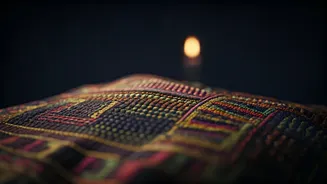
and weaving. Among these traditions, its embroidery stands out. It is most famously seen on the ‘babban riga’, a grand, flowing robe worn by men. This garment, whose name translates to “big gown” in the Hausa language, is a symbol of prestige and is traditionally donned for significant events like religious festivals and political gatherings. The embroidery itself is characterised by intricate, geometric patterns that are bold, visually striking, and meticulously planned.
Threads of Royalty and Status
Historically, the most elaborate embroidery was reserved for royalty and the aristocracy. The Etsu Nupe, or king, and high-ranking officials would wear robes adorned with these complex designs, which served as a public declaration of their status, wealth, and authority. The sheer artistry and labour involved in creating a single embroidered babban riga made it a luxury item. Often crafted from high-quality cotton or silk, the robe's value was significantly enhanced by the hand-stitched wild silk threads. In some instances, aristocrats would layer multiple robes to further project their power and prestige. The embroidery, therefore, was not merely decorative; it was a coded language of power, instantly communicating a person’s place within the Nupe social structure.
Symbols as a Historical Record
This is where Nupe embroidery truly becomes a “history shortcut.” The motifs are not random; they are a library of symbols. For instance, a common pattern known as ‘aska biyu’ or “two knives,” features a pair of downward-pointing triangles on the front of the gown. This, along with spiral motifs, is believed by some researchers to indicate cultural influence from the Arab world, linked to the diffusion of Islam into northern Nigeria. Other geometric shapes and abstract designs can represent proverbs, community emblems, or historical events, preserving oral traditions in a tangible form. By learning to read these symbols, one can gain insight into centuries of Nupe history, from their political evolution and religious transformations to their social values. The patterns act as a visual archive, passed down through generations.
The Hands Behind the Needle
The tradition of Nupe embroidery has been meticulously preserved through a system of guilds, where skills are passed down from one generation to the next, often within families. Interestingly, while women in many cultures handle embroidery, the prestigious work on garments like the babban riga has traditionally been the domain of men. These male artisans, concentrated in Bida, learn the craft over many years, mastering the precise stitches and the deep cultural meanings behind the patterns they create. This guild system has been crucial in maintaining the quality and authenticity of the craft, ensuring that the historical and artistic integrity of Nupe embroidery endures even in the face of modernisation.
A Living Tradition in a Modern World
Today, Nupe embroidery continues to be a vital part of cultural life in the region. Bida’s status as a UNESCO Creative City of Crafts and Folk Art, designated in 2021, has brought renewed attention to its artisanal heritage. While still central to traditional ceremonies, the embroidery is also finding new expressions. The bold patterns and vibrant colours are being incorporated into contemporary fashion, both in Nigeria and globally. This evolution helps provide economic opportunities for artisans and introduces the rich stories of the Nupe people to a new audience. The craft is not a relic of the past but a living, breathing art form that continues to adapt, carrying its history forward one stitch at a time.