



The Golden Elixir of Winter
Before we embark on this sweet journey, it is important to understand why jaggery is so intertwined with the Indian winter. Traditionally, gur is considered a 'warming' food in Ayurveda. Its consumption is believed to increase body heat and metabolism,
providing comfort during colder months. Unlike refined sugar, jaggery is unrefined and retains minerals like iron, magnesium, and potassium. This unprocessed nature means it provides a quick source of energy, which was vital for staying warm and active during winter in agrarian communities. This combination of warmth, energy, and a rich, caramel-like flavour makes jaggery the perfect foundation for a vast array of seasonal delicacies that are as much about nourishment as they are about indulgence.
First Stop: The Crunchy North
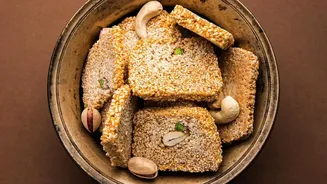
Our trail begins in North India, where the air turns crisp and the craving for something crunchy and warm is universal. Here, gajak and chikki reign supreme. Gajak, with origins in places like Morena in Madhya Pradesh and Sawai Madhopur in Rajasthan, is an artisanal creation. It's made from roasted sesame seeds (til) and jaggery, which is repeatedly hand-hammered for hours. This laborious process creates its signature flaky, layered texture that shatters with each bite. Chikki, while often used interchangeably, is typically a simpler, brittle confection made by mixing roasted peanuts into a hot jaggery syrup and pressing it into slabs. Both are especially popular during festivals like Lohri and Makar Sankranti, embodying the season's harvest and offering a perfect, pocket-sized piece of warmth.
A Sweet Detour to the West
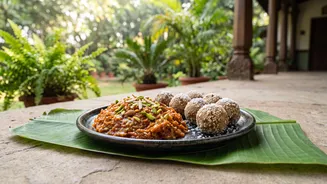
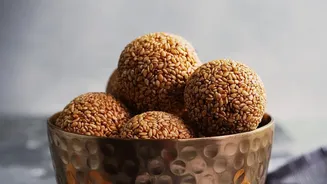
Moving west, particularly to Maharashtra and Gujarat, the winter trail leads us to Tilgul. These small, round laddoos made from sesame seeds and jaggery are the hallmark of the Makar Sankranti festival. The act of exchanging Tilgul is a beautiful tradition, often accompanied by the phrase 'Tilgul ghya, goad goad bola,' which translates to 'Accept this sweet and speak sweet words'. This gesture symbolizes forgetting past grievances and starting afresh, with the stickiness of the jaggery meant to bind people together in goodwill. Beyond the symbolism, these laddoos are packed with nutrition from sesame seeds and the heat-producing qualities of jaggery, making them a healthy and meaningful festive treat.
Eastern Treasures of Nolen Gur
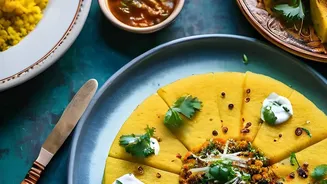
In Bengal, winter brings a delicacy so prized it has an entire genre of sweets dedicated to it: Nolen Gur. This is fresh date palm jaggery, harvested only from November to February, and it has a unique, smoky aroma and a deep, caramel flavour that is unlike any other. The arrival of Nolen Gur marks a celebratory period in every Bengali household and sweet shop. This liquid gold is used to create an incredible variety of sweets. There’s the Nolen Gurer Sandesh, where fresh chhena is infused with the jaggery, and the iconic Nolen Gurer Roshogolla, which transforms the classic sweet into a seasonal delicacy. You will also find Patishapta, delicate crepes filled with a coconut and nolen gur mixture, and Payesh, a rich rice pudding made divine with its addition.
Southern Comfort in a Bowl
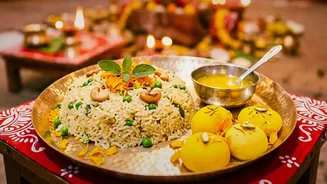
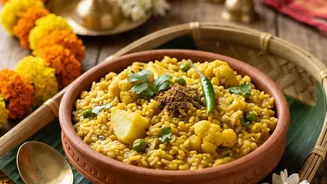
The food trail concludes in the South, where jaggery is a staple sweetener year-round but takes on special significance during the winter harvest festival of Pongal. The star of the show is Sakkarai Pongal, a delicious pudding made from newly harvested rice, moong dal, ghee, and, of course, jaggery. It is cooked in homes and temples as a ritual offering to the sun god, expressing gratitude for the harvest. The jaggery gives the dish its characteristic dark colour and rich, earthy sweetness, which is often enhanced with cardamom and edible camphor. Other jaggery-based sweets like payasams (kheers) and various laddoos are also widely prepared, ensuring the comforting taste of gur is woven throughout the region’s winter celebrations.