




A Metal World in the Asteroid Belt
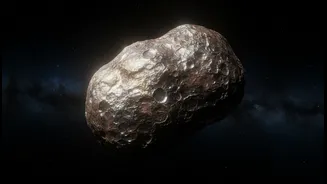
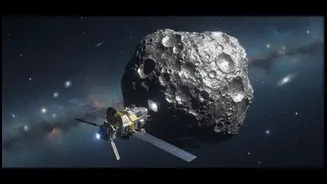
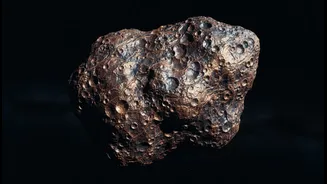
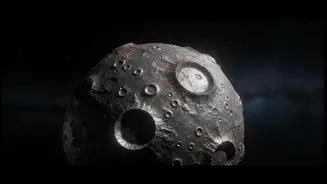
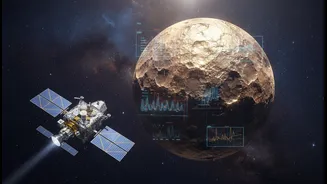
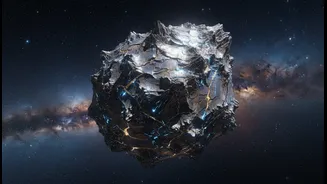
Located in the main asteroid belt between Mars and Jupiter, 16 Psyche is no ordinary space rock. Discovered in 1852, it is a massive, potato-shaped object measuring about 280 kilometers at its widest point. What makes it truly special is its composition.
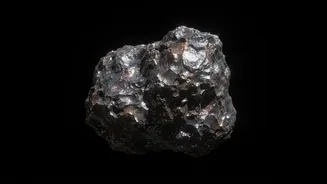
Scientists believe Psyche is composed of 30% to 60% metal, primarily iron and nickel. This has led to the compelling theory that Psyche is the exposed core of a planetesimal, a building block of a planet, that was stripped of its rocky outer layers by violent collisions billions of years ago. Since we cannot drill to Earth's core, visiting Psyche offers a unique opportunity to study the heart of a planetary body firsthand.
The Propulsion Challenge of Deep Space
Getting to the asteroid belt, hundreds of millions of kilometers from Earth, is a monumental undertaking. A traditional chemical rocket would need an enormous amount of propellant to make the multi-year journey, reach the asteroid, and then enter orbit. The sheer mass of the required fuel would make such a mission prohibitively expensive and complex. This is where a more efficient, long-term solution becomes necessary. NASA's Psyche mission, launched in October 2023, is not just a scientific mission; it's a showcase for a technology designed to solve this very problem.
Enter Solar Electric Propulsion
Solar electric propulsion (SEP) is a game-changing technology for deep space travel. Instead of the explosive, short-lived thrust of chemical rockets, SEP provides a gentle but constant push. The system works by using large solar arrays to capture sunlight and convert it into electricity. This electricity then powers a thruster that ionizes, or charges, a propellant—in Psyche's case, the inert gas xenon. Electromagnetic fields then accelerate these ions and expel them at incredibly high speeds, up to 90,000 miles per hour, creating a small amount of thrust. While the force at any given moment is tiny—comparable to the weight of a single AA battery in your hand—it is relentless. Over months and years, this continuous push can accelerate a spacecraft to tremendous velocities, using about ten times less propellant than a chemical rocket.
How the Psyche Mission Pushes the Limits
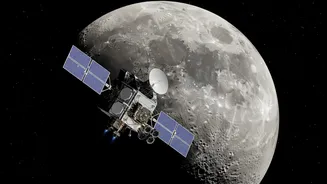
While SEP is not a new concept, the Psyche mission is its most ambitious application yet in deep space. The spacecraft is the first to use Hall-effect thrusters—a particularly efficient type of SEP—beyond the orbit of the Moon. The mission's demands have pushed engineers to advance the technology significantly. The thrusters must operate for longer durations and at higher power levels than on previous missions like Deep Space 1 and Dawn. This necessity has accelerated research into making the thrusters more durable and efficient, particularly through innovations like magnetic shielding, which extends their operational lifetime from around 10,000 hours to more than 50,000 hours. Psyche is effectively a flying testbed, proving that this technology is robust enough for long-haul interplanetary voyages.
The 'Race' for a Foundational Technology
The "race" for Psyche isn't about claiming the asteroid itself but about mastering the technology that gets us there. Gaining proficiency in advanced SEP is a strategic goal for future space exploration. This technology is critical for NASA's Artemis program, with high-power SEP systems slated for use on the Gateway, an orbiting lunar outpost that will serve as a staging point for missions to the Moon and Mars. By demonstrating the capabilities of its advanced Hall thrusters, the Psyche mission is paving the way for more complex missions, including sending heavy cargo to Mars, moving large structures in space, and potentially enabling future asteroid mining operations. The knowledge gained from this single mission will underpin decades of future exploration.