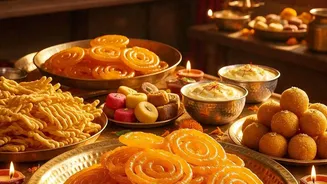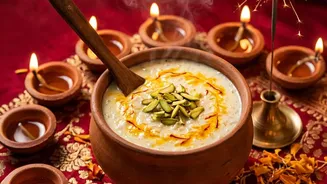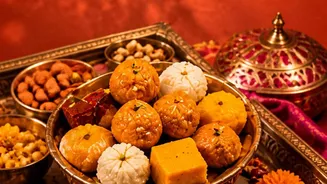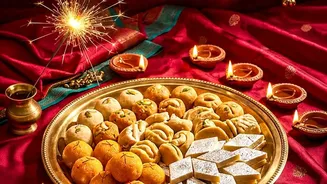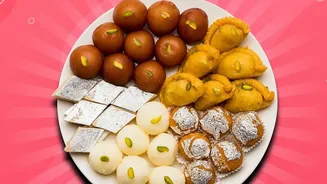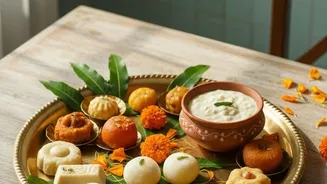


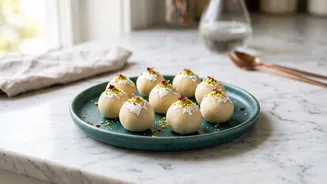
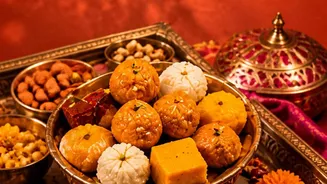
The magic of Diwali is incomplete without the aroma of homemade sweets. Planning ahead can make the festivities more joyful and less stressful. Here’s how you can prepare some classic Indian sweets well before the celebrations begin.
The Golden Orbs: Besan Ladoo
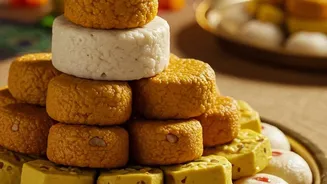
Besan Ladoo is a quintessential
Diwali sweet, loved for its nutty aroma and melt-in-the-mouth texture. The good news is that it's one of the most resilient festive treats, making it perfect for advance preparation. The key is in the roasting; gram flour (besan) must be slow-roasted in ghee on a low flame until it turns golden brown and aromatic. Once roasted, the mixture needs to cool to a lukewarm temperature before you add powdered sugar. Adding sugar to a hot mixture will cause it to melt and result in a soft, sticky texture. Once shaped, these ladoos can be stored in a clean, airtight container at room temperature for up to a month. Avoid refrigeration, as the cold will solidify the ghee and ruin the delicate, crumbly texture.
The Crunchy Diamond: Shankarpali
Shankarpali, also known as Shakarpara, is a crispy, diamond-shaped snack that's mildly sweet and incredibly moreish. Because it's a dry snack, it has a fantastic shelf life and can be made weeks ahead of Diwali. When stored correctly in an airtight container, Shankarpali can stay fresh and crispy for up to two months. To achieve that perfect flaky texture, the secret lies in the dough. It should be kneaded firm, not soft like a chapati dough. Using enough ghee or 'moyan' is crucial; the flour mixture should resemble breadcrumbs. Another vital tip is to fry them on a low to medium flame. Frying on high heat will cook the outside too quickly, leaving the inside raw and doughy. Allow them to cool completely before storing, as they become crispier as they cool.
The Crescent Moon: Gujiya
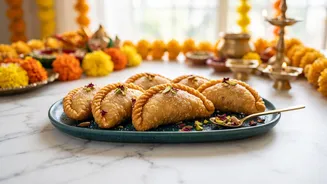
Gujiya, a sweet dumpling with a crisp pastry shell and a rich filling, is a festive favourite across India. Making Gujiya can be a multi-step process, but many parts can be prepared in advance. The filling, often made with khoya, semolina, and nuts, can be prepared a day or two ahead and stored in the refrigerator. It's crucial that the filling is completely cool and dry before you stuff the pastries. Any moisture can make the outer layer soft and cause the Gujiya to break open while frying. The dough should be stiff and rested for at least 20-30 minutes. Once the Gujiyas are filled and shaped, ensure the edges are sealed properly, using a little water or a flour paste to prevent them from opening in the oil. After frying on low to medium heat, let them cool completely before storing in an airtight container to maintain their crispness for days.
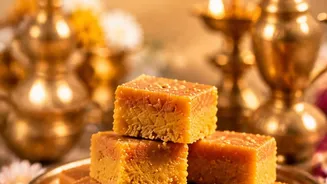
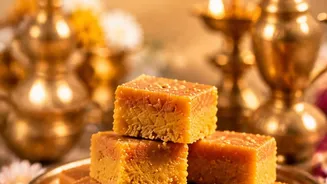
The Fudge Square: Coconut Barfi
Coconut Barfi is a wonderfully quick and delicious fudge_like sweet that can be made in many ways. Using condensed milk is a popular, beginner_friendly method that comes together in minutes. Whether you use desiccated, fresh, or frozen coconut, the key is to cook the mixture on low to medium heat, stirring constantly until it thickens and starts to leave the sides of the pan. If the mixture is undercooked, the barfi won't set properly. Once cooked, spread it onto a greased plate or pan, let it set for a few hours at room temperature or for an hour in the fridge, and then cut into squares. Coconut Barfi stores well in an airtight container for up to 10 days in the refrigerator. You can serve it straight from the fridge or let it sit at room temperature for about 10 minutes before serving.
Smart Storage Is Key
Proper storage is essential to keep your homemade sweets fresh. For all sweets, wait until they have cooled down to room temperature completely before packing them away; trapped steam creates moisture that can lead to spoilage. Use clean, dry, and airtight containers, preferably made of glass or stainless steel, as they don't transfer odours. For dry sweets like Shankarpali and Besan Ladoo, store them in a cool, dry place away from direct sunlight. For milk_based or syrupy sweets, refrigeration is best to extend their shelf life. To prevent different sweets from sticking together or transferring flavours, you can place parchment or butter paper between the layers.