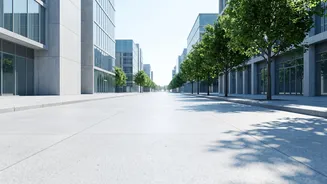


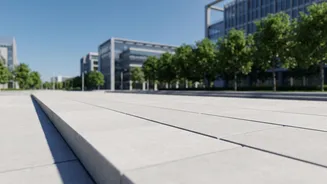
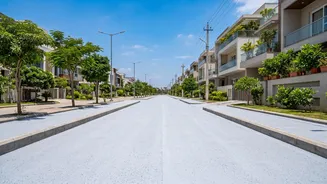
The City as a Concrete Oven
Cities often feel significantly hotter than surrounding rural areas, a phenomenon known as the urban heat island effect. This happens because materials like asphalt and concrete, which make up our roads, buildings, and other infrastructure, absorb and retain
far more of the sun's heat than natural landscapes like forests and fields. Dark asphalt roads, for example, can absorb up to 95% of the sunlight that hits them, getting incredibly hot and slowly releasing that heat back into the air, keeping temperatures elevated even after sunset. This trapped heat is amplified by waste heat from cars and air conditioners and the way tall buildings can block cooling winds, turning dense urban cores into virtual ovens.
Fighting Heat with Light
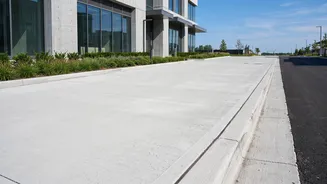
The idea behind reflective pavements, also known as cool pavements, is simple: if dark surfaces absorb heat, lighter surfaces must be better. By using brighter materials, these pavements reflect more sunlight back into the atmosphere instead of absorbing it. This property is called albedo. The higher the albedo, the more sunlight is reflected. This can be achieved in several ways: using naturally lighter materials like concrete, mixing reflective aggregates into asphalt, or applying a special reflective coating to existing road surfaces. The goal is to keep the pavement itself from becoming a giant heat battery, which in turn helps to lower the temperature of the air around it.
Real-World Results
This isn't just a theoretical concept. Cities have been putting it to the test with promising results. A multi-year study in Phoenix, Arizona, found that surfaces treated with a reflective coating were, on average, 5.8 to 6.6 degrees Celsius cooler than traditional asphalt during the afternoon. Researchers in Los Angeles also observed significant cooling, with treated areas showing ambient air temperatures up to 1.9 degrees Celsius lower during an extreme heat event. While the direct impact on air temperature is often modest—Phoenix saw nighttime air cool by about 0.3°C—the reduction in ground temperature is substantial and consistent. These results show that cool pavements are an effective tool for lowering surface temperatures, which is the first step in cooling the wider environment.
Is It Really That Easy?
The headline's claim of 'easily' lowering temperatures deserves a closer look. While the concept is straightforward, implementation has its challenges. One major concern is durability; reflective coatings can lose their effectiveness over time due to tire abrasion and dirt. There is also the issue of glare, as highly reflective surfaces can be uncomfortable for drivers and pedestrians. Furthermore, some studies point out that reflecting solar radiation at street level can sometimes increase the heat felt by people and warm the walls of adjacent buildings, potentially increasing air conditioning needs in some cases. Finally, the materials used for some reflective coatings can be more energy-intensive to produce than traditional asphalt sealants, creating an environmental trade-off. These factors mean that planning and material selection are crucial.
A Promising Tool for Indian Cities
In India, where cities like Ahmedabad, Hyderabad, and Gurgaon are already grappling with extreme heat, cooling strategies are a major focus. While most pilot projects in India have concentrated on cool roofs, which have been shown to reduce indoor temperatures by 2 to 5 degrees Celsius, the principles are the same. Initiatives like the Telangana Cool Roof Policy 2023-2028 and pilot projects in Tamil Nadu show a growing commitment to passive cooling solutions. As Indian cities look to expand their climate resilience plans, reflective pavements offer another valuable strategy. When combined with other measures like increasing tree canopy and creating green spaces, they can play a significant role in making urban environments more livable and less dangerous during heatwaves.