


The 'Goldilocks' Oversimplification
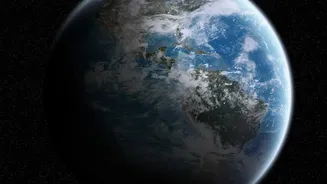
The idea of a habitable or 'Goldilocks' zone is simple and appealing: it is the region around a star where conditions are not too hot and not too cold for liquid water to exist on a planet's surface. This concept has been a foundational guide for astronomers,
helping them narrow down which of the thousands of known exoplanets are worth a closer look. If a planet is too close to its star, its water will boil away; too far, and it will freeze into solid ice. This makes a planet's orbital path a critical first filter. However, relying on this zone alone is like judging a book by its cover. Being in the right neighbourhood doesn't guarantee a planet is habitable. Recent discoveries and advanced models show that two other factors are just as important, if not more so: the planet's size and the nature of its atmosphere.
The Gravity of the Situation
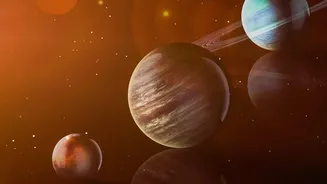
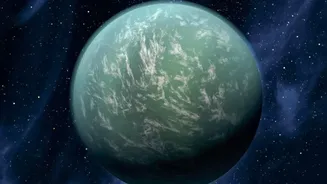
A planet's mass is a critical factor in its potential to host life. If a planet is too small, its gravity will be too weak to hold onto a substantial atmosphere. Recent research suggests a minimum threshold for habitability is a mass of about 2.7 percent of Earth's, or a radius of about 0.8 times that of our own planet. Anything smaller, like our Moon or Mercury, will likely have its atmosphere stripped away by stellar radiation and wind over cosmic timescales, leaving it an airless, barren rock. On the other end of the spectrum, planets that are too massive tend to become gas giants like Jupiter or 'mini-Neptunes' with crushing atmospheric pressure, not rocky worlds with surfaces. The sweet spot appears to be 'super-Earths,' planets larger and more massive than Earth but still fundamentally rocky. These worlds have enough gravity to retain a thick, protective atmosphere and may even support longer periods of volcanic activity, which helps regulate the atmosphere and a protective magnetic field.
Everything Is in the Air
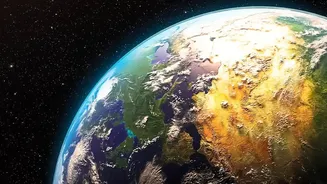
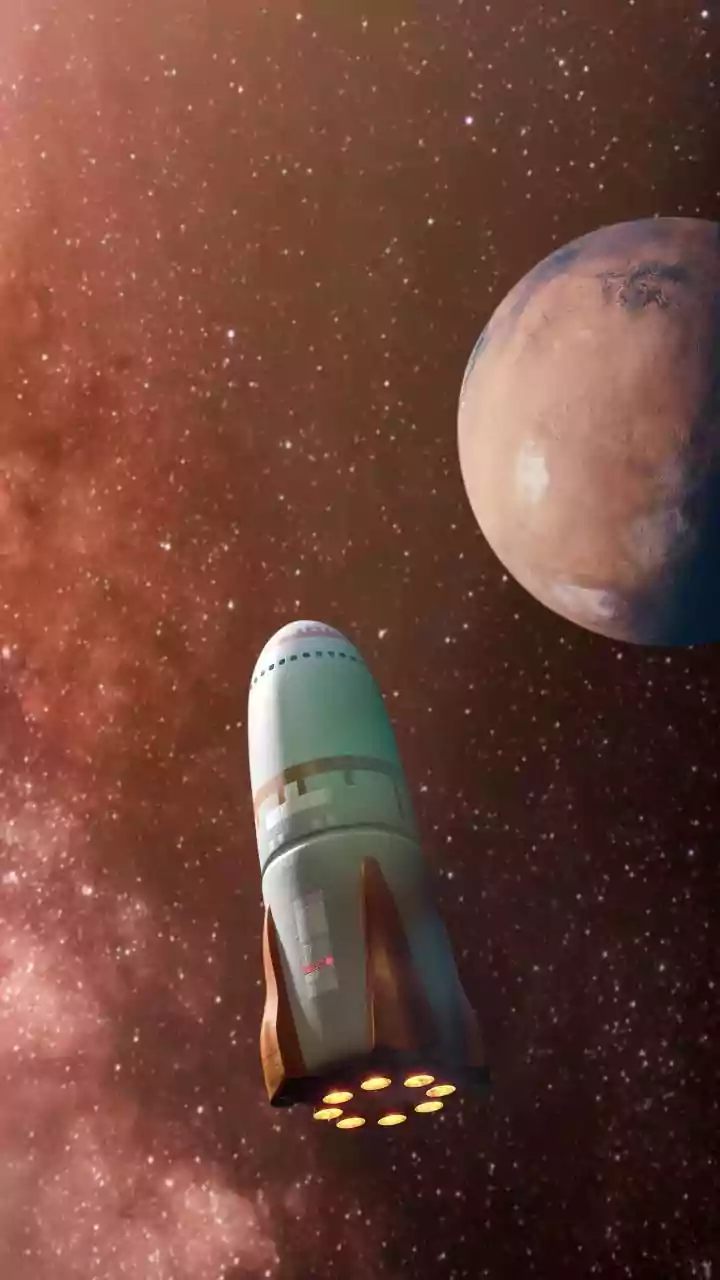
An atmosphere does more than just give a planet air to breathe; it acts as a global climate control system. Without our atmosphere's greenhouse effect, Earth's average temperature would be a frigid -18 degrees Celsius. The composition of gases is key. A runaway greenhouse effect, like the one caused by Venus's thick carbon dioxide-rich atmosphere, creates scorching surface temperatures. Conversely, a thin atmosphere, like that of Mars, can't trap enough heat, leading to a cold, frozen surface. The ideal atmosphere maintains stable temperatures and pressures that allow liquid water to persist. It also provides a shield against harmful cosmic and stellar radiation. The presence of an atmosphere is so vital that detecting one around a rocky world in the habitable zone, which scientists have recently started to do, is considered a monumental step in the search for life.
A More Complex Cosmic Recipe
Size and atmosphere are not independent features; they are deeply interconnected. A planet's mass determines its ability to acquire and, more importantly, retain its atmosphere over billions of years. A larger rocky planet is more likely to have a molten core, which can generate a magnetic field. This magnetic field acts as a crucial shield, protecting the atmosphere from being eroded by the solar wind. This interplay means that the search for habitable worlds is a search for systems with the right combination of properties. A planet must have enough mass to hold onto its air, and that air must have the right chemical mixture to keep the surface temperature stable and wet. Just being in the habitable zone is no longer enough to get astronomers excited; they want to see a world of sufficient size with an atmosphere they can actually analyze.
The Search Gets Smarter
This more nuanced understanding is revolutionizing how astronomers search for life. Instead of just pinpointing planets in the habitable zone, they are using powerful new tools like the James Webb Space Telescope (JWST) to directly study exoplanet atmospheres. The JWST can analyze the light that passes through or is emitted by an exoplanet's atmosphere, revealing a full menu of the atoms and molecules present, including water vapor, carbon dioxide, and methane. This capability allows scientists to move beyond simply identifying a planet's location and begin to characterize its actual environment. By finding rocky worlds in the habitable zone that have also managed to hold onto a substantial atmosphere, we are getting closer than ever to answering the ultimate question: are we alone?