







An Unblinking Eye Over India
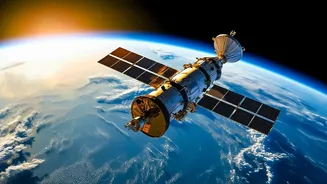
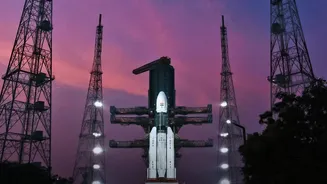
On September 4, 2026, the Indian Space Research Organisation (ISRO) successfully launched the Earth Observation Satellite-05 (EOS-05) into its intended orbit. Also known as GISAT-1A, this satellite is not just another eye in the sky; it's a fundamental
change in how India can monitor its own territory. Unlike most earth observation satellites that circle the globe in Low Earth Orbit (LEO) and only get periodic snapshots of a location, EOS-05 is positioned in a geosynchronous orbit. At an altitude of about 36,000 kilometres, it orbits in sync with the Earth's rotation. This allows it to remain virtually fixed over the Indian subcontinent, providing a constant, persistent watch that was previously unavailable. The successful mission was also a moment of triumph for ISRO, as it is a replacement for the GISAT-1 satellite (EOS-03) which was lost during a launch failure in 2021.
Seeing More Than Ever Before
The key to EOS-05's power lies in its advanced imaging systems and its unique vantage point. The satellite is equipped with multi-spectral and hyperspectral imagers, allowing it to see across various wavelengths of light, far beyond what the human eye can perceive. This enables it to gather detailed information on everything from vegetation health and soil moisture to the thermal signature of a forest fire. But its real game-changing feature is its temporal resolution—how frequently it can provide updates. EOS-05 can image the entire Indian landmass approximately every 30 minutes. For specific areas of interest, like a developing cyclone or a flood-hit region, it can be tasked to provide fresh images as frequently as every five minutes. This ability to move from periodic snapshots to near-continuous monitoring is what sets it apart.
A Boost for Weather Prediction
For a nation with a vast coastline and a deep reliance on the monsoon, accurate weather forecasting is critical. EOS-05 is poised to significantly enhance these capabilities. Meteorologists will be able to track the formation, intensification, and movement of cyclones in the Bay of Bengal and the Arabian Sea with much greater precision. The near-real-time, continuous observation of cloud patterns, storm structures, and sea surface temperatures can lead to more accurate predictions about a cyclone's path and strength. This allows for more effective and timely evacuations, potentially saving countless lives. Beyond cyclones, the satellite will provide invaluable data for understanding and forecasting the complex monsoon system that underpins India's agriculture and water security.
Transforming Disaster Response
When natural disasters strike, the first few hours are crucial. Rescue and relief operations depend on a clear and accurate picture of the situation on the ground. EOS-05 will be a vital tool for India's disaster management agencies. In the event of floods, the satellite's frequent updates can help authorities map the extent of inundation in near-real-time, identifying which areas are worst affected and which routes remain open for emergency services. Similarly, it can be used to track the spread of large forest fires, monitor glacial lakes in the Himalayas for potential outburst floods, and assess damage after landslides. This 'eye in the sky' provides situational awareness that is often impossible to get from the ground, helping to direct resources where they are needed most.
Beyond Emergencies: A National Asset
While its role in disaster management is paramount, the applications of EOS-05 extend much further. Its data will be used for a wide range of national needs, including monitoring crop health and stress for agricultural planning, assessing the state of water resources in reservoirs and rivers, and tracking changes in land use and forest cover. Furthermore, the satellite’s ability to provide persistent surveillance over the Indian region also has strategic applications, enhancing border monitoring and maritime awareness. This makes EOS-05 a versatile national asset, contributing to economic planning, environmental protection, and national security, joining a select group of countries with such a capability.