

An Overlooked Underground Network
For decades, the story of seed dispersal has been dominated by vertebrates. We’ve focused on birds and mammals because they are large, visible, and can carry seeds over long distances after eating fruit. However, a groundbreaking new review by researchers
has pulled together evidence from studies across the globe, revealing a far more complex and widespread system at play. The review highlights a process called invertebrate endozoochory, where small ground-dwelling animals like slugs, beetles, crickets, and even crabs ingest seeds, which then pass through their digestive systems unharmed. These seeds are later deposited in new locations, ready to germinate. By compiling data from numerous studies, scientists have shown that this process involves at least 186 plant species, suggesting it is a significant, widespread ecological mechanism rather than a series of isolated events.
The Slow, Steady Work of Slugs
Often viewed as garden pests, slugs are emerging as surprisingly effective, if slow, seed dispersers. Studies have shown that slugs consume seeds from a variety of plants, and a significant portion of these seeds remain viable after passing through their gut. While they may not travel far—one study noted movements of up to 15 metres in a night—their impact is about precision, not distance. Slugs often deposit seeds in small, protected pockets within the leaf litter or soil, which can be ideal micro-habitats for germination. Furthermore, some research suggests that the journey through a slug's digestive system can actually be beneficial, breaking down tough seed coats or removing chemical coatings that might otherwise attract predators, thereby increasing the seed's chance of survival.
Beetles: Nature's Clean-Up Crew and Planters
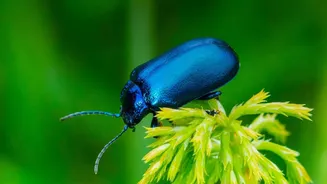
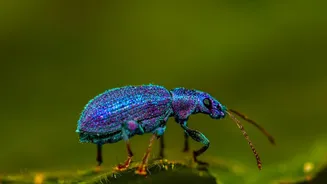
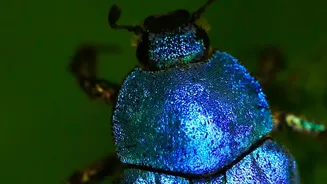
Beetles, particularly dung beetles, are another key player in this hidden network. Their contribution is often as secondary dispersers. After a mammal consumes fruit and defecates the seeds, dung beetles arrive to process the dung for food or to lay their eggs. In doing so, they inadvertently move and bury the seeds embedded within the dung. This burial is crucial for several reasons. It helps seeds escape from seed-eating predators like rodents, reduces competition with the parent plant, and places them in a nutrient-rich environment that enhances the probability of germination and successful growth. While some beetles consume seeds, many species move them to underground locations that are perfect for sprouting, acting as unintentional farmers.
Coastal Action from Crabs
The role of invertebrates in seed dispersal isn't limited to forests and fields; it extends to coastal ecosystems, where land crabs take on the job. In tropical and temperate regions, crabs are known to consume fallen fruits. One study highlighted their incredible capacity, noting a single crab can swallow over 1,000 seeds in a single night. While some crab species are seed predators, others are effective dispersers, carrying fruit away from the parent plant before consumption. They might carry a fruit several metres before eating the fleshy parts and discarding the seeds, effectively moving the next generation of plants along the coastline. This activity is vital for maintaining the structure and composition of coastal forests, especially on remote islands where other animal dispersers may be scarce.
Why These Tiny Dispersers Matter
Recognizing the role of these small creatures is more important than ever. Around the world, populations of large birds and mammals are declining due to habitat loss, climate change, and other human-related pressures. Many plant species rely on these animals for seed dispersal, and their loss threatens the ability of forests to regenerate and adapt. The discovery that a vast and diverse group of invertebrates is also performing this crucial service offers a new layer of understanding about ecosystem resilience. These ground-dwelling dispersers provide a continuous, localized service, helping to maintain plant biodiversity from the ground up. Their work ensures that even if larger dispersers disappear, a vital mechanism for plant regeneration remains active, albeit at a different scale.