





What is Electric Propulsion?
Think of traditional rocket engines. They work by creating a powerful, controlled explosion of chemical propellants to generate immense thrust, pushing a satellite into orbit. Electric propulsion (EP) is entirely different. Instead of a short, powerful burst,
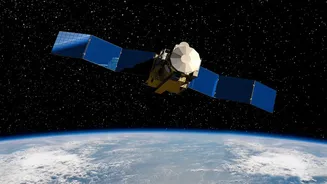
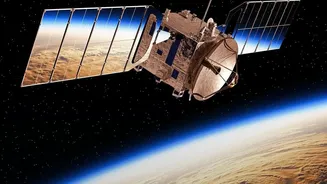
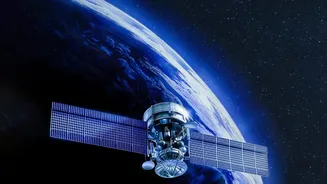
it provides a gentle but continuous push over a very long period. It uses electrical power, typically from a satellite's solar panels, to accelerate a small amount of inert gas propellant, like xenon, to extremely high speeds. This stream of charged particles, or ions, creates a small but highly efficient thrust. There are different types, including Hall thrusters and ion thrusters, but the core principle remains the same: using electricity to generate motion in space.
The Efficiency Game-Changer
The primary advantage of electric propulsion is its incredible fuel efficiency. The effectiveness of a rocket engine is measured by its 'specific impulse'—essentially, how much push it gets from a certain amount of fuel. Electric propulsion systems have a specific impulse that is five to ten times higher than traditional chemical rockets. This means a satellite needs to carry significantly less propellant to perform its functions. For example, a communications satellite that would typically require around 2,000 kg of chemical fuel might only need 200 kg of propellant for an electric system. This massive weight saving is a game-changer. It either allows for the launch of lighter satellites on smaller, cheaper rockets or frees up that mass for more valuable payload, like additional transponders or scientific instruments.
Extending a Satellite's Lifespan
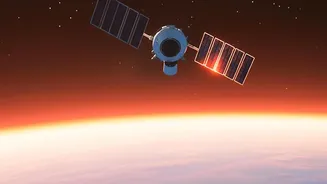
Many satellites are retired not because their electronics fail, but because they run out of the fuel needed for 'station-keeping'. This involves making tiny adjustments to maintain a precise orbit against gravitational pulls and other disturbances. With its superior fuel efficiency, electric propulsion allows a satellite to carry enough propellant for many more years of station-keeping. This directly extends the operational service life of the spacecraft, sometimes adding five to fifteen years. A longer life means more value from a single mission, providing services like telecommunications, broadcasting, or earth observation for an extended period without the cost of a replacement. This enhanced lifespan and reliability are crucial as India looks to expand its satellite-based infrastructure.
ISRO's Indigenous Push
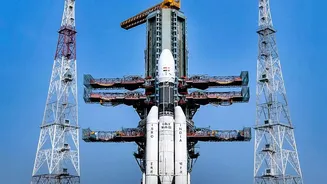
While ISRO has experimented with electric propulsion before, including on the GSAT-9 satellite in 2017 using an imported thruster, recent efforts focus on fully indigenous systems. The upcoming Technology Demonstration Satellite (TDS-01) is set to be a major milestone, featuring an Indian-developed electric propulsion system. ISRO's Liquid Propulsion Systems Centre (LPSC) has been developing and testing these systems, including a 300mN Stationary Plasma Thruster that successfully completed a 1,000-hour life test, proving its reliability. This move towards self-reliance is critical, placing India alongside leading space agencies and companies that have already adopted this technology for their satellite constellations.
The Future of Indian Spaceflight
The integration of electric propulsion is not without trade-offs. The thrust is much lower, meaning it takes longer for a satellite to reach its final orbit—months instead of days. However, for most commercial and scientific missions, this extended travel time is a small price to pay for the enormous benefits in cost, mass, and lifespan. Adopting this technology will make ISRO's commercial launch services more competitive, allowing it to pack more small satellites onto its rockets. It also paves the way for more ambitious future projects, including advanced communication satellites, enhanced earth observation, and even long-duration interplanetary missions where fuel efficiency is paramount. This is a foundational step towards a more sustainable and capable future for India in space.