
First, A Quick Definition
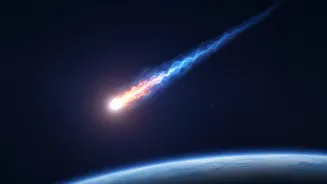
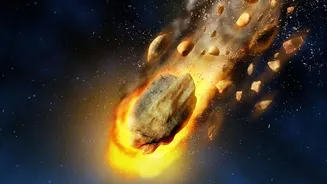
Before we dive into the detective work, let's clear up the terminology. A rock traveling in space is a meteoroid. When it enters Earth's atmosphere and creates that fiery streak of light, it's called a meteor (or shooting star). If any part of it survives
the journey and hits the ground, it becomes a meteorite. While most meteors we see in showers are tiny—like grains of sand—and burn up completely, meteorites are the physical specimens that provide a direct link to space.
Tracking the Trajectory
The first step in identifying a meteor's origin is to watch it arrive. Using networks of cameras, radar, and other observation tools, scientists can track a meteor's path through the atmosphere. By triangulating its position from multiple viewpoints, they can calculate its speed and trajectory with high precision. This data allows them to essentially rewind its journey, plotting its path backward from Earth's atmosphere out into space. This reverse-engineered path reveals the meteoroid's original orbit around the Sun, which is a crucial clue to its parent body.
Analyzing the Light (Spectroscopy)
As a meteor burns through the atmosphere, it gets incredibly hot and glows brightly. The light it emits is a treasure trove of information. Scientists use a technique called spectroscopy, which breaks down this light into its component colors, like a prism creating a rainbow. Each chemical element burns with a unique color signature. By analyzing the spectrum of a meteor's light, researchers can determine its chemical composition. For example, the presence of strong signals for iron, magnesium, and sodium can help classify the meteoroid. This chemical fingerprint allows scientists to distinguish between different types of meteors, such as those that are rocky versus those that are metallic.
Studying the Survivors (Meteorites)
When a meteorite is recovered, it provides the ultimate ground truth. These rocks from space can be analyzed in a lab with a powerful array of tools. One key method involves studying isotopes—variants of elements like oxygen. Different parts of the solar system have distinct isotopic signatures. If a meteorite's oxygen isotope ratio matches that of rocks from Mars or the Moon, its origin is clear. Scientists can also determine a meteorite's age, with most dating back to the formation of the solar system, around 4.6 billion years ago. A younger age suggests it was once part of a larger, evolving body like a planet.
Matching With a Parent Body
The final step is to put all the clues together. The calculated orbit and the chemical composition are compared with known objects in our solar system. Meteor showers, for instance, occur when Earth passes through the debris trail left by a comet or, occasionally, an asteroid. The orbit of the meteors in the Perseid shower, for example, perfectly matches the orbit of Comet Swift-Tuttle, identifying it as the parent body. Similarly, the chemical composition of certain meteorites can be linked to specific classes of asteroids observed in the asteroid belt. By combining orbital data, spectroscopy, and meteorite analysis, scientists can confidently separate likely sources from mere possibilities, painting a detailed family history of these visitors from space.