





The Global Night Watch
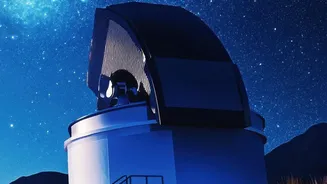
The hunt for NEOs begins with powerful, wide-field telescopes that repeatedly scan the same patches of the night sky. Projects like the Catalina Sky Survey in Arizona and Pan-STARRS in Hawaii are the workhorses of this effort, responsible for the majority
of new discoveries. The basic method is a sophisticated game of spot-the-difference: computer software compares a series of images taken minutes apart, looking for faint points of light that have moved against the fixed background of stars and galaxies. Anything that moves is a potential NEO candidate. These ground-based surveys are incredibly effective, discovering thousands of new objects every year. They are the first line of defense, a persistent and watchful eye on our cosmic surroundings.
From Detection to Confirmation
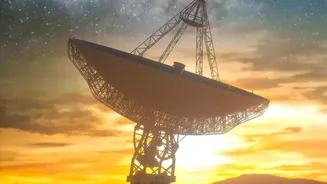
Spotting a moving object is just the beginning. Once a candidate is flagged, it's a race against time to confirm its existence and determine its path. The initial data is sent to the Minor Planet Center (MPC), an international clearinghouse sanctioned by the International Astronomical Union to collect and organize these observations. The MPC then posts the information on a public page, calling for reinforcements from other astronomers around the world, including a dedicated community of amateur observers. It takes multiple observations from different locations to refine an object's trajectory. This global collaboration is crucial; with each new data point, the object's orbit becomes clearer, distinguishing a distant, harmless asteroid from one that requires closer attention.
Calculating the Risk
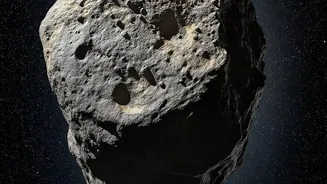
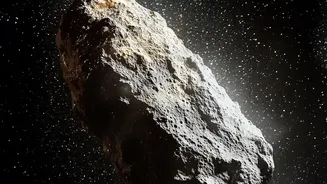
Once an orbit is well-established, the data is handed over to specialized centers like NASA's Center for Near-Earth Object Studies (CNEOS). Here, scientists use sophisticated computer models, such as the Sentry system, to project the object's path decades or even a century into the future. They are looking for any possibility that the asteroid's orbit might intersect with Earth's. An object is designated a "potentially hazardous asteroid" if it is larger than about 140 meters (around 460 feet) and its orbit brings it within 7.5 million kilometers of Earth's path. While this sounds close, the vast majority of these objects will safely pass us by. Constant monitoring allows scientists to update and refine these risk assessments as more observations become available.
The Next Generation of Sentinels
Even with the current system's success, there are blind spots. Ground-based telescopes are limited by daylight and weather, and they struggle to spot asteroids approaching from the direction of the Sun. To address this, a new generation of sentinels is being prepared. The Vera C. Rubin Observatory in Chile, with its enormous mirror and the world's largest digital camera, will survey the entire southern sky every few nights, dramatically increasing our ability to find smaller, fainter objects. Even more crucial is NASA's upcoming NEO Surveyor, a space-based infrared telescope set to launch around 2027. By operating in space at infrared wavelengths, NEO Surveyor will be able to detect both dark and bright asteroids and, critically, spot those coming from the sunward direction, filling a major gap in our current defensive screen.