






A Match Across Worlds
Scientists from the Physical Research Laboratory (PRL) in Ahmedabad have announced a significant discovery: the soil at the Chandrayaan-3 landing site, named Shiv Shakti Station, shares a strikingly similar geochemical fingerprint with a meteorite known
as ALHA 81005. This meteorite holds a special place in science as it was the very first rock found on Earth to be definitively identified as having come from the Moon. The new findings, published in the journal npj Space Exploration, create a crucial bridge between samples analysed directly on the lunar surface by India's Pragyan rover and rocks from the Moon that have naturally fallen to Earth.
The Earthly Counterpart: ALHA 81005
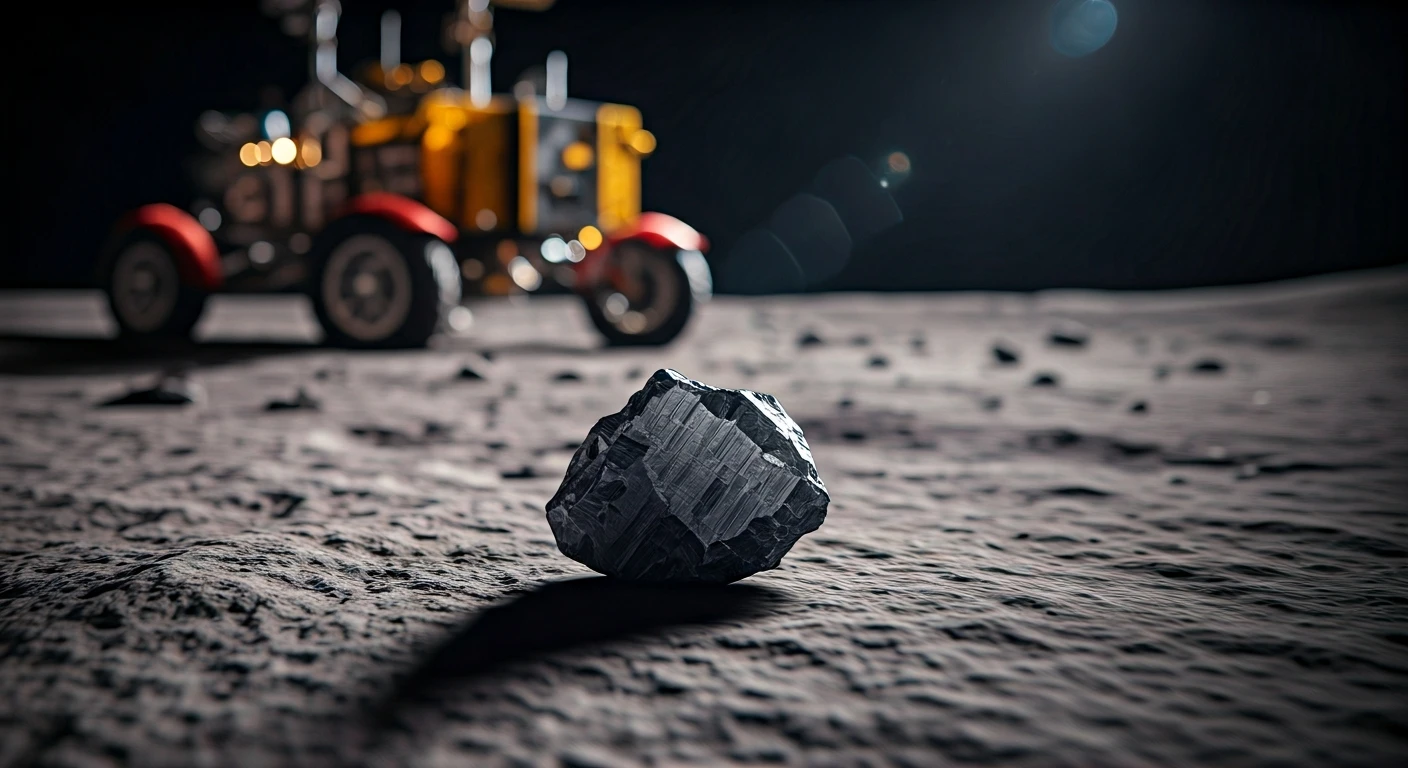
The story of the meteorite twin begins not in space, but in the icy expanse of Antarctica. During an expedition in 1981-82, scientists in the Allan Hills region discovered a peculiar rock. After analysis, geochemists confirmed the unimaginable: it was a piece of the Moon, blasted off its surface by an asteroid impact long ago and sent on a cosmic journey to Earth. Named ALHA 81005, it provided researchers with their first lunar sample that wasn't from the Apollo landing sites. For decades, lunar meteorites like this have offered invaluable, if random, glimpses into the Moon's geology, representing different regions than those visited by astronauts.
India's Rover Plays Detective
The other half of the discovery took place hundreds of thousands of kilometres away. After its historic landing near the lunar south pole in August 2023, the Pragyan rover from the Chandrayaan-3 mission got to work. One of its key instruments, the Alpha Particle X-ray Spectrometer (APXS), was designed to zap the lunar soil, or regolith, and analyse its elemental composition. The data sent back from the Shiv Shakti Station revealed that the soil had a distinct chemical makeup, with notable levels of aluminium oxide, iron oxide, and magnesium oxide. When PRL scientists compared this unique signature to their database of 66 known lunar meteorites, one match stood out as the closest: ALHA 81005.
Not a Direct Origin, But a 'Twin' Type
Researchers are careful to clarify that this discovery does not mean the ALHA 81005 meteorite was ejected from the exact spot where Chandrayaan-3 landed. Pinpointing the specific crater of origin for any lunar meteorite is incredibly difficult. Instead, the geochemical similarity indicates that both the landing site and the meteorite represent a similar and relatively rare type of lunar crust. This particular crust is rich in magnesium, suggesting it may contain materials from the Moon's deeper layers, exposed by ancient impacts. The finding validates that the rocks we find on Earth are indeed representative of the broader lunar surface, beyond the limited Apollo sites.
Why This Discovery Is a Giant Leap
This India-led breakthrough is significant for several reasons. Firstly, it enhances the scientific value of both lunar missions and meteorite collections. By linking a specific landing site to a type of meteorite, scientists can now study meteorites on Earth with a better understanding of their geological context on the Moon. Secondly, it sheds light on the formation of the Moon's ancient crust, known as the lunar highlands. The data from Chandrayaan-3 suggests this region is more diverse than previously thought. This achievement underscores the incredible capability of India's space program, demonstrating how data from its missions can contribute to solving longstanding mysteries in planetary science and deepen our understanding of our celestial neighbour.