
Finding Your Perfect Part
Before you can dive into specific decades, you need to master the basics of the side part itself. The general rule is to find your natural parting by looking at the cowlick at the crown of your head. If the hair spirals clockwise, a part on the left tends
to sit better; if it’s counter-clockwise, try the right. However, for dramatic vintage styles, feel free to defy nature. Use the tip of a rat-tail comb to draw a clean, sharp line from your hairline back towards the crown. For a classic deep side part, a good landmark is to align the part with the arch of your eyebrow. Wetting the hair or using a pomade can help in creating a slick, defined line that stays put.
The 1920s: Sharp, Deep, and Dramatic
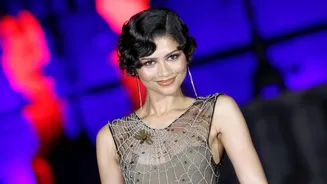
The Roaring Twenties were all about bold, boyish cuts and sleek, sculpted waves. The side part was a key element, often positioned deeply on one side to create an asymmetric look. This style works beautifully with short bobs or even longer hair styled into a faux bob. The key to the '20s look is a flat, polished finish. To achieve this, apply a strong-hold gel or setting lotion to damp hair before creating your deep side part. This is the foundation for iconic finger waves. Using a comb and your fingers, push the hair to create 'S' shaped waves, securing each curve with a long metal clip as you go. The part is severe and the waves are glossy, creating a look that’s both rebellious and highly stylised.
The 1940s: Soft, Sculptural, and Voluminous
The 1940s moved away from the flat, severe styles of the '20s towards softer, more voluminous silhouettes. The side part remained a staple but was used as a starting point for sculptural rolls and waves. Victory rolls are the quintessential '40s style, featuring large rolls of hair pinned on top or to the sides of the head. To create this look, start with a side part. Take a section from the heavier side of the part, backcomb it lightly at the roots for volume, and then roll the hair upwards or downwards towards your head, securing firmly with bobby pins. The rest of the hair was often styled in soft, brushed-out curls. For a simpler take, a deep side part with hair swept smoothly over one eye, known as the peek-a-boo bang, was also immensely popular.
The 1950s: From Sleek Bobs to Poodle Cuts
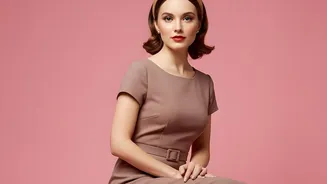
The 1950s offered a variety of styles, from the ultra-feminine to the playfully short. The side part was versatile, adapting to everything from sleek pageboys to voluminous curls. A soft side part was often paired with a curly bob, famously worn by stars like Marilyn Monroe. These looks were typically achieved by setting the hair in pin curls or rollers and then brushing them out into soft, bouncy waves. For a more polished look, the pageboy featured hair cut to one length and curled under, often accompanied by a smooth side part. On the other end of the spectrum was the 'Italian Cut,' a short, shaggy style with soft curls and a side part, and the famous 'Poodle Cut' which featured tight, voluminous curls piled high on the head.
Essential Tools for a Retro Finish
While vintage methods involved wet sets and long drying times, modern tools can help you achieve a similar look more quickly. A rat-tail comb is non-negotiable for creating a precise part. Duckbill clips are essential for holding finger waves or pin curls in place. For 1940s and '50s volume, a teasing brush and a strong-hold, brushable hairspray are your best friends. Pomades provide the high-shine finish seen in many 1920s and sleek 1950s men's styles that were also adopted by women. Don't be afraid to use a curling iron to create your initial curls before pinning them to cool; this helps them set for a bouncy, lasting style. A boar bristle brush is also a great investment for brushing out curls into soft, glamorous waves without causing frizz.