




Cardiovascular Health and Calorie Burn
Both aerobics and trampolining are excellent for raising your heart rate and improving cardiovascular fitness. Studies show that a vigorous trampolining session can be as effective as running for boosting heart health and endurance. When it comes to burning
calories, the two are surprisingly comparable, though intensity is key. A half-hour of high-energy step aerobics can burn around 280-480 calories, depending on your weight and the complexity of the routine. Similarly, 30 minutes of rebounding can burn anywhere from 200 to 400 calories. While a very high-intensity aerobics class might have a slight edge in pure numbers, the fun factor of trampolining often means people work out for longer without realizing it, leading to a significant burn over time.
Impact on Your Joints
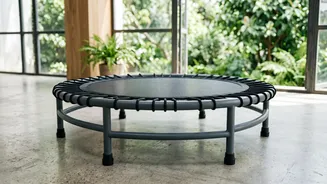
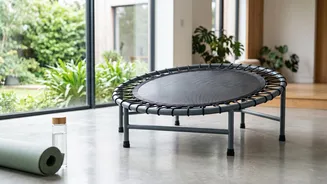
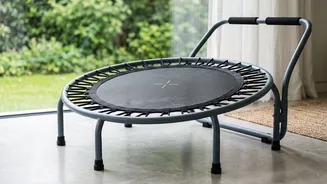
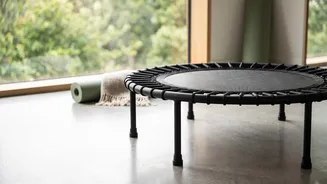
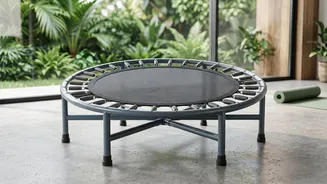
This is where the two forms of exercise diverge significantly. Traditional aerobics, especially high-impact variations like step or dance fitness, involve repetitive stress on the joints. While this can be beneficial for building bone density, it can also be a major drawback for individuals with pre-existing knee, hip, or ankle issues. Trampolining, on the other hand, is celebrated for being a low-impact workout. The elastic surface of the mini-trampoline, or rebounder, absorbs a huge portion of the force from each jump. Some studies suggest it reduces the impact on joints by as much as 80% compared to running on a hard surface, making it a much gentler option that allows for more frequent training with less wear and tear.
Muscle Engagement and Toning
Aerobics classes, particularly step aerobics, are fantastic for targeting the lower body. They consistently work your quadriceps, hamstrings, glutes, and calves. Trampolining offers a more comprehensive, full-body workout. The unstable surface forces hundreds of muscles to engage simultaneously to maintain balance. Every bounce works your legs and glutes, but it also activates your entire core, back, and the deep stabilizing muscles that are often missed in other workouts. This constant engagement helps improve posture and builds functional strength across the whole body.
Beyond the Workout: Other Key Benefits
Each activity comes with its own unique set of secondary benefits. The group setting of most aerobics classes provides a strong social and motivational component that many people find crucial for consistency. Trampolining is praised for its benefits to the lymphatic system. The vertical up-and-down motion is thought to help stimulate lymphatic drainage, which aids in flushing toxins from the body. Furthermore, the constant adjustments required to stay balanced on a rebounder can significantly improve your coordination and spatial awareness. Some research, including a famous NASA study, found rebounding to be an incredibly efficient way for astronauts to regain bone and muscle mass lost in space.
Accessibility, Cost, and Convenience
Aerobics has a very low barrier to entry. You can find countless free videos online to do in your living room, or you can join a local gym or community centre for a relatively low cost. It requires minimal equipment—just comfortable clothes and supportive shoes. Trampolining requires a specific piece of equipment: a rebounder. A quality mini-trampoline can be an investment, but it offers the convenience of having an effective workout machine at home that takes up minimal space. While classes are available, the at-home option is a major draw for those with busy schedules.