
The Grand Feast: Understanding the Onam Sadya
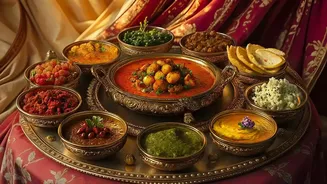
Onam, a ten-day harvest festival culminating with the main day of Thiruvonam on August 26, 2026, is synonymous with one of India's most magnificent culinary experiences: the Onam Sadya. This elaborate vegetarian feast, traditionally served on a banana
leaf, is a spectacle of flavour, balance, and tradition. An old Malayalam saying suggests one must have the Onam feast even if it means selling one's assets. The Sadya features a meticulously arranged spread of anywhere from 20 to over 30 dishes. Central to the meal is Kerala's staple red Matta rice. Surrounding it are an array of curries and side dishes, each with a distinct purpose. Key components include Parippu (a comforting lentil curry), Sambar, tangy Rasam, and Aviyal, a beloved mixed vegetable dish cooked in a coconut and yogurt gravy. Other stars include Olan (a mild curry of ash gourd and red beans in coconut milk), Kalan (a thicker, yogurt-based dish), and various Pachadi and Kichadi, which are yogurt-based sides that can be sweet, sour, or spicy. The meal is punctuated by crispies like banana chips and papadam, and a variety of pickles, most notably a potent ginger-tamarind concoction called Inji Puli.
Beyond the Banana Leaf: A Culinary Journey
While the Sadya is the undisputed star of Onam, it represents just one facet of Kerala’s immense food culture. The state's geography, with its long coastline, fertile backwaters, and spice-laden hills, has cultivated distinct culinary zones. The festival provides the perfect impetus to look beyond the traditional feast and embark on a gastronomic tour of these regions, each with its own unique identity shaped by history, trade, and local ingredients. From the aromatic biryanis of the north to the hearty meat dishes of Central Travancore, Kerala’s everyday cuisine offers a world of flavour waiting to be discovered.
Northern Flavours: The Malabar Spice Route
The Malabar region in North Kerala, historically a major centre of the spice trade, boasts a cuisine rich with Arab, and later European, influences. This is most evident in the famous Thalassery Biryani, which stands apart from its counterparts with its use of fragrant, small-grained Kaima rice and a unique blend of spices. Unlike the purely vegetarian Sadya, Malabar cuisine celebrates meat and seafood. Onam in this region might even include non-vegetarian dishes. Signature dishes include Kozhi Varuthathu (spicy fried chicken) and various Meen Curries (fish curries) made tangy with tamarind and creamy with coconut milk. Another staple is Pathiri, a delicate, paper-thin pancake made from rice flour, often served alongside rich meat or fish gravies. Don't miss out on Kallummakkaya Ularthiyathu, a flavourful dish of stir-fried mussels that showcases the region's coastal bounty.
Central Delights: Backwaters and Bold Tastes
Moving to Central Kerala, the cuisine is heavily influenced by the backwaters of Kuttanad and the region's strong Syrian Christian community. Known as the 'rice bowl of Kerala', Kuttanad is famed for its unique below-sea-level farming and a cuisine that makes liberal use of freshwater produce. The star here is Karimeen Pollichathu, where pearl spot fish is marinated in spices, wrapped in a banana leaf, and grilled to perfection. Another local favourite is Tharavu Roast, a rich and spicy duck preparation often paired with fluffy Appams (lacy rice pancakes). The Syrian Christian influence brings a variety of robust meat dishes to the table, such as Erachi Ularthiyathu (a dry-fried beef preparation) and Meen Mappas, a gentle fish curry simmered in creamy coconut milk. These dishes, rich with pepper and locally grown spices, offer a comforting and hearty contrast to the lighter Sadya fare.
A Sweet Conclusion: Payasams and More
No Keralan feast is complete without a sweet ending, and Onam is the time for Payasam to shine. While a Sadya will feature at least one, often more, of these delightful pudding-like desserts, the variety is staggering. The most traditional is Ada Pradhaman, made with rice flakes, jaggery, and coconut milk. Palada Payasam is another classic, a creamier version made with milk and rice flakes. Beyond the Sadya, you will find Payasams made from lentils, wheat, and different fruits. Another essential sweet is Sharkara Upperi (or Varatti), which are banana chips coated in a thick layer of jaggery, ginger, and spices, offering a crunchy, sweet, and spicy bite that is quintessentially Keralan. Exploring these sweets provides a final, delicious chapter in the state's diverse food story.