





A New Strategy for Martian Mobility
NASA recently announced it has selected seven U.S. companies for its Science Transport and Robotic Innovation for Deployment and Exploration (STRIDE) initiative. With a total value of around $17 million, these contracts are designed to supercharge the development
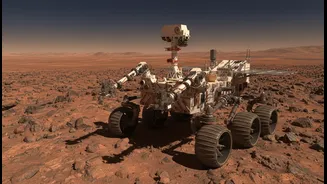
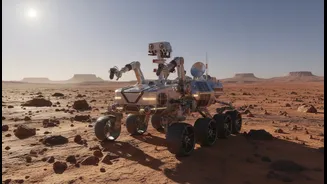
of a new generation of robotic explorers. The goal is to move beyond the limitations of even the most advanced wheeled rovers, like Curiosity and Perseverance, which have struggled with deep sand and extremely rugged ground. The selected companies include a mix of established aerospace giants and innovative newcomers: AeroVironment, Astrobotic, Venturi Astrolab, Ground Control Robotics, Honeybee Robotics, Intuitive Machines, and MEI Technologies. By funding private sector innovation, NASA is building a new toolkit for accessing scientifically rich but hard-to-reach Martian locations, from steep crater walls to treacherous icy deposits.
The Rise of Legged Explorers
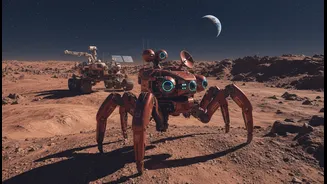
One of the most exciting frontiers in planetary robotics is the move from wheels to legs. Projects like the NASA-backed LASSIE (Legged Autonomous Surface Science In Analogue Environments) initiative are developing quadrupedal robots, much like Boston Dynamics' famous robot dogs, for extraterrestrial use. These machines offer a radical advantage over rovers. Instead of just driving over terrain, they can 'feel' it. Each step provides data on the ground's composition and stability, allowing the robot to adjust its gait in real-time to handle soft sand, slippery ice, or unstable rocks. This technology could prevent robots from getting stuck, an issue that hampered past missions like the Spirit rover. More than just a mode of transport, the legs themselves become scientific instruments, constantly measuring the properties of the ground they traverse. This capability will be essential for scouting landing zones and pathways for future human missions.
Smarter Scouts in the Martian Sky
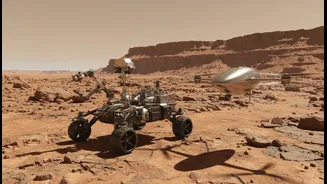
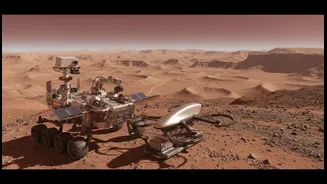
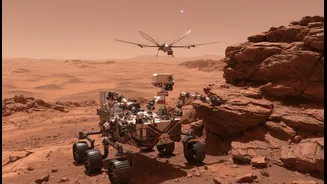
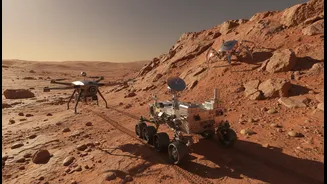
The incredible success of the Ingenuity helicopter, built by STRIDE contract winner AeroVironment, proved that powered flight is possible in Mars's thin atmosphere. Now, NASA is looking to build on that legacy. Future Martian drones won't just be technology demonstrations; they will be indispensable scientific tools. Envisioned as partners to rovers and, eventually, astronauts, these advanced aerial platforms will act as scouts. They can fly ahead to map treacherous terrain, identify the safest routes for ground-based assets, and spot scientifically interesting targets from a unique aerial perspective. This drone-rover duo approach could dramatically increase the speed and efficiency of exploration. While a rover might cover a few kilometers on a good day, a drone could survey a vast area, creating high-resolution 3D maps that allow its wheeled companion to navigate with unprecedented confidence and precision.
AI-Powered Teams and Autonomous Discovery
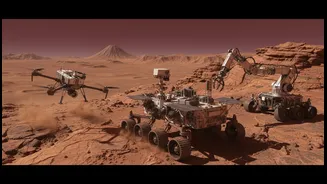
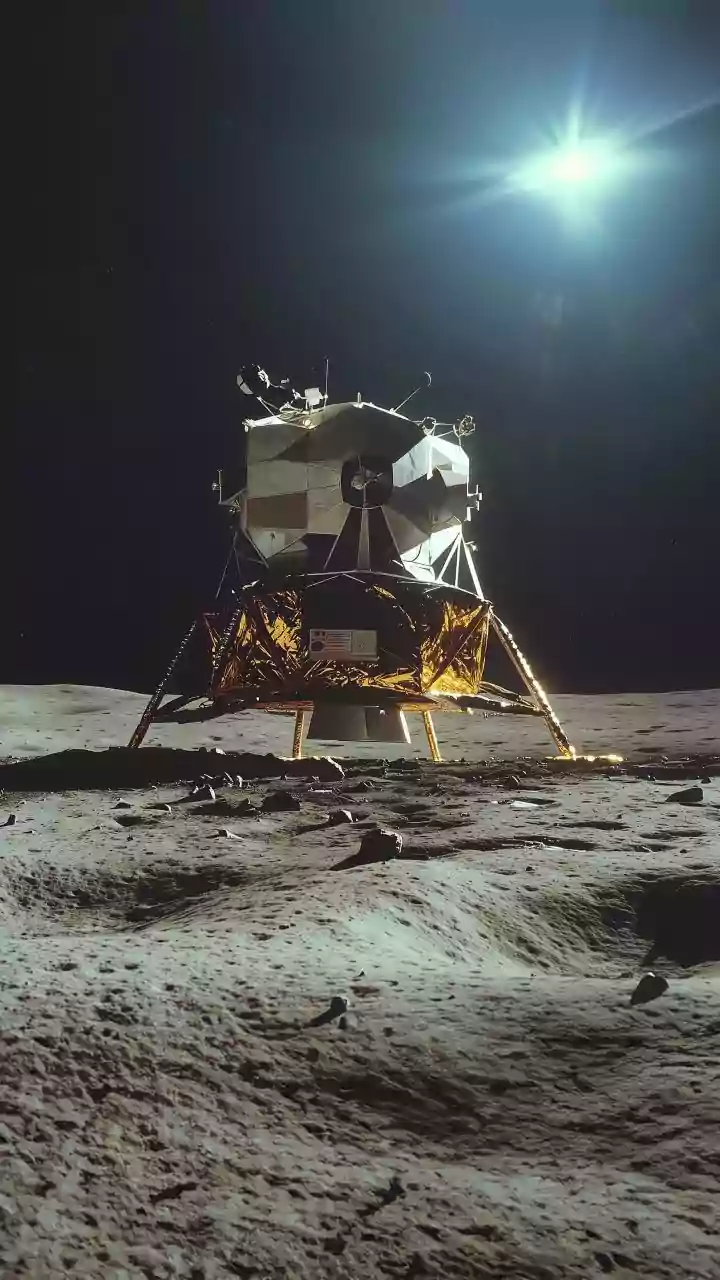
Perhaps the most profound shift is the move toward true autonomy and cooperative robotics. On Mars, the time delay for commands from Earth makes direct human control impractical for complex maneuvers. The solution is to make robots that can think for themselves. Projects like CADRE (Cooperative Autonomous Distributed Robotic Exploration) are pioneering the use of multiple robots working together as a single, autonomous team. Instead of one large, expensive rover, imagine a swarm of smaller, more expendable robots that communicate with each other, share mapping data, and make collective decisions without human intervention. If one robot fails, the mission continues. This approach, which STRIDE winner Intuitive Machines is helping to test on the Moon, increases resilience and allows for distributed science, where measurements can be taken from multiple points simultaneously. This collective intelligence will allow robot teams to explore hazardous areas that would be too risky for a single, billion-dollar asset.