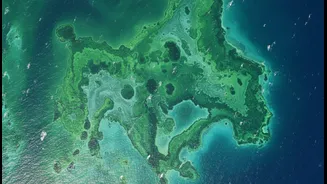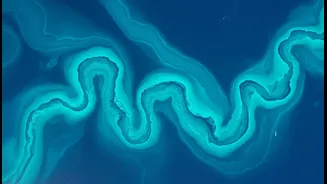






What Are These Massive Blooms?
These colourful displays are caused by phytoplankton, microscopic marine plants that form the base of the oceanic food web. Like plants on land, they need sunlight and nutrients to grow. When conditions are just right—warm water, slow currents, and an overabundance
of nutrients—their populations can explode into what scientists call a bloom. While many blooms are harmless and a natural part of the ecosystem, some are known as Harmful Algal Blooms (HABs). These events involve algae that produce potent toxins or grow so dense they cause widespread damage. Only about 1% of algal species produce these dangerous toxins, but their impact is enormous.
A Planetary Health Check from Orbit
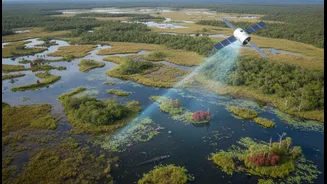
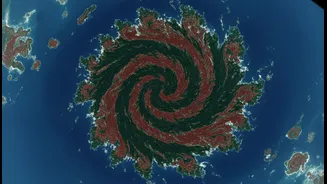
The fact that these blooms are visible to satellites tells us about their sheer scale. Instruments like NASA's MODIS can detect the colour changes caused by chlorophyll in the phytoplankton, allowing scientists to track these events across the globe. The vibrant swirls, often looking like a Van Gogh painting from space, cover vast areas, sometimes hundreds of square kilometres. This orbital view is crucial, as it provides data on a global basis that on-the-ground sampling cannot match, helping researchers monitor the frequency and size of blooms and understand the larger processes at play.
The Key Cause: Nutrient Pollution
The primary driver behind most harmful algal blooms is nutrient pollution, a process known as eutrophication. This happens when excessive amounts of nutrients, mainly nitrogen and phosphorus, enter waterways. Major sources include agricultural runoff from fertilized fields, untreated sewage from cities, and industrial discharge. In India, for example, a significant portion of wastewater goes untreated, flowing into rivers and eventually the sea, loading coastal waters with the exact nutrients that fuel explosive algal growth. This overfeeding of the ocean creates the perfect conditions for a few opportunistic algae species to outcompete everything else.
Climate Change Is Pouring Fuel on the Fire
Climate change is making a bad problem worse. Rising global temperatures are warming the surface of the ocean, which many toxic algae species prefer. Warmer water also leads to increased stratification, where the water forms distinct layers that don't mix well. This traps nutrients at the surface, giving algae a stable, sunlit, and nutrient-rich environment to thrive in. Furthermore, changing rainfall patterns—more intense storms and longer droughts—can increase the flushing of nutrients from land into the sea, further fueling the blooms.
The Crisis Beneath: Dead Zones and Suffocation
One of the most severe consequences of a massive algal bloom is the creation of a 'dead zone'. This happens after the bloom dies. The huge mass of dead algae sinks and decomposes, and the bacteria that break it down consume vast amounts of dissolved oxygen in the water. This process, called hypoxia, starves the water of the oxygen that fish, crabs, and other marine life need to breathe. Organisms that can't flee the area suffocate and die, leading to mass fish kills and a collapse of the local ecosystem. These dead zones, which now number in the hundreds worldwide, can devastate fisheries and marine biodiversity.
Threats to Human Health and Livelihoods
The impacts extend far beyond marine life. Harmful algal blooms pose a direct threat to human health. Consuming seafood like shellfish that have filtered toxic algae can lead to severe illnesses such as paralytic shellfish poisoning. In some cases, toxins can become airborne, causing respiratory irritation for people near the coast. For coastal communities in India and elsewhere that depend on the ocean, the economic fallout is crippling. Blooms can shut down fisheries, contaminate aquaculture stocks, and devastate the tourism industry as beaches are closed due to foul-smelling, toxic scum.