







The Modern Posture Problem
The human body was designed for movement, not for sitting in a fixed position for eight hours a day. When we sit at a desk, we tend to lean forward, round our shoulders, and collapse our core. This common posture, often called 'tech neck' or 'sitting
slouch', puts immense strain on our neck, shoulders, and lower back. Over time, the muscles in the front of our body become tight and short, while the muscles in our back become overstretched and weak. This imbalance not only causes chronic aches and pains but can also affect our breathing, digestion, and even our mood. We try to remember to 'sit up straight', but our muscles have often adapted to the slouch, making good posture feel unnatural and difficult to maintain.
Why Your Feet Are the Foundation
The secret to fixing your posture starts not with your back, but with your feet. Our feet are incredibly complex, packed with over 200,000 nerve endings. They are designed to sense the ground, providing constant feedback to the brain to help us balance and align our entire body. However, when we spend our lives walking on perfectly flat, hard surfaces and wearing cushioned, supportive shoes, these nerves and small muscles in our feet barely have to work. They become 'lazy', and we lose that crucial connection to the ground. This forces larger muscle groups in our legs and back to overcompensate for stability, leading to inefficiency and strain. Correcting your slouch requires reawakening this foundational system.
Enter the Humble Grass Walk
This is where a simple walk on the grass comes in. Unlike a pavement or a tiled floor, a grassy lawn is an uneven, yielding, and textured surface. As you walk on it, your feet are forced to make thousands of tiny, unconscious adjustments to maintain balance. Each step is slightly different. This simple act stimulates those dormant nerve endings and engages the small, intrinsic muscles in your feet and ankles. This chain reaction travels up your body. To stay stable on the unpredictable surface, your body naturally engages your core muscles—the deep abdominal and back muscles that form a supportive corset around your spine. Instead of consciously trying to 'stand up straight', your body does it automatically as a response to the environment. It's a natural, reflexive workout for your postural system.
How to Start Your Morning Ritual
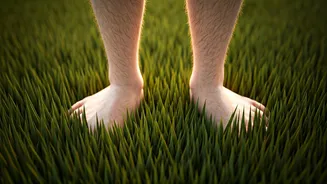
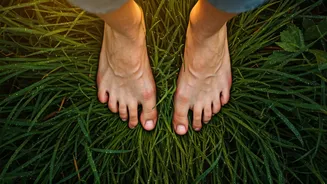
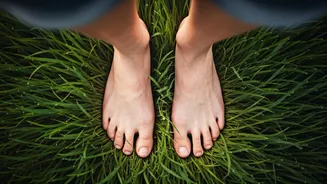
Making this a part of your routine is incredibly simple. Aim for just 5 to 10 minutes each morning. Find a patch of grass in a nearby park, your garden, or a local field. If you are comfortable and the area is safe, consider doing it barefoot. This practice, sometimes called 'earthing' or 'grounding', maximises the sensory feedback from the ground. The feeling of cool, damp grass under your feet can also be a meditative and stress-reducing experience to start your day. If barefoot isn't an option, wear a pair of minimalist, flexible-soled shoes. Walk slowly and mindfully. Pay attention to how your feet are landing and how your body is adjusting. Don't force anything; just let your body's natural intelligence take over. The goal is not exercise in the traditional sense, but sensory re-education.