

Why You Need to Escape the City Glow
The single biggest obstacle to seeing a star-filled sky is light pollution. The constant glow from streetlights, buildings, and vehicles in urban areas washes out all but the brightest celestial objects, reducing a sky of thousands of stars to just a handful.
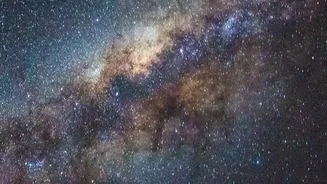
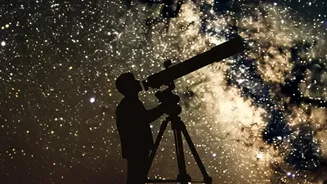
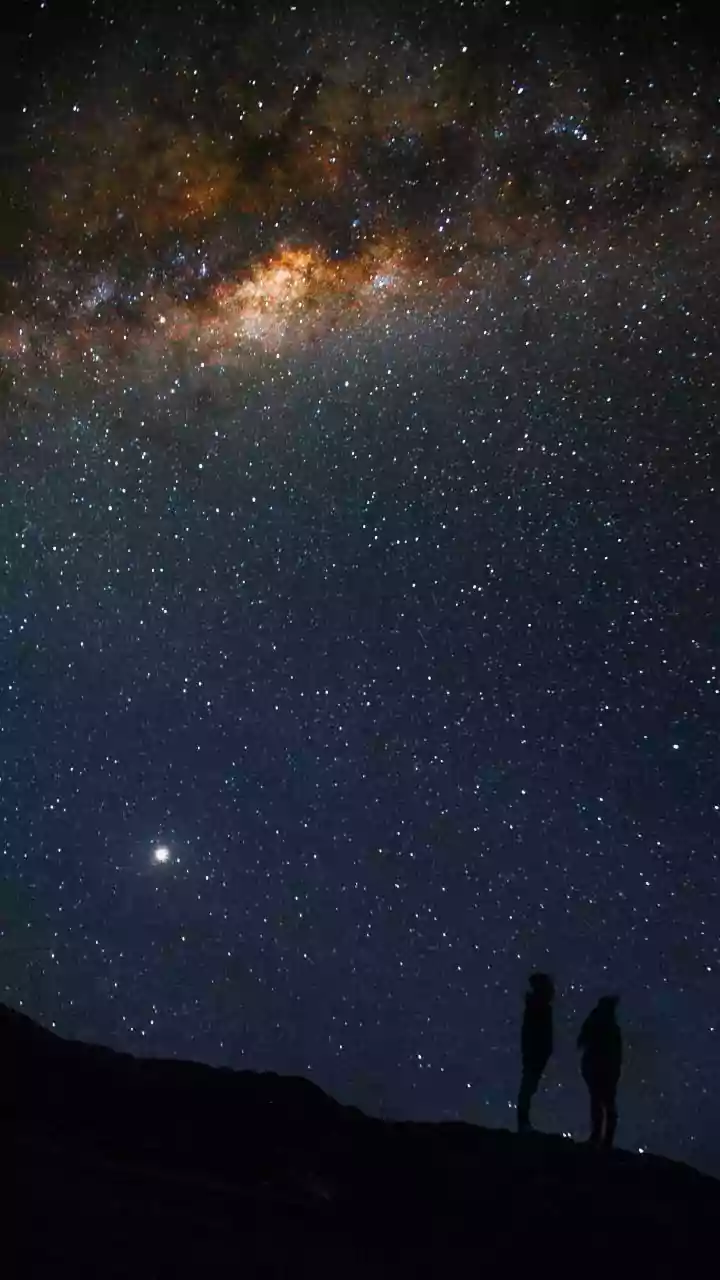
To truly witness the spectacle of the cosmos—the dense band of the Milky Way, faint constellations, and even distant galaxies—you need to travel to a location with minimal artificial light. These 'dark sky' sites are often found in remote, high-altitude areas where the air is thinner, drier, and more stable, providing a crystal-clear window to the universe. More than 80% of the world's population lives under light-polluted skies, making a trip to a dark-sky location a rare and unforgettable experience.
Hanle, Ladakh: India's Celestial Sanctuary
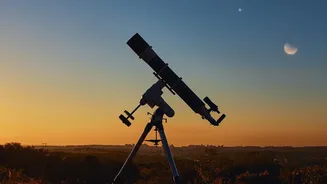
For the ultimate stargazing experience, nowhere in India rivals Hanle in Ladakh. Perched at a staggering altitude of 4,500 metres, this remote village is home to India's first official Dark Sky Reserve. Its high-altitude desert climate ensures over 250 clear nights a year, with exceptionally dry air and virtually zero light pollution, earning it a Bortle Class 1 rating—the darkest possible sky. The region is so astronomically pristine that it houses the Indian Astronomical Observatory. While access to the research telescopes is restricted, the local community has been trained as 'Astronomy Ambassadors', offering guided stargazing sessions for visitors with powerful Dobsonian telescopes. This initiative makes Hanle not just a place to see the stars, but to connect with a community dedicated to preserving the night.
Spiti Valley: A High-Altitude Desert Dream
Another Himalayan jewel, Spiti Valley in Himachal Pradesh offers some of the most dramatic and accessible dark skies. Villages like Langza, Komic, and Kibber, all situated above 4,000 metres, provide breathtakingly clear views of the night sky with minimal interference. The valley's cold desert landscape and high altitude mean the air is thin and free of the atmospheric distortion that makes stars twinkle in lower regions. On a clear, moonless night here, the Milky Way is not just visible but appears as a textured, glowing band. The best time to visit for stargazing is from May to October, when the roads are open and the galactic core is at its brightest.
Beyond the Himalayas: Deserts and Ghats
You don't have to travel to the high Himalayas to find celestial wonder. The vast salt flats of the Rann of Kutch in Gujarat provide an otherworldly setting for stargazing, with an uninterrupted horizon that makes you feel like you're standing at the edge of the world. In Rajasthan, the Thar Desert near Jaisalmer offers easily accessible dark skies, with many desert camps providing telescopes for guests. Down south, the Western Ghats in Coorg, Karnataka, offer a surprise. Far from city lights and nestled among coffee plantations, the region's clear winter skies provide a unique opportunity to see southern constellations not visible from the north.
Your Stargazing Starter Kit
You don't need expensive gear to begin. The most important tool is your own eyes, given 20-30 minutes to fully adjust to the darkness. Avoid looking at your phone or any white light, as it will ruin your night vision. A red-light torch is essential for finding your way without disrupting your dark adaptation. For a closer look, a pair of binoculars is a great starting point, powerful enough to reveal Jupiter's moons or craters on our own moon. Finally, download a stargazing app like Stellarium or Star Walk. These apps use your phone's GPS to create a real-time map of the sky, helping you identify constellations, planets, and even satellites passing overhead.
Timing Is Everything: Moon and Season
To maximise your experience, plan your trip around the new moon. A full moon is so bright it can wash out the Milky Way and fainter stars, creating its own form of light pollution. The best months for viewing the bright core of the Milky Way in India are generally from June to September. In places like Ladakh and Spiti, this window conveniently aligns with the summer travel season. For most other parts of India, the post-monsoon and winter months from October to March offer the clearest, most stable skies. Always check the local weather forecast before you head out, as clouds are the final, unavoidable hurdle to a perfect night of stargazing.