





Your Dog's Superpower: A World of Scent
To understand why sniffing is so important, we first have to appreciate the sheer power of a dog's nose. While humans are primarily visual, dogs experience the world through smell. They possess up to 300 million olfactory receptors, compared to our mere
six million. The part of their brain dedicated to processing scent is about 40 times larger than ours. When you see a tree, your dog smells a complex story: which other dogs have been there, what they ate, and even their emotional state. Letting them sniff isn't just a detour; it's like letting them read their daily newspaper or scroll through their social media feed to catch up on all the local gossip.
Mental Workout, Not Just Physical
We often focus on tiring our dogs out physically, but mental exercise is just as crucial for a calm and happy pet. Sniffing provides intense mental stimulation. The act of taking in, processing, and interpreting a world of complex scents is a significant cognitive workout. In fact, studies and experts suggest that a 20-minute walk with plenty of sniffing can tire a dog out more effectively than a longer, fast-paced walk with no sensory input. This mental fatigue leads to a more content and relaxed dog at home. It activates their brain's seeking system, much like we feel engaged when solving a puzzle or reading a captivating book.
The Calming Effect of a Good Sniff
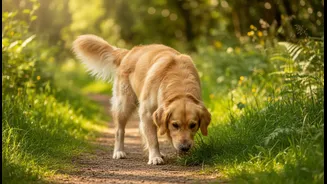
Beyond mental exercise, sniffing has a direct impact on your dog’s emotional state. The act of sniffing can lower a dog's heart rate and helps release calming hormones like dopamine, which reduces stress and anxiety. It’s a form of self-soothing. For dogs that are anxious, fearful, or easily overstimulated, allowing them dedicated time to sniff on a walk can be incredibly therapeutic. This type of outing, sometimes called a 'decompression walk' or a 'sniffari', allows the dog to engage in natural behaviours, which builds confidence and promotes a sense of well-being.
How to Embrace the 'Sniffari'
So, how do you put this into practice? It's about changing your mindset. Not every walk has to be a race to cover distance. Try dedicating some walks specifically to sniffing. Use a longer leash (where safe and appropriate) to give your dog more freedom to explore. Let your dog lead the way and decide the pace. If they want to spend five minutes investigating one particular spot, let them. Be patient and present. Instead of seeing it as a delay, view it as a moment to slow down and connect with your dog as they experience the world in their own unique way. You might even start to notice more about your surroundings, too.
Finding the Right Balance for You Both
This doesn’t mean every walk has to be a slow, meandering sniff-fest. There is still a place for brisk, structured walks focused on physical exercise. The key is balance. You can have different types of walks: a quick potty break, a longer exercise-focused walk, and a relaxed 'sniffari'. It’s also important to teach good leash manners for safety, especially in crowded urban environments. But by intentionally incorporating sniff-focused walks into your routine, you acknowledge a fundamental need of your dog. It shows them that you understand their world and are providing for their mental and emotional health, not just their physical fitness.