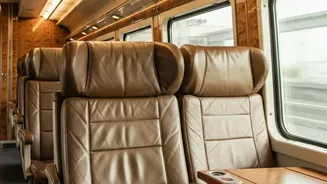





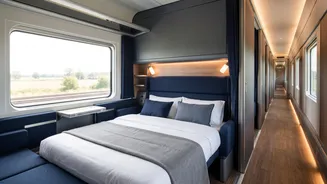
Anyone who has travelled overnight on an Indian train is familiar with the challenges of the AC three-tier coach. Now, Indian Railways' Vande Bharat Sleeper is here, and its design directly tackles one of the most persistent passenger complaints.
The All-Too-Familiar Complaint
For decades,
overnight train travel in India's popular AC 3-tier coaches has come with a shared set of grievances. Passengers frequently complain about the cramped conditions, but one issue stands out: the berths located near the coach doors and toilets. These spots are zones of constant traffic. People board and de-board, vendors pass through, and the main doors open and close, flooding the area with noise and light. For those unlucky enough to be assigned these berths, a restful night's sleep is often an elusive dream. The constant disturbance from movement and noise has been a source of frustration for countless travellers, turning what should be a comfortable journey into a test of patience.
A Thoughtful Design Intervention
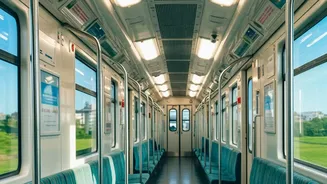
The new Vande Bharat Sleeper trainsets have been engineered with this specific problem in mind. A recent viral video by a travel content creator highlighted a subtle but significant design change that promises to enhance passenger comfort. In the new sleeper coaches, the main entrance features a sliding door, but crucially, it is positioned with a clear gap separating it from the first set of berths. This design creates a buffer zone, effectively distancing sleeping passengers from the high-traffic area around the main door. The berths are no longer immediately adjacent to the entrance, which should dramatically reduce the level of disturbance from people entering, exiting, or moving through the coach during the night.
More Than Just Door Placement
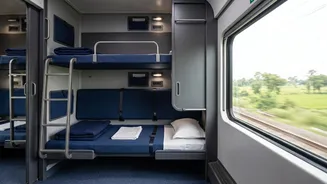
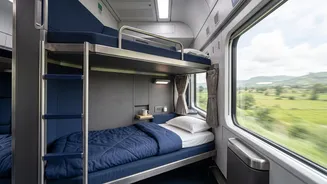
While the repositioned door is a key improvement, designers have also re-evaluated other aspects of the 3-tier experience. Another long-standing issue has been the agility required to climb into the middle and upper berths. Early design mock-ups and statements from officials indicate a focus on making this easier. The Vande Bharat Sleeper includes redesigned ladders with improved foot area to make climbing to the upper berths less of an athletic feat. There is also a focus on creating more headroom, tackling the claustrophobic feeling many associate with the middle berth. These passenger-centric modifications show an attention to detail that goes beyond just speed and aesthetics.
A New Era of Overnight Travel
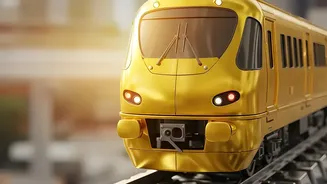
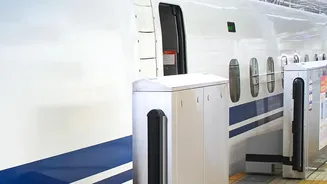
The Vande Bharat Sleeper is more than just a few tweaks; it represents a comprehensive upgrade. Manufactured by BEML, these trainsets are designed to be self-propelled, allowing for faster acceleration and deceleration, and can operate at speeds up to 160 kmph. A standard 16-coach train can carry 823 passengers across AC First, 2nd Tier, and 3rd Tier classes. The interiors feature ergonomically designed, betterer cushioned berths, sensor based lighting, modern bio vacuum toilets with odour control, and individual charging points. Safety is also enhanced with the KAVACH anti collision system, CCTV cameras, and advanced fire detection systems. The first AC coaches even feature a hot shower facility.
When and Where Can You Board?
The rollout of these new sleeper trains is already underway. Following a successful debut on the Howrah–Kamakhya route, several new services have been launched. An overnight service between Varanasi and New Delhi was inaugurated on October 31, 2026. Another highly anticipated service between Bengaluru and Mumbai was launched on November 1, 2026, significantly cutting down travel time between the two metros. These trains will consist of 11 AC three–tier coaches, four AC two–tier, and one AC first–class coach. While the fares are higher than conventional trains on the same routes, the promise of a faster, quieter, and more comfortable journey appears to be a major draw for passengers.