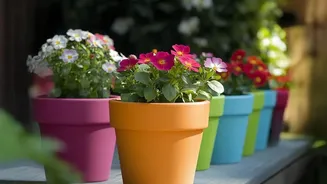








As cooler, shorter days arrive, your balcony garden's needs change. Winter care isn't complicated, but the routine that worked in summer can harm plants now. Here are practical tweaks to help your potted plants survive and even thrive this winter.
Rethink Your Watering Routine
The
most common mistake in winter is overwatering. With lower temperatures and reduced sunlight, soil stays moist for longer. Continuing a summer watering schedule can lead to waterlogged soil, depriving roots of oxygen and causing root rot. The best approach is to check the soil before you water. Push your finger an inch or two into the topsoil; if it feels dry, it's time to water. If it's still moist, wait another day or two. When you do water, do so in the morning. This gives the plant's foliage and the soil surface time to dry before the colder night sets in, further reducing the risk of fungal diseases. Make sure every pot has clear drainage holes and empty any saucers that collect excess water.
Chase the Winter Sun
The winter sun hangs lower in the sky, changing the light patterns on your balcony. A spot that was a shady refuge in May might be the only sunny corner in December, while a formerly sun-drenched spot may now get very little direct light. Take some time to observe where the sunlight falls throughout the day and reposition your plants accordingly. Most flowering and fruiting plants will need as much direct sunlight as they can get. Rotating your pots every week will also encourage even growth and prevent plants from leaning towards the light source. For indoor plants, a gentle wipe of their leaves to remove dust can make a big difference in how much light they absorb.
Provide Shelter from the Chill
While winters are mild in many parts of India, North Indian cities can experience frost, and coastal areas face chilly winds. Potted plants are more vulnerable than those in the ground because their roots are exposed to the cold air from all sides. A few simple actions can offer significant protection. Grouping pots together creates a warmer microclimate and shields plants in the centre. Moving plants against a wall, especially one that receives daytime sun, allows them to benefit from the radiated heat at night. For particularly cold nights or in frost-prone regions, you can cover sensitive plants with a breathable cloth like burlap or an old bedsheet, removing it in the morning to let the plants breathe.
Adjust Feeding and Fertilising
Most plants enter a dormant or slow-growth phase in winter and don't require much, if any, fertiliser. Feeding them with high-nitrogen chemical fertilisers can force delicate new growth that is susceptible to cold damage. For most of your ornamental foliage plants, it's best to pause feeding until spring. The exceptions are plants that actively grow and bloom in winter, like petunias, pansies, and chrysanthemums. These will benefit from light, periodic feeding with an organic option like vermicompost or a mild liquid fertiliser to support their flowering. A layer of organic mulch, such as dried leaves or coconut husk, can also help insulate the soil and keep roots warm.
Welcome Winter_Flowering Champions
Winter doesn't have to mean a colourless balcony. It's the peak season for many stunning annual flowers that thrive in cooler weather. Introducing a few of these can bring vibrancy to your space. Petunias are a classic choice for hanging baskets, available in a huge range of colours. Marigolds (Genda) are incredibly resilient and a traditional favourite, blooming profusely through the season. Other great options for Indian balconies include Chrysanthemums (Guldaudi), Calendula, Pansies, and Dianthus. These plants are well_suited to pots and will reward you with continuous blooms with the right care and sunlight.