







Our Disappearing Frozen Archives
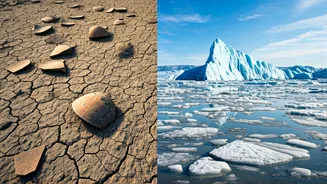
Across the globe, from the Norwegian mountains to the Mongolian highlands, a new field called 'ice patch archaeology' is in a race against time. Unlike glaciers, which grind and destroy, stationary ice patches have acted as perfect time capsules, preserving
organic artefacts for millennia. As global temperatures rise, these patches are melting at an unprecedented rate, revealing a treasure trove of history. Perfectly preserved arrows, leather shoes, clothing, and tools — some dating back thousands of years — are emerging from their frozen slumber. But this revelation is fleeting. Once exposed to oxygen and the elements, these delicate organic materials can disintegrate within years, if not months. What we are witnessing is both a miracle of discovery and the agony of irreversible loss, as a frozen archive of human history vanishes before it can be fully read.
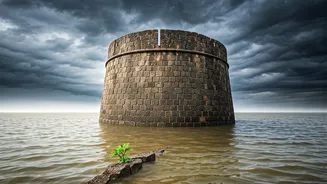
When History Goes Under the Waves
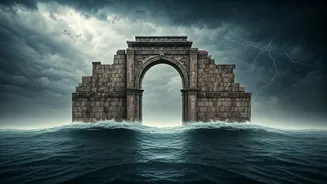
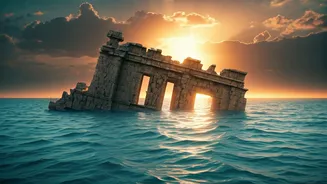
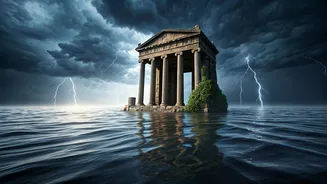
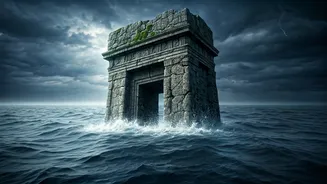
It is not just ice that is rewriting the map of our past; it is also water. Rising sea levels and increased storm surges are accelerating coastal erosion, posing a direct threat to countless heritage sites. In India, the risks are stark. Ancient structures like the Shore Temple at Mahabalipuram, forts in Goa, and the Jagannath Temple in Puri are situated perilously close to the coast, vulnerable to flooding and structural damage. The Elephanta Caves off Mumbai face the long-term threat of a rising sea. This is a global crisis, impacting sites from Scottish prehistoric settlements to ancient Libyan harbours. This erosion doesn't just damage stone; it washes away the context, the layers of soil and deposits that tell the full story of a place, turning invaluable historical records into a scattered mess along the shoreline.
A Deluge of a Different Kind
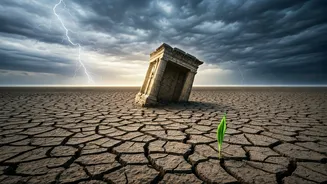
The impacts of climate change are not limited to the coasts. More frequent and intense rainfall events are wreaking havoc on inland sites. In recent years, heavy rains have been blamed for damage at the Taj Mahal and the collapse of a wall at Jaisalmer's Sonar Fort, a structure built for an arid climate now struggling with modern plumbing and unusual weather. In the Himalayas, monasteries like the 1,000-year-old Tabo Monastery in Spiti face new threats from erratic rainfall and flash floods in a region historically defined by its cold, dry climate. Increased humidity and moisture accelerate the decay of ancient murals and carvings, from the Ajanta Caves to Khajuraho. The very stones that have stood for centuries are being weakened by a climate they were never built to withstand.
Finding Future Resilience in the Past
Paradoxically, the crisis also presents an opportunity. Viewing the archaeological record through a climate lens allows us to see not just what we are losing, but what we can learn. Archaeology is emerging as a critical tool for understanding human resilience. The archaeological record is a vast database of how societies adapted—or failed to adapt—to past climate shifts. By studying how ancient peoples dealt with drought, changing coastlines, or shifting agricultural zones, we can gain invaluable insights for our own future. This emerging field, the archaeology of climate change, seeks to identify the tipping points that forced societies to change, providing a long-term perspective that modern climate models often lack. It turns every threatened site into a potential lesson in survival.