





A New Travel Priority
In recent years, the profile of the Indian international traveller has evolved. The traditional multi-country, checklist-driven European tour is giving way to a more immersive, experience-focused approach. It is no longer just about seeing the Eiffel
Tower and the Colosseum; it is about participating in unique cultural events. This shift has propelled Oktoberfest, the world's largest folk festival, onto the bucket list of many Indians. Recent travel intelligence data confirms this, showing that India was the fastest-growing major market for travel to Munich for Oktoberfest 2026, with air bookings up nearly 60% compared to the previous year. This surge is driven by a generation of travellers who seek out vibrant, photogenic, and memorable experiences to share.
The Grand 'Euro-Fest' Itinerary
For most Indian travellers, a trip to Germany is not just for a 16-day festival. Instead, Oktoberfest has become the anchor for a much larger European holiday. The Schengen visa, a requirement for Indian passport holders, facilitates this, allowing travel across 29 countries on a single visa. Data shows a strong growth in longer stays of 14 nights or more among Indian visitors, suggesting that many are using Munich as a spectacular starting or midway point. A common itinerary involves flying into Munich for a few days at the festival, followed by train journeys to the Swiss Alps, the romantic canals of Venice, or the chic boulevards of Paris. This approach maximises the value of a long-haul flight and the significant visa process, turning a festival trip into a comprehensive European exploration.
Planning Your Bavarian Adventure
A spontaneous trip to Oktoberfest is nearly impossible, and seasoned Indian travellers know that planning is key. The process begins 6-8 months in advance. The first and most crucial step is booking accommodation, as hotels in Munich can triple their prices during the festival period. Many opt to book hotels near a U-Bahn (metro) station for easier access. The next hurdle is the Schengen visa application, which requires a detailed itinerary, flight reservations, and proof of funds. While entry to the Oktoberfest grounds and even the tents is free, securing a table reservation is highly recommended for evening or weekend visits, a process that often needs to be done months ahead directly with the tent operators. Without a reservation, the best strategy is to arrive on a weekday morning.
Budgeting for the Experience
While entry is free, the Oktoberfest experience itself comes at a cost. A one-litre stein of beer, known as a Mass, was priced around €15 in recent years, with 2026 prices expected to be slightly higher. Add to that the cost of food like roast chicken or pretzels, and a day at the festival can add up. A comfortable budget for a 5-day trip from India, including flights, a mid-range hotel, visa fees, and daily expenses, can range from ₹1.2 lakh on a tight budget to over ₹2.2 lakh for more comfort. The biggest variable is accommodation, which is why booking early is the single most effective way to manage costs. Flights from major Indian cities like Delhi and Mumbai can range from ₹45,000 to over ₹70,000 for a round trip, depending on how early they are booked.
More Than Just Beer
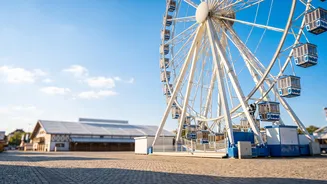
One of the pleasant surprises for many Indian visitors is that Oktoberfest is a family-friendly funfair, not just a beer festival. The grounds are filled with carnival rides, parades, and live music. For vegetarians, the options have improved significantly. Beyond giant pretzels, many tents offer delicious Käsespätzle (cheese noodles), potato salads, and other vegetarian dishes, which are now clearly marked on menus. This cultural immersion, combined with the sheer energy and camaraderie of the event, transcends language barriers. The festival's appeal lies in its celebration of tradition, community, and joy—a universal language that resonates with visitors from all over the world, including the growing number of adventurers from India.