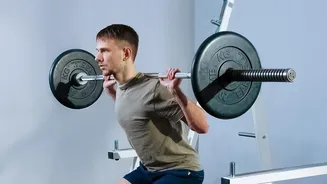




The Rise of the 'Exercise Snack'
For many, the biggest obstacle to consistent exercise isn't motivation, but time. This reality has fueled the rise of concepts like “exercise snacking” and “micro-workouts”—short bursts of intentional physical activity spread throughout the day. Instead
of a single 45-minute session, this might look like a 10-minute bout of bodyweight exercises in the morning and another in the afternoon. The old wisdom suggested that workouts under 30 minutes were ineffective, but modern research is proving that notion outdated. Studies now show that breaking up activity into smaller chunks can be just as effective for many health markers as one continuous session.
Intensity Over Duration
The key to making short workouts effective is intensity. When it comes to stimulating muscle, the duration of the workout often matters less than the effort you put in. Research shows that performing even a single set of an exercise can trigger muscle growth, provided that set is taken close to the point of muscular failure. This high-intensity effort sends a powerful signal to the body to repair and rebuild the muscle fibers stronger than before. A 15 or 20-minute session, if performed with sufficient intensity, can stimulate muscle protein synthesis, the process behind muscle growth, and lead to significant gains in strength.
The Minimum Effective Dose
In medicine, the “minimum effective dose” is the smallest amount of a substance needed to produce a desired effect. Exercise scientists have adopted this concept to determine the least amount of training required for measurable gains in strength and muscle. Research suggests this dose can be surprisingly small. For many people, just two to three short sessions per week, with as few as one or two hard sets per exercise, can be enough to increase strength. Some studies indicate that as little as 30 to 60 minutes of total strength training per week can lead to a 10-20% lower risk of premature death. This approach makes fitness far more accessible, reframing it as something that can be efficiently woven into a busy life.
More Than Just Muscle
The benefits of brief, intense strength work extend far beyond aesthetics. Muscle tissue is metabolically active, playing a crucial role in how your body manages blood sugar. Short, vigorous workouts have been shown to improve insulin sensitivity, which helps the body use glucose more efficiently and can reduce the risk of developing type 2 diabetes. Furthermore, studies have linked short bursts of vigorous activity to a lower risk of heart disease and even certain cancers. These routines also enhance functional strength, making everyday activities like carrying groceries or climbing stairs easier and helping to maintain independence with age.
Setting Realistic Expectations
While short workouts are incredibly powerful, they are not a magic bullet for all fitness goals. For individuals aiming for maximum muscle hypertrophy (growth) or elite levels of strength, higher-volume training programs are generally more effective. Research shows that for optimal muscle gain, a higher number of weekly sets—often between 10 to 20 per muscle group—is recommended, which can be difficult to achieve exclusively through micro-workouts. Short routines are a potent tool for improving general health, building a solid base of strength, and maintaining fitness. They are an excellent, scientifically-backed solution for the time-poor, but they may not be the optimal path for a competitive bodybuilder.
How to Make It Work for You
To get the most out of a short strength routine, focus on efficiency. Prioritize compound exercises that work multiple muscle groups at once, such as squats, push-ups, rows, and lunges. This gives you the biggest return on your time investment. The goal is to challenge your muscles, so choose a resistance level (whether using weights, bands, or your own bodyweight) that makes the last few repetitions of a set feel very difficult. Aim for consistency over perfection. A 10-minute workout that you do three times a week is far more beneficial than a one-hour workout you only manage to do once a month.