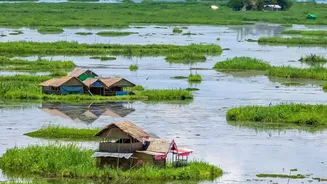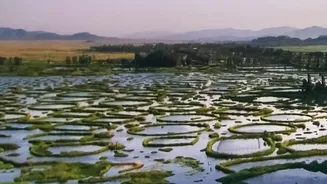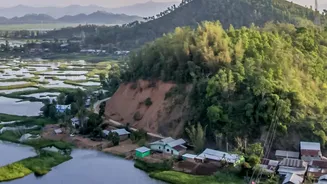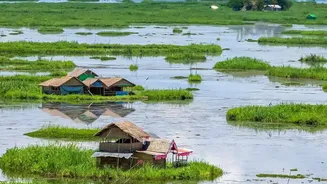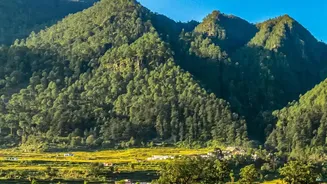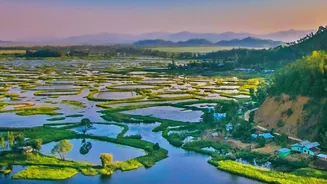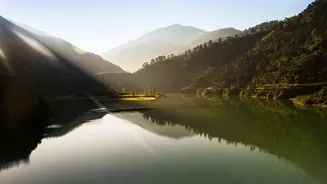




In the heart of Manipur lies a wonder of the natural world that defies convention. It’s a national park that isn't built on solid ground but instead floats atop the vast Loktak Lake, creating a landscape that is constantly, subtly, in motion.
The Secret of the Floating Islands
The foundation
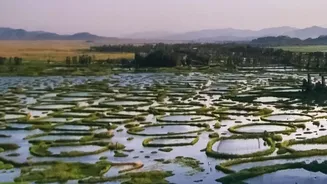
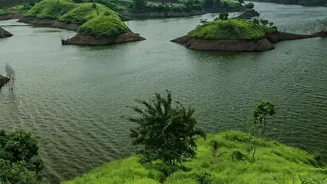
of Keibul Lamjao National Park is a unique natural phenomenon known as 'phumdi'. These are not islands in the traditional sense but rather thick, buoyant mats of vegetation, soil, and organic matter in various stages of decomposition. These floating masses, some several feet thick, have consolidated over centuries, creating a solid enough surface to support a rich grassland ecosystem. The park, an integral part of Loktak Lake, is a 40-square-kilometre expanse formed by the largest single phumdi. This ecosystem follows a fascinating natural cycle: during the dry season, the phumdis sink to touch the lakebed, absorbing nutrients. When the monsoon arrives and water levels rise, they float back to the surface, rejuvenated. This process creates a springy, living landscape that is the only one of its kind in the world.
Home of the 'Dancing Deer'
This floating sanctuary is the last natural habitat of one of the world's most endangered and graceful creatures: the Sangai deer (Rucervus eldii eldii). This brow-antlered deer is Manipur's state animal and is often called the 'dancing deer'. The name comes from its delicate, high-stepping gait as it navigates the soft, yielding phumdis, creating an illusion of it dancing across the meadows. The Sangai's survival is completely intertwined with the health of this floating park; its hooves are specially adapted to the spongy ground. Once thought to be extinct in 1951, the species was rediscovered here a few years later, making the park a critical site for its conservation. The entire wild population of this unique subspecies lives within this small, isolated park.
A Lifeline for People and Nature
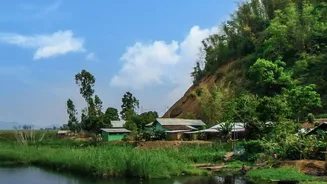
Keibul Lamjao and Loktak Lake are more than just a wildlife habitat; they are the cultural and economic lifeline for many communities in Manipur. Loktak is the largest freshwater lake in Northeast India and a designated Ramsar site of international importance. For generations, local fishermen have lived on the lake, even building huts on the phumdis and using them for fishing and foraging. The lake provides water for irrigation and hydropower, while the park itself is home to hundreds of other species, including hog deer, wild boar, various reptiles, and a rich diversity of resident and migratory birds. This delicate balance shows a unique coexistence between humans and nature, centered around the floating ecosystem.
An Ecosystem Under Pressure
Despite its unique status, the future of Keibul Lamjao is under serious threat. The construction of the Ithai Barrage in 1983 for a hydroelectric project has had the most profound impact. The barrage maintains a constantly high water level in the lake throughout the year, disrupting the natural wet-and-dry cycle of the phumdis. This prevents them from sinking to the lakebed to absorb essential nutrients, causing them to thin, break apart, and lose their buoyancy. A thinner phumdi cannot support the weight of the Sangai deer, shrinking their habitat and threatening their survival. Additional pressures include pollution from agricultural runoff and untreated sewage from nearby towns, which degrade the water quality and further weaken the fragile ecosystem.