





What Exactly Are Climate Models?
Think of climate models as incredibly complex simulators for the Earth. They aren't crystal balls that predict the future with 100% certainty. Instead, they are sophisticated computer programs that use the laws of physics and chemistry to represent how
the atmosphere, oceans, land, and ice interact. Scientists input data on factors like greenhouse gas levels, solar radiation, and land use. The model then simulates how these factors will influence climate patterns—like temperature and rainfall—and, by extension, how vegetation will respond. For India, researchers use these models to forecast potential changes in everything from Himalayan forests to cropland in the Indo-Gangetic Plain.
The Carbon Question: A Plant's Best Friend?
One of the most talked-about effects of rising CO2 is 'carbon fertilization'. Plants use carbon dioxide for photosynthesis, the process of turning light into energy. More CO2 in the air can, in theory, boost this process, making plants grow faster and more vigorously. Some studies show that this effect is already contributing to a 'greening' trend, where satellite data reveals an increase in leaf area across parts of India. A recent study led by the Indian Institute of Tropical Meteorology (IITM) projects that this greening could continue, with plant productivity potentially doubling by 2100 under a high-emission scenario.
It's Not Just About Carbon
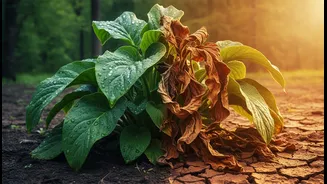
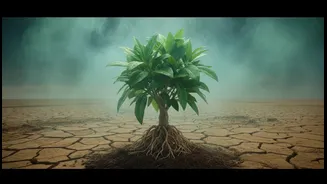
While carbon fertilization sounds like great news, it's only one part of a much bigger, more complicated picture. Plant growth isn't just limited by CO2; it also depends heavily on water, nutrients, and temperature. Even if there's plenty of CO2, a plant can't grow without sufficient water or if it's suffering from extreme heat stress. Researchers caution that while India may get greener in terms of overall leaf area, this doesn't automatically mean our ecosystems are healthier. Rising temperatures can still harm biodiversity and put stress on forests. A plant that is 'well-fed' with carbon can still suffer from thirst or heatstroke.
The Forecast for India: Greener, but Weaker?
So what do the models predict for India specifically? The picture is nuanced. Studies project the strongest greening gains in regions that are already quite lush, like the Western Ghats, Northeast India, and the Indo-Gangetic plains, partly driven by projections of increased rainfall in those areas. However, other studies raise a serious concern. Research from IIT Kharagpur suggests that while forests may appear greener, their actual health and ability to effectively convert carbon into biomass—their photosynthetic efficiency—has been declining. This means forests could become 'weaker' even as they look 'greener'. The reason? Increased stress from higher temperatures, changing moisture levels, and even more wildfires.
The Human Factor: Croplands vs. Forests
It’s also crucial to understand what kind of greening is happening. A significant portion of India's greening trend is not from expanding pristine forests, but from agriculture. This greening is often supported by intensive irrigation that draws heavily on groundwater. While it contributes to vegetation cover, it raises serious questions about long-term water security, especially in breadbasket regions. In contrast, greening from forest restoration tends to provide wider ecosystem benefits like improved biodiversity and more stable water cycles. Therefore, policy choices, land management, and conservation efforts play a massive role in shaping what our future landscape truly looks like.