



Sailing on a River of Light
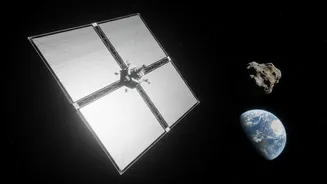
The basic principle of a solar sail is surprisingly simple. Sunlight is made of tiny particles of energy called photons. While they have no mass, photons have momentum. When billions of these photons bounce off a large, reflective sail, they transfer
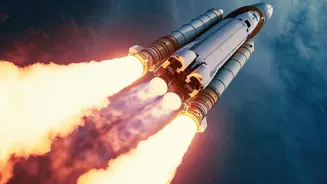
their momentum, giving the spacecraft a gentle but continuous push. Unlike chemical rockets that provide a powerful but short-lived burst of thrust, solar sails accelerate slowly but constantly. Over months and years, this constant push allows them to reach immense speeds without carrying any heavy fuel, making them ideal for long-distance missions.
The Old Speed Limit
For decades, the potential of solar sails has been hampered by significant challenges. The force from sunlight is incredibly faint, so sails must be enormous—often the size of a small apartment or larger—yet also incredibly light. This creates a major engineering problem: how to build, package, and deploy these massive, fragile structures in space without them tearing or tangling. Furthermore, traditional sail materials were a compromise. They needed to be highly reflective to capture momentum, but any absorbed energy would heat the sail, potentially causing damage and even creating a small, counter-productive force. This limited both acceleration and how close a probe could get to the Sun to catch more light.
A Breakthrough in Materials and Design
The latest breakthrough addresses these core limitations through advancements in composite materials and deployable boom technology. New composite booms, the 'masts' that hold the sail open, are much lighter, stiffer, and more resilient to temperature changes than previous designs. This allows for the reliable deployment of even larger sails. The sail materials themselves have also been improved. Recent developments focus on ultra-lightweight metamaterials that are not only more reflective but are also better at radiating away absorbed heat. Some designs even incorporate diffractive or solar photon thruster concepts, which aim to more efficiently manage the direction of force from incoming light, allowing for better steering and acceleration.
How the New Sails Work Faster
The new generation of solar sails, like those tested in NASA's Advanced Composite Solar Sail System (ACS3) mission, combines these innovations. Because the composite booms are stronger and lighter, they can support a larger sail area relative to the spacecraft's total mass. This increases the 'push' received from sunlight. The improved materials mean the sails can operate more efficiently and withstand more intense sunlight. This enables a key strategy for high-speed travel: a 'sun-diver' maneuver. A probe can now angle its sail to fall inward toward the Sun, where the sunlight pressure is exponentially stronger, and then use that intense light to perform a slingshot maneuver, accelerating it out toward the solar system at incredible speeds.
Reaching Asteroids in Record Time
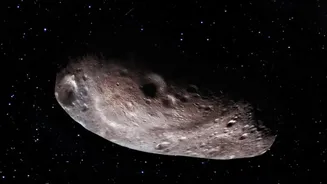
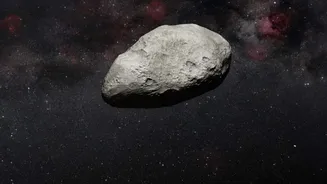
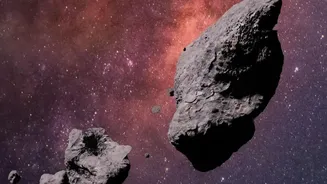
For asteroid missions, speed is everything. The asteroid belt is vast, and its targets are constantly moving. A faster spacecraft can intercept more interesting objects, respond to new discoveries, or carry out sample-return missions in a fraction of the time. The slow, gradual acceleration of older sails was a poor fit for these time-sensitive missions. With the new technology, a probe can get a massive speed boost from a solar slingshot, cutting the years-long journey to the asteroid belt down significantly. This makes missions to survey near-Earth asteroids for planetary defense or scout asteroids for potential resource mining far more practical and affordable.