



The Unforgiving Lunar Night
Unlike Earth, with its thick, insulating atmosphere, the Moon has virtually no air to trap heat. When the Sun sets for 14 Earth days, any warmth absorbed during the day radiates away into space almost instantly. This plunges the environment into a deep
freeze, with temperatures cold enough to cripple sensitive electronics, drain batteries, and seize mechanical parts. Early lunar missions were essentially day trips, designed to operate only in the relative comfort of lunar morning. To establish a long-term presence, whether with robots or humans, engineers had to solve one of the biggest challenges in space exploration: surviving the night.
Why Solar and Batteries Fall Short
The most obvious power source in space is the Sun. During the lunar day, solar panels can generate plenty of electricity. The problem is storing enough of that energy to last through 350 hours of continuous, sunless cold. The batteries required would be enormous and heavy. According to one estimate, for every single watt of power needed to run heaters through the night, a spacecraft would need to carry an additional five kilograms of batteries. A small rover could require hundreds of kilograms of batteries just to keep its systems from freezing, making the mission prohibitively expensive and difficult to land. This mass penalty makes long-duration, solar-powered night survival nearly impossible for most missions.
A Nuclear-Powered Hand Warmer
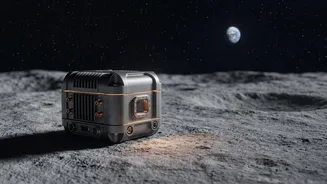
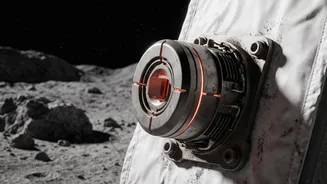
The solution comes in a small, simple, and incredibly reliable package: the Radioisotope Heater Unit, or RHU. Think of it as a tiny, nuclear-powered hand warmer for spacecraft. These units are not generators; they don't produce electricity. Their only job is to produce heat. Each RHU contains a small pellet of a radioactive material, typically plutonium-238 or americium-241, about the size of a pencil eraser. As the material naturally decays, it releases a steady, predictable amount of heat—usually about one watt per unit—continuously for decades. By strategically placing these units near critical components like computers and batteries, engineers can keep the hardware within its operational temperature range without using any electrical power.
Proven in the Harshest Environments
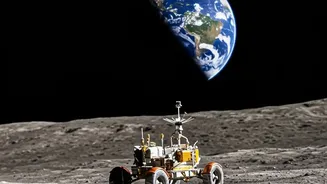
RHUs are not a new or experimental technology. They have been a cornerstone of deep space exploration for decades. The Apollo 11 astronauts left a science package on the surface in 1969 that used RHUs to survive. NASA's Mars rovers, including Spirit, Opportunity, and the primarily solar-powered Sojourner, all relied on RHUs to keep their electronics from freezing during the cold Martian nights. More recently, China's Chang'e-4 mission, which made the first-ever soft landing on the far side of the Moon in 2019, successfully used RHUs to help its lander and rover, Yutu-2, survive the punishing lunar nights and continue operating. This was a landmark achievement, demonstrating the technology's effectiveness for long-term lunar surface missions.
The Future of Lunar Exploration
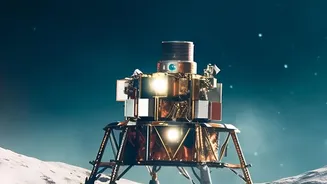
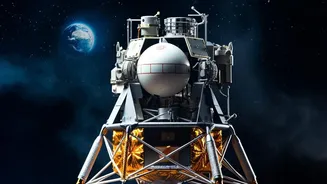
As NASA and its commercial partners, like Firefly Aerospace, push forward with the Artemis program, the ability to operate through the lunar night is critical. Upcoming missions are already planned to demonstrate next-generation heater units. One such mission, scheduled for 2028, will test an RHU powered by americium-241 on a Blue Ghost lander. The goal is to prove these systems can enable payloads to continue operating and sending data back to Earth throughout the entire two-week darkness. These technologies are seen as essential for enabling a continuous human and robotic presence on the Moon, supporting everything from resource mapping to the eventual construction of a lunar base. Surviving the night is the first step toward staying for good.