






A Key Regulatory Green Light
In a significant move for India's aviation sector, the Directorate General of Civil Aviation (DGCA) has recently granted a Design Organisation Approval (DOA) to an Indian eVTOL developer. In early August 2026, Bengaluru-based startup Sarla Aviation received
this crucial certification. A DOA is the regulator's official validation that a company possesses the required expertise, procedures, and design capabilities to develop aircraft that can meet stringent safety standards. It is the foundational step before a company can proceed towards the more intensive 'Type Certification' process for a specific aircraft model. This approval is not just a procedural milestone; it's a vote of confidence in India's domestic capability to design and build next-generation aircraft, aligning the country's aerospace ecosystem with global standards set by bodies like the FAA in the US and EASA in Europe.
Decoding the eVTOL Revolution
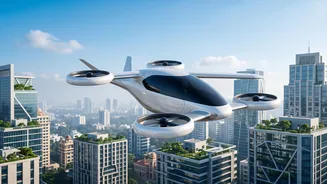
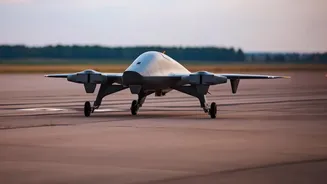
So, what exactly is an eVTOL? The acronym stands for electric Vertical Take-Off and Landing. Think of it as a hybrid between a helicopter and a drone. Like a helicopter, it can ascend and descend vertically, eliminating the need for long runways and making it perfect for dense urban environments. However, unlike traditional helicopters which are loud and run on fossil fuels, eVTOLs are powered by electricity, making them significantly quieter and more sustainable. These aircraft are being designed to carry a handful of passengers, typically between two and six, plus a pilot. The goal is to offer rapid, on-demand flights over short distances, transforming a 90-minute car journey through a congested city like Bengaluru or Mumbai into a flight of less than 10 minutes.
India's Players in the Sky Race
While the recent approval has put the spotlight on Sarla Aviation, they are part of a growing ecosystem of players betting on India's air taxi market. Another prominent domestic player is The ePlane Company, an IIT-Madras incubated startup that has also completed the assembly of its full-scale e200X prototype. Beyond homegrown startups, major corporate players are also making strategic moves. InterGlobe Enterprises, the parent company of IndiGo, has partnered with US-based Archer Aviation to launch an air taxi service in India, with plans to purchase up to 200 of Archer's 'Midnight' aircraft. This partnership aims to start services in Delhi, Mumbai, and Bengaluru as early as 2026, pending regulatory clearances.
The Long Road to Commercial Flights
Despite the excitement, a commercial air taxi ride is not just around the corner. The Design Organisation Approval is just the first of many regulatory hurdles. The next major challenge is Type Certification, where the DGCA will rigorously test a specific aircraft model to ensure its airworthiness. Beyond certifying the aircraft, a whole new ecosystem needs to be built. This includes constructing 'vertiports'—mini-airports for eVTOLs to land and take off—and establishing dedicated air corridors. Furthermore, new regulations are needed for pilot training, air traffic management to integrate these new vehicles into crowded airspace, and operator permits. The government has signalled its intent to have a framework ready, with the Civil Aviation Minister noting that India's regulations are developing rapidly, but the physical and operational infrastructure will take time and significant investment to build.
What This Means for Urban India
The push for eVTOLs is a direct response to the crippling traffic congestion that plagues India's major metropolitan areas. For a city like Bengaluru, where travel times are notoriously unpredictable, air taxis promise a revolutionary alternative. Initially, the service will likely cater to a premium segment, with projected costs for a 7-minute flight from Delhi's Connaught Place to Gurugram estimated to be between ₹2,000 and ₹3,000. However, the long-term vision extends beyond passenger transport. These electric aircraft could be deployed for a variety of uses, including emergency medical services, organ transport, and logistics, offering a high-speed solution where every minute counts. The development also aligns with national goals like 'Atmanirbhar Bharat' by fostering indigenous design and manufacturing in a high-tech sector.