








Understanding Originality in the AI Age
University honor codes are stricter than ever, and the definition of 'original work' has become a critical point of discussion. Traditionally, originality metrics in academia revolved around concepts like citation counts, the h-index, and avoiding clear-cut
plagiarism. These metrics helped gauge a paper's contribution and influence. Now, the conversation has expanded to include AI-generated content. Many institutions have specific policies on whether students can use AI writing tools, and if so, how they must be disclosed. The challenge for students is ensuring their work is authentically theirs, properly attributes all sources, and doesn't accidentally trigger flags from sophisticated detection software used by universities.
Why 'Local' and 'Open-Source' Matters
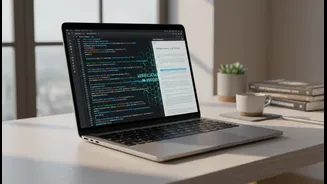
When you use a typical online plagiarism checker or AI tool, your document is uploaded to a cloud server. This can create privacy concerns and, in some cases, may even add your paper to a database used for future checks. Local, open-source software changes this dynamic completely. 'Open-source' means the software's code is publicly available, transparent, and usually free to use. 'Local' means the AI model and software run entirely on your own computer. The benefits are significant: your work never leaves your machine, you have complete privacy, there are no subscription fees, and you can run checks as often as you need without limits. It puts you in control of your own academic integrity process.
Finding and Setting Up Your Toolkit
The world of open-source AI is vast and accessible. Platforms like GitHub are treasure troves of projects, including text analysis tools and small language models that can be run locally. Communities on sites like Kaggle also offer datasets and code 'notebooks' for learning. Tools like Ollama or LocalAI are designed to help users run large language models on their personal computers. While some technical comfort is helpful, many of these projects come with straightforward instructions. The goal is to find tools that can perform natural language processing (NLP) tasks like text comparison, semantic analysis, and pattern recognition. This allows you to build a personal validation system that works for you, without relying on external services.
A Step-by-Step Validation Process
Once you have a local AI tool set up, you can integrate it into your writing workflow. First, write your draft as you normally would, focusing on your ideas and research. Before you begin final edits, run your text through your local validation software. The software will compare passages against each other and analyze stylistic patterns, like sentence length and structure, to identify inconsistencies. It can flag sections that are too similar to your source material, helping you catch accidental paraphrasing that is too close to the original. It can also identify text that has characteristics often associated with AI generation, giving you a chance to review and rewrite those sections to ensure your own voice is clear and dominant. Think of it as a pre-submission check-up to catch issues before your professor ever sees them.
Beyond a Plagiarism Check
Using local AI for validation isn't just a defensive move against plagiarism accusations. It's a proactive tool for becoming a better writer. By analyzing your text, these tools can highlight areas where you might be over-relying on a single source or where your phrasing has become repetitive. They can help you see your own writing from a different, analytical perspective. This process encourages you to refine your arguments, strengthen your unique voice, and ensure that every part of your paper reflects your own understanding and intellectual contribution. The goal isn't just to prove you didn't cheat, but to produce the most original, well-supported research possible.