





Choose Fabrics Wisely
The single most important decision you'll make is your choice of fabric. During the monsoon, humidity ensures that nothing dries quickly, especially heavy materials like cotton and denim. These fabrics act like sponges, soaking up moisture and taking
days to dry, leaving you with a bag of damp, musty clothes. Instead, build your travel wardrobe around lightweight, synthetic fabrics. Materials like polyester, nylon, and rayon are your best friends. They are inherently water-resistant, don't hold moisture, and dry in a fraction of the time. A few tops and trousers made from these quick-dry materials mean you can easily wash items in a hotel sink and have them ready to wear by the next morning.
Master the Art of Rolling
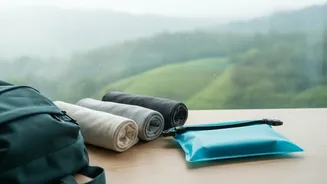
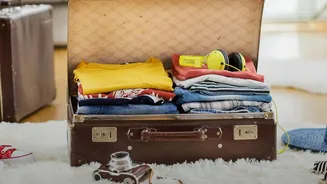
Folding clothes creates hard edges and traps air, wasting precious space. The solution is to roll every item tightly. This technique compresses clothing into small, dense cylinders that can be packed together without any wasted gaps. A rolled-up pair of trousers or a t-shirt takes up significantly less volume than a folded one. This method also has the added benefit of reducing deep wrinkles. For a week-long trip, you can fit several rolled tops and bottoms into a space that would otherwise hold only a few folded garments. It's a simple switch in technique that makes a massive difference, allowing you to fit a surprising number of outfits into your bag.
Tame Your Rain Gear
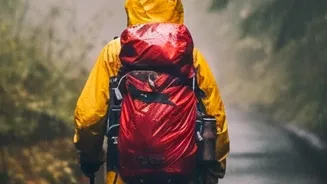
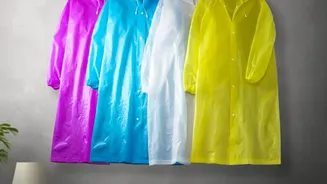
A raincoat and umbrella are non-negotiable, but they are also bulky. Opt for a lightweight, packable rain jacket instead of a heavy one. Modern shell jackets can be folded or rolled into their own hood or a small stuff sack, compressing down to the size of a water bottle. When it comes to an umbrella, choose a compact, wind-resistant model that can slide into a side pocket. To save even more space, wear your rain jacket on the plane, as it's often the bulkiest item you'll carry. A waterproof backpack cover is another lightweight essential that provides an extra layer of protection for your entire bag during sudden downpours.
Embrace Packing Cubes
Packing cubes are revolutionary for organisation and compression. These small, zippered bags allow you to compartmentalise your clothing, making it easy to find what you need without unpacking your entire suitcase. More importantly, they help compress your rolled clothes even further. You can designate one cube for tops, one for bottoms, and another for underwear. Consider using a waterproof or water-resistant packing cube specifically for damp or dirty laundry to keep it sealed away from your clean, dry clothes—an absolute necessity during monsoon travel. This system not only saves space but also keeps your bag tidy and your belongings fresh.
Rethink Your Footwear
Shoes are notoriously difficult to pack. For a seven-day monsoon trip, you only need two pairs. The first should be a comfortable, waterproof pair with good grip suitable for walking on slippery surfaces. Wear this, your heaviest pair, on the flight. The second pair should be lightweight, open-toed footwear like flip-flops or waterproof sandals. These are perfect for casual wear and allow your feet to dry quickly. Stuff your packed shoes with socks or other small items to make use of the empty space. Avoid packing any shoes that can't handle getting wet, as they will likely be ruined or remain damp for the entire trip.
Create a Capsule Wardrobe
You don't need seven distinct outfits for a seven-day trip. The key is to pack a 'capsule wardrobe'—a small collection of items that can be easily mixed and matched. Stick to a simple, neutral colour palette for your main garments (trousers, jackets) and add colour with a few lightweight tops or scarves. For a week, a good rule of thumb is four interchangeable tops and two pairs of trousers. This combination alone can create eight different outfits, giving you more than enough variety without overpacking. Every item you pack should be able to be worn with at least two other items in your bag.
Protect Your Valuables
In the monsoon, water is the enemy of electronics and documents. Use individual waterproof pouches or high-quality zip-lock bags to shield your phone, passport, wallet, and chargers from moisture. Distributing a few silica gel packets throughout your luggage is another great hack; they absorb ambient humidity and help prevent that dreaded damp smell from developing in your bag and affecting your clothes. This small step provides an essential final layer of defence against the pervasive dampness of the rainy season, ensuring your most important items stay safe and dry.