





The Culprits in Your Glass
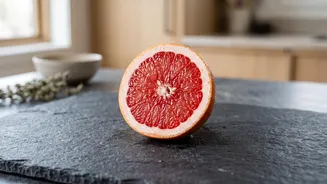
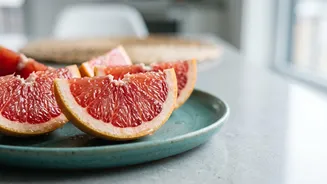
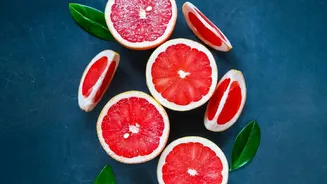
The issue isn't with all citrus fruits, but specifically with a class of chemical compounds called furanocoumarins. Grapefruit is the most well-known source of these compounds, but they are also found in other fruits like pomelos, Seville oranges (often
used in marmalades), and tangelos, which are a crossbreed of tangerines and grapefruit. These furanocoumarins are the agents responsible for interacting with your body's delicate system for processing medications. It's important to note that sweet oranges, such as Navel or Valencia varieties, do not contain these problematic compounds and are generally considered safe.
Your Liver's Processing System
Think of your liver and small intestine as a sophisticated processing plant for everything you consume. A crucial part of this plant is an enzyme called cytochrome P450 3A4, or CYP3A4 for short. This enzyme is responsible for breaking down, or metabolising, nearly half of all prescription drugs. Its job is to process a medication after you take it, ensuring the correct amount enters your bloodstream to do its work. Without this enzyme functioning properly, the carefully calculated dosage recommended by your doctor can become dangerously inaccurate.
How Citrus Causes a System Breakdown
When you consume grapefruit or other furanocoumarin-containing fruits, these compounds enter your small intestine and essentially shut down the CYP3A4 enzymes. They block the enzyme's ability to metabolise medication. As a result, instead of being partially broken down, much more of the drug passes from your intestine into your bloodstream. This can lead to blood levels of the medication becoming dangerously high — in some cases, it's equivalent to taking multiple doses at once. This effect is not brief; it can last for up to three days, so simply separating your juice and medication by a few hours won't prevent the interaction. In a less common interaction with certain drugs like the allergy medication fexofenadine, citrus juices can have the opposite effect, blocking transporters that help the drug get absorbed and making it less effective.
Which Medications Are Most Affected?
A wide range of common and critical medications can be affected. While it's vital to get a complete list from your doctor or pharmacist, some of the major categories include: certain statins for cholesterol like atorvastatin (Lipitor) and simvastatin (Zocor); many blood pressure medications like nifedipine (Procardia); anti-anxiety drugs like buspirone (BuSpar) and diazepam (Valium); blood thinners like apixaban (Eliquis) and rivaroxaban (Xarelto); and some organ transplant rejection drugs. The interaction can significantly increase the risk of side effects, which for statins could mean muscle and liver damage, and for blood pressure medications, a drop to dangerously low levels.
Staying Safe: What You Need to Do
Given the potential risks, awareness is your best defence. Always read the patient information leaflet that comes with your prescription, as it will often include a specific warning about grapefruit. The most important step is to have an open conversation with your doctor or pharmacist. Ask them directly if any of your medications—both prescription and over-the-counter—interact with grapefruit or other citrus fruits. They can tell you if you need to avoid these fruits entirely or if there is an alternative medication within the same class that is not affected by the interaction. Never stop or alter your medication dosage on your own if you think you've consumed something that might interact; always seek professional medical advice first.