








Why Cats Crave Height
Have you ever found your cat perched on top of a cupboard, the refrigerator, or the highest point of a bookshelf? This isn't just a quirky habit; it's pure instinct. In the wild, height means safety. From an elevated vantage point, a cat can survey its
surroundings for potential threats and spot prey (or in your home, spot you coming with the treat bag). Height gives them a sense of security and control over their domain. For indoor cats, especially those in multi-pet households or busy environments, having a high-up escape route is crucial for reducing stress and anxiety. These vertical spaces act as personal, untouchable zones where they can relax and observe the world on their own terms.
The Concept of a 'Cat Superhighway'
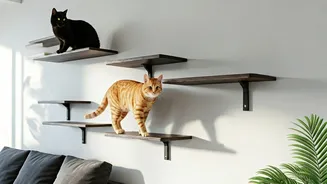
The idea of 'doubling' your cat's territory isn't about floor space; it's about creating interconnected pathways above the ground. Think of it as a 'cat superhighway.' Instead of being confined to the floor and a few pieces of furniture, your cat gets a whole new network of routes to travel. This network can be built using a combination of shelves, planks, and dedicated cat furniture. It allows them to navigate a room without ever touching the floor, which is incredibly stimulating for their minds. This vertical world engages their natural athleticism, encouraging them to jump, balance, and explore. For a bored indoor cat, this is the ultimate environmental enrichment, preventing behavioural issues that stem from a lack of stimulation.
Planning Your Vertical Route
Before you start drilling holes, take a moment to see your flat through your cat’s eyes. Where do they like to hang out? What windows offer the best view of birds outside? The goal is to connect these desirable spots. A great starting point is linking two tall pieces of furniture, like a bookshelf and a wardrobe, with a sturdy wooden plank. You can create a path leading up to a favourite sunny window. Look for unused wall space, especially in corners or above doorways. Staggered shelves are a classic and effective way to create a staircase up a wall. The key is to ensure the jumps between platforms are manageable for your cat’s age and agility. A young, athletic cat might handle a four-foot leap, but an older cat will need shorter, more accessible steps.
Safety and Materials First
Your cat's safety is the number one priority. All bridges and shelves must be incredibly secure. Use strong brackets and ensure they are anchored properly into the wall studs, not just the plaster. If you’re unsure, it’s worth consulting someone handy. When you think it’s secure, test it by applying significant downward pressure. The wood itself should be solid—avoid particleboard or MDF, which can bow or break over time. The surface of the bridges should be non-slip. You can achieve this by leaving the wood untreated (but sanded smooth to avoid splinters) or by wrapping it in a durable material like sisal rope or a tight-weave, low-pile carpet. Avoid anything with loops that could snag a cat's claws.
Simple Ideas to Get Started
You don't need to be a master carpenter to begin. Start simple. A single, wide shelf installed near a window can serve as a perfect sunbathing spot and lookout point. Another easy project is to buy a few basic wooden shelves and brackets from a hardware store. Paint or stain them to match your decor and install them in a staggered pattern on a blank wall. You can also connect the top of a tall cat tree to a nearby shelf, extending its reach. The idea is to build upon what you have. By adding one or two elements at a time, you can observe how your cat uses them and slowly expand their vertical world in a way that suits their preferences and your home's layout.