





Meet the eVTOL: A New Kind of Flight
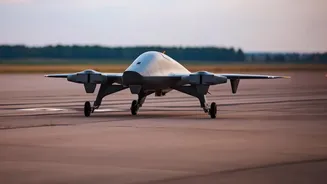
Imagine a vehicle that takes off and lands like a helicopter but flies like a small plane, all powered by electricity. That’s an electric Vertical Take-Off and Landing aircraft, or eVTOL. These are not the noisy, fuel-guzzling helicopters of the past.
Designed to be significantly quieter and with zero operational emissions, eVTOLs are being touted as a clean, fast, and efficient way to travel within congested cities. The typical design involves multiple small rotors, which not only provides a quieter flight but also adds layers of safety through redundancy. The goal is to create a new layer of urban transport in the sky, offering rapid, point-to-point travel that bypasses ground-level chaos entirely.
India's Bet on Urban Air Mobility
The Indian government and private sector are taking this concept seriously. InterGlobe Enterprises, the parent company of IndiGo, has partnered with US-based Archer Aviation to launch an all-electric air taxi service in India, with an ambitious target to begin operations in 2026. The plan includes purchasing up to 200 of Archer's 'Midnight' aircraft, which are designed to carry four passengers and a pilot. The initial focus is on major metropolitan areas like Delhi, Mumbai, and Bengaluru. This isn't just talk; the Directorate General of Civil Aviation (DGCA) has already started formulating the necessary regulatory framework, issuing guidelines for the certification of eVTOL aircraft and the infrastructure they'll need, known as vertiports. This represents a significant push to create a new ecosystem for advanced air mobility in the country.
Connaught Place to Gurgaon in 7 Minutes
For a Delhi resident, the promise is almost unbelievable. The 27-kilometre journey from Connaught Place to Gurugram, a trip that typically takes 60 to 90 minutes by car during peak hours, could be completed in approximately seven minutes. The proposed cost for this flight is expected to be between ₹2,000 and ₹3,000 per passenger. While not a replacement for the daily commute for everyone, it presents a cost-competitive alternative to premium taxi services for those valuing time and convenience. Beyond passenger travel, these aircraft could also be used for cargo, logistics, and medical emergency services, adding another layer of utility. The vision is a network of vertiports across the Delhi-NCR region, seamlessly integrated with other transport hubs.
Major Hurdles on the Horizon
Despite the excitement, the path to a sky full of air taxis is paved with challenges. The most significant hurdle is regulation. The DGCA needs to finalise a comprehensive framework covering everything from aircraft certification and pilot licensing to air traffic management. Integrating these new, low-flying vehicles safely into Delhi's already crowded airspace is a complex task that will require sophisticated Unmanned Aircraft Traffic Management (UTM) systems. Then there's the issue of infrastructure. Vertiports need to be built in commercially viable and accessible locations, a major challenge in a dense city where land is scarce and expensive. Public acceptance, safety assurance, and ensuring the economic viability of the service beyond a niche luxury offering are other critical factors that will determine its success.
A Reality Check for Delhi's Future
So, will air taxis truly change travel in Delhi? The 2026 timeline is aggressive, with some officials suggesting a 2028 launch might be more realistic. Initially, the service will likely cater to a premium segment, functioning more like an air limousine than a mass transit solution. It won't solve the everyday commuter's problems overnight. However, the current momentum from both industry and government is undeniable. The development of indigenous eVTOLs by startups like the ePlane Company and Sarla Aviation signals a growing domestic ecosystem. While the vision of hopping into an air taxi from your neighbourhood rooftop is still a distant dream, this push represents a fundamental rethinking of urban mobility. It’s the first serious step towards using the third dimension to solve our ground-level problems.