

Understanding Mountain Pose (Tadasana)
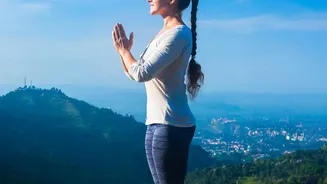
On the surface, Mountain Pose looks like just standing, but it is an active and intentional pose that serves as the foundation for all other standing postures in yoga. Its purpose is to teach the art of stillness, grounding, and refined alignment. By
practicing Tadasana with awareness, you awaken the entire body, from the soles of your feet to the crown of your head, improving posture, balance, and body awareness. It encourages you to find length and stability, creating a strong and steady base that translates from the yoga mat into the world.
Building Your Posture from the Ground Up
Proper posture begins with your feet. Stand with your feet either together or hip-width apart, whichever feels most stable. Spread your toes and ground down through all four corners of your feet: the mound of the big toe, the inner heel, the mound of the small toe, and the outer heel. Your weight should be distributed evenly. Engage the muscles in your thighs by gently lifting your kneecaps, but be careful not to lock your knees—maintain a micro-bend to avoid hyperextension. This firm foundation in your legs provides the stability needed to support the rest of your body correctly.
Aligning the Spine and Core
With your foundation set, focus on your spine. Your goal is a neutral spine, not an exaggerated arch or a flat back. Gently tuck your tailbone toward your heels as you engage your core muscles. Think of stacking your joints: shoulders should be aligned over your hips, and hips over your ankles. Let your arms rest by your sides, and you can turn your palms to face forward to help open and broaden the chest. Draw your shoulders back and let the shoulder blades slide down your back. Finally, lengthen through the crown of your head as if a string is gently pulling you upward, keeping your chin level with the floor.
Common Mistakes to Watch For
Awareness is key to correcting common postural habits. Many people stand with their knees locked, which puts strain on the joints. Another frequent mistake is letting the shoulders round forward and the chest collapse, often from prolonged sitting. Be mindful of where your head is in space; a 'forward head' posture, where the head juts in front of the shoulders, is a common issue that can lead to neck tension. Also, check that you aren't leaning your weight too far forward onto your toes or too far back on your heels. A quick body scan can help you identify and adjust these tendencies.
Taking Tadasana into Your Day
The true benefit of Mountain Pose comes when you apply its principles off the mat. When you're waiting in line at the grocery store, standing at a counter, or talking with a colleague, take a moment to check in with your posture. Are your feet grounded? Are your knees soft? Is your core lightly engaged? Are your shoulders relaxed and back? You don't need to be rigid; the goal is mindful awareness. Use these moments to run through a quick mental checklist, recalibrating your alignment. This practice of consistent, small adjustments can retrain your body's default standing position over time, leading to less pain and more ease.