




The Sun's Hidden Danger
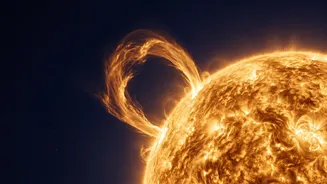
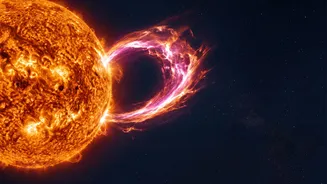
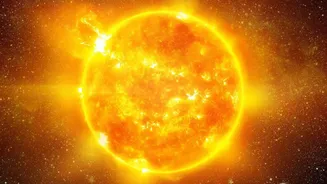
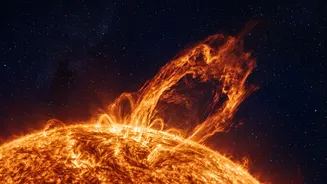
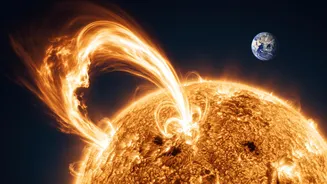
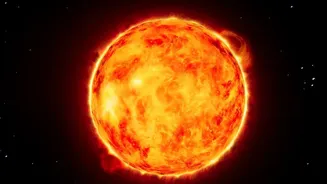
We depend on the sun for life, but it also poses a significant threat to our modern, tech-reliant civilization. The sun constantly sends out a stream of charged particles called the solar wind. Occasionally, it unleashes much more powerful blasts known
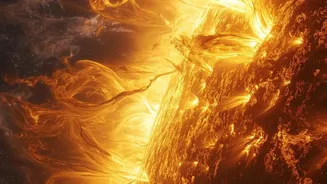
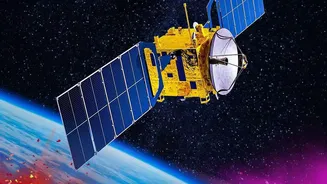
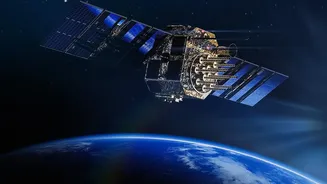
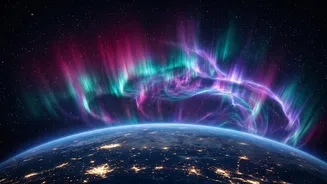
as Coronal Mass Ejections (CMEs). These are colossal eruptions of plasma and magnetic fields from the sun's atmosphere. If a CME is aimed at Earth, it can trigger a geomagnetic storm, a major disturbance of our planet's magnetosphere. The results can be catastrophic, inducing currents that can overload power grids, damage transformers, disrupt radio communications, and degrade GPS signals. Satellites are especially vulnerable; increased atmospheric drag can cause them to lose altitude, while radiation can fry their sensitive electronics.
The Ghost of the Carrington Event
The benchmark for a worst-case scenario is the Carrington Event of 1859. During this historic super-storm, a massive CME reached Earth in just 17.6 hours. While technology was limited, the impact was still dramatic. Telegraph systems worldwide failed, shocking operators and even setting paper on fire from sparks. Auroras, typically confined to polar regions, were seen as far south as the Caribbean. Scientists warn that if a Carrington-class event happened today, the consequences would be devastating. It could trigger widespread, long-lasting blackouts and disable the satellite networks that underpin global communication, banking, and navigation, causing trillions of dollars in damage.
Introducing the DAGGER AI
Predicting which CMEs will impact Earth and how severe they will be has been a major challenge. The warning time is often short, sometimes only a few hours. This is where a new AI model supported by NASA comes in. Called DAGGER (Deep Learning Geomagnetic Perturbation), this system represents a significant leap forward in space weather forecasting. Unlike previous models, DAGGER uses artificial intelligence to rapidly analyze data from spacecraft measuring the solar wind and predict the specific location and intensity of a geomagnetic disturbance on Earth. It's designed to act like a planetary tornado siren for space weather.
How the AI Forecaster Works
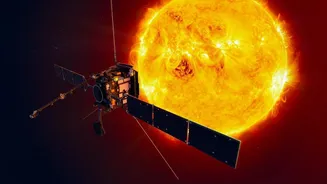
DAGGER's power comes from a technique called deep learning. Researchers trained the AI on vast amounts of historical satellite data, allowing it to learn the complex connections between measurements of the solar wind and the resulting impacts on Earth. When new data from satellites streams in, the AI can quickly spot patterns that indicate an impending storm. The result is a system that can issue a specific forecast for anywhere on the globe with about 30 minutes of advance warning. While 30 minutes may not sound like much, it's a crucial window for power grid operators to re-route power, for satellite operators to put their spacecraft into a safe mode, and for other critical infrastructure to prepare for the impact.
A New Era of Planetary Defense
The development of AI like DAGGER, and other models like Surya which aim to predict flares hours in advance, marks a shift from simply observing space weather to actively forecasting its terrestrial effects. These tools don't just tell us a storm is coming; they provide actionable intelligence on where it will hit and how strong it will be. This allows for a more targeted and effective response, helping to minimize or even prevent the widespread disruption a major solar storm could cause. By making these models open source, NASA and its partners are encouraging global collaboration to refine and improve our planetary defense against the sun's fury. As our world becomes ever more connected and dependent on technology, this ability to anticipate risk from space is no longer a luxury—it's a necessity.