



Meet the New Cosmic Contenders
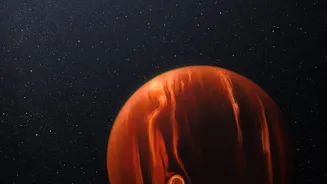
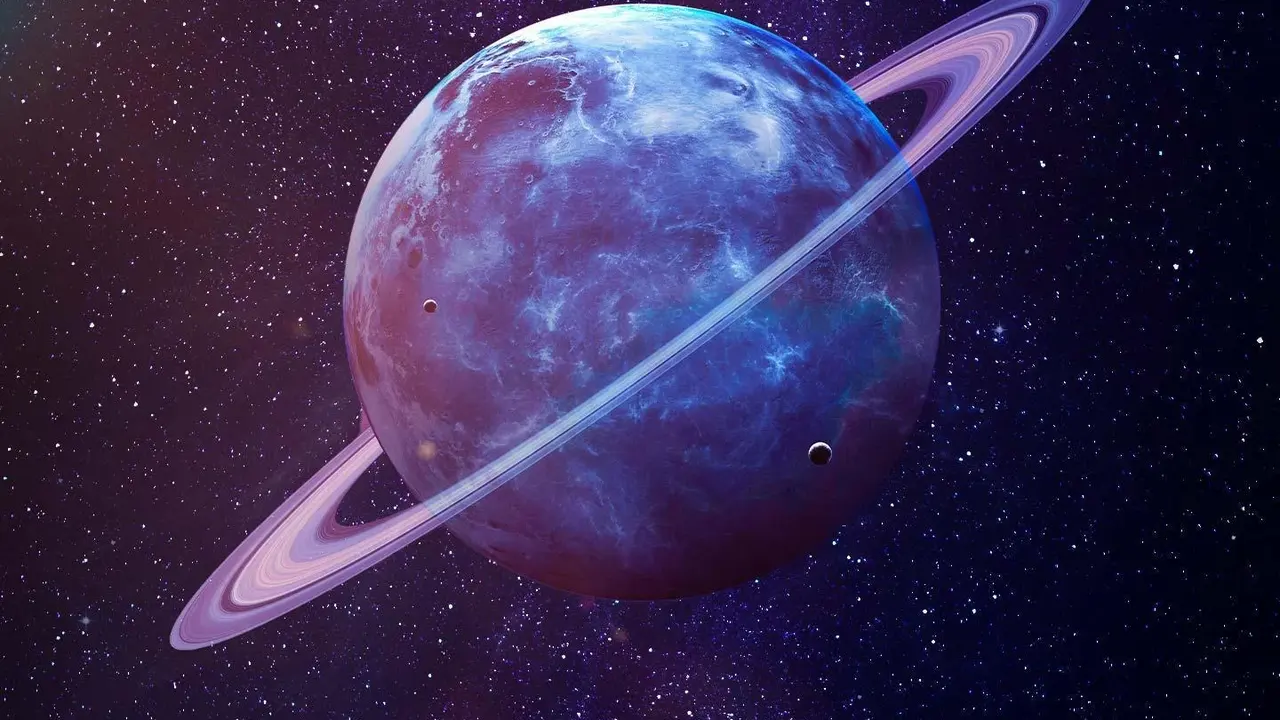
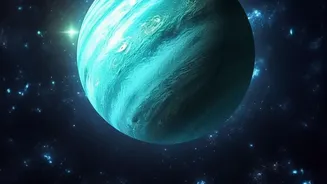
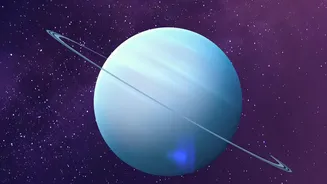
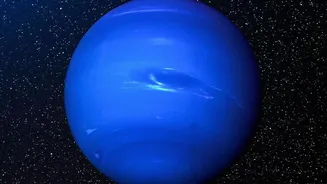
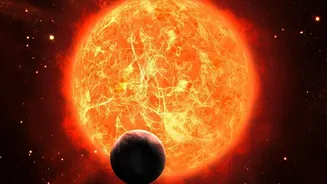
In the vast cosmic zoo, astronomers have long been interested in planets that fall into a category known as ‘sub-Neptunes’ or ‘warm Neptunes’. These are worlds larger than Earth but smaller than our own Neptune, and they are surprisingly common in our galaxy,
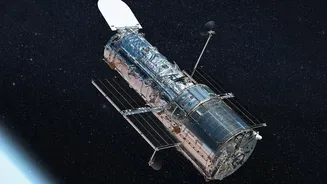
even though we have nothing like them in our solar system. Typically, these planets were not considered prime candidates for hosting life. They possess thick, hydrogen-rich atmospheres and are often much warmer than Earth, seemingly inhospitable environments. However, groundbreaking observations from the James Webb Space Telescope (JWST) are forcing scientists to take a second look.
The Telltale Methane Signal
The game-changer has been the detection of carbon-bearing molecules, specifically methane and carbon dioxide, in the atmospheres of these planets. A prominent example is K2-18 b, an exoplanet 8.6 times more massive than Earth, located 120 light-years away. Using the JWST, scientists have confirmed the presence of methane in its atmosphere. This is significant because, until recently, methane has been surprisingly elusive in the atmospheres of transiting exoplanets. Its definitive detection opens a new chapter in atmospheric analysis.
A Sign of Life, or Geology?
The presence of methane is thrilling because on Earth, much of it is produced by living organisms, making it a potential biosignature. However, methane can also be produced by purely geological (abiotic) processes, such as volcanic activity or reactions deep within a planet's mantle. The key is context. On K2-18 b, the abundance of methane and carbon dioxide, combined with a shortage of ammonia, strongly supports the hypothesis that the planet might have a massive water ocean beneath its hydrogen-rich atmosphere. This has given rise to a new classification: 'Hycean' planets, a portmanteau of 'hydrogen' and 'ocean'. These worlds, with their global oceans and hydrogen atmospheres, are now considered promising targets in the search for life.
The Intriguing Case of DMS
Adding another layer of intrigue, the initial observations of K2-18 b hinted at the possible presence of another molecule called dimethyl sulphide (DMS). This is particularly exciting because, on our planet, DMS is exclusively produced by life, primarily marine phytoplankton. The signal is not yet definitive and requires further validation with more telescope time. If confirmed, it would be one of the strongest pieces of evidence for biological activity found on an exoplanet to date, although scientists remain cautiously optimistic and are exploring all possible non-biological explanations.
Redefining the 'Habitable Zone'
These findings are fundamentally expanding the definition of a 'habitable planet.' Traditionally, the search focused on rocky, Earth-sized planets in the 'Goldilocks Zone,' where temperatures are just right for liquid water. Hycean worlds challenge this narrow view. Their thick hydrogen atmospheres can act like a powerful greenhouse blanket, potentially keeping water liquid over a much wider range of distances from their host star than an Earth-like planet could manage. This means that planets previously dismissed as too hot or too cold might actually harbour vast, life-sustaining oceans. This discovery prompts a major shift, suggesting we should consider diverse habitable environments instead of just looking for Earth's twin.