


The Undeniable Case for the Machines
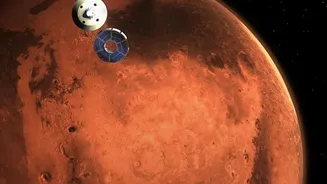
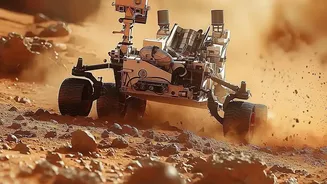
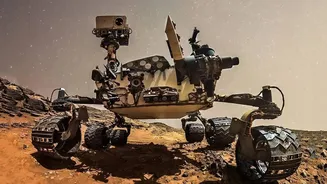
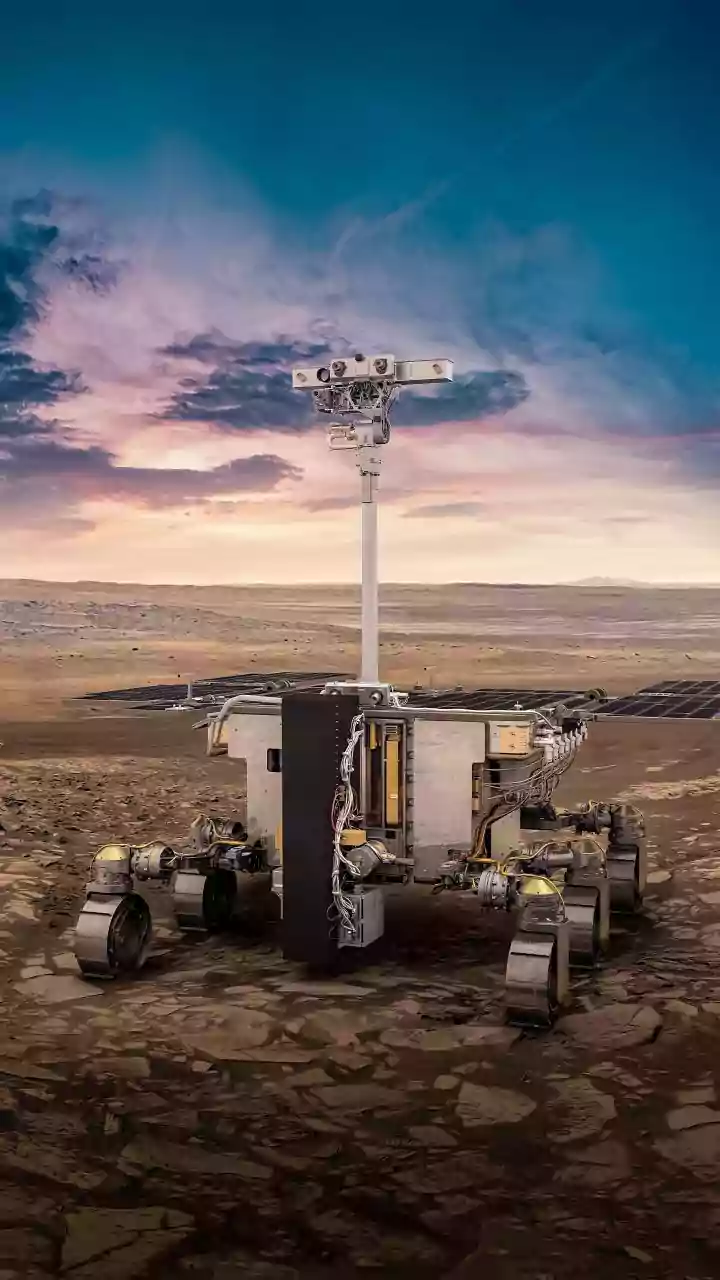
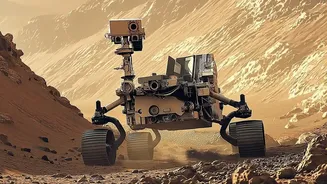
Robotic missions have been nothing short of revolutionary. Rovers like Curiosity and Perseverance have fundamentally reshaped our understanding of the Red Planet, confirming it once had the conditions to support life. These missions are a triumph of engineering
and value. A high-end rover mission costs less than $3 billion, a fraction of the estimated price tag for a human mission, which can run into the hundreds of billions. Robots don't need food, water, or life support systems. They are immune to the dangers of space radiation and the psychological toll of isolation. They can operate for years, patiently gathering data in a hostile environment where a human would perish. In terms of cost and safety, there is no contest: robots are the more sensible choice.
The Robotic Ceiling: Speed and Adaptability
Despite their strengths, robots have significant limitations. The most glaring is the speed of discovery. Because of the communication delay between Earth and Mars, which can be up to 24 minutes one-way, every action must be meticulously planned. Rovers move with extreme caution; the Curiosity rover's maximum speed is a mere 0.14 kilometres per hour. A human geologist could accomplish in minutes what a rover might take weeks to do, such as digging a trench or breaking open a promising rock. Furthermore, robots are limited by their programming. They cannot improvise or investigate a sudden, unexpected discovery outside their mission parameters. A human, on the other hand, possesses intuition and the ability to make on-the-spot decisions, a critical factor in exploration.
The Human Advantage: A Force Multiplier for Science
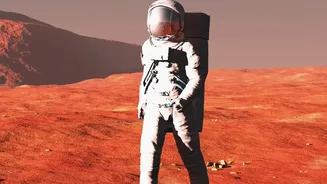
The core argument for sending humans is that they are not just explorers; they are scientific force multipliers. An astronaut on Mars can analyse samples in real-time, decide which ones are most interesting, and perform complex experiments that a robot cannot. The Apollo missions to the Moon provide a powerful precedent. In a short time, Apollo astronauts returned 382 kilograms of lunar samples from over 2,000 locations; by contrast, robotic Luna missions returned just over 300 grams. Humans can repair broken equipment—a critical skill demonstrated during the Apollo 13 mission—and navigate treacherous terrain that would trap a rover. A human presence turns a slow, methodical data-gathering exercise into a dynamic process of discovery.
Beyond Science: Inspiration and Survival
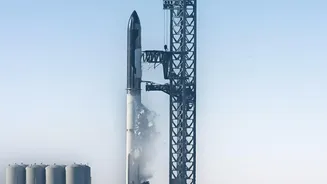
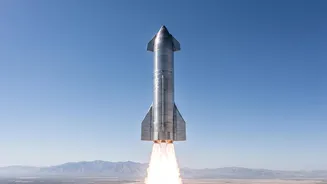
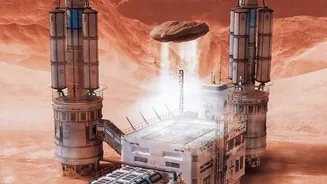
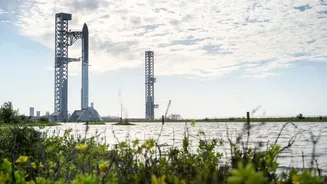
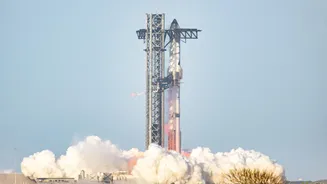
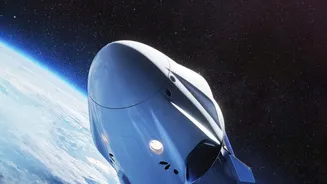
The drive to send humans to Mars isn't based on science alone. For organisations like NASA and private companies like SpaceX, human exploration serves a powerful cultural purpose. It inspires future generations to pursue careers in science and technology and unites people in a common, ambitious goal. For proponents like Elon Musk, the objective is even grander: ensuring the long-term survival of the human species. Establishing a self-sustaining colony on another planet is an insurance policy against a catastrophe on Earth. This long-term vision, making humanity a multi-planetary species, is a primary motivator behind the development of next-generation spacecraft like Starship.
The Immense Hurdles for Human Missions
The ambition to send humans is tempered by monumental challenges. A round-trip mission could last up to three years. Throughout this journey, astronauts would be exposed to dangerous levels of cosmic and solar radiation, as Mars lacks a protective global magnetic field and has only a thin atmosphere. Engineers must develop fully reliable, closed-loop life support systems to recycle air and water, create sustainable food sources, and provide a power source on the surface. The psychological strain of long-duration confinement and isolation is another critical, unresolved issue. These technological and human factors, combined with the sheer cost, are why robots have so far been our sole emissaries to the Martian surface.
A Collaborative Future
Ultimately, the debate is not a zero-sum game of robots versus humans. The future of Mars exploration is a synergistic partnership. Robotic missions are essential precursors, scouting landing sites, identifying resources like water ice, and assessing potential hazards before humans arrive. In the future, robots will act as assistants to human crews, performing reconnaissance, construction, and other dangerous or repetitive tasks. This human-machine teaming allows for the best of both worlds: the resilience and expendability of robots combined with the intellect and adaptability of human explorers.