





What Exactly Is a Dark Sky Reserve?
A Dark Sky Reserve is a designated area where artificial light pollution is actively managed and restricted to preserve the natural darkness of the night sky. The goal is to create a pristine environment for astronomy, protect nocturnal wildlife, and allow
people to experience the stars as our ancestors did. The Hanle Dark Sky Reserve (HDSR) was established through a tripartite agreement between the Ladakh administration, the Ladakh Autonomous Hill Development Council, and the Indian Institute of Astrophysics (IIA). It covers an area with a radius of about 22 kilometres inside the Changthang Wildlife Sanctuary, centred around the existing observatory.
Why Hanle is an Astronomer's Paradise
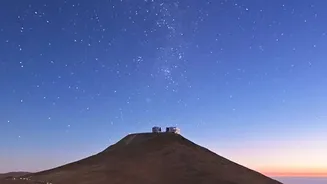
The village of Hanle in Ladakh was not chosen by chance. Located at a staggering altitude of 4,500 metres (about 14,800 feet), it is one of the highest observatories in the world. This high-altitude desert boasts exceptionally clear skies for over 270 nights a year, minimal atmospheric disturbance, and extremely low humidity—all perfect conditions for observing the universe. Its remote location means it has near-zero light pollution, earning it a Bortle-1 classification, which is the darkest possible rating for a night sky. These unique characteristics are why the IIA established the Indian Astronomical Observatory (IAO) here back in 2001, which houses powerful telescopes like the Himalayan Chandra Telescope.
More Than Just Science: A Boost for the Community
The Hanle Dark Sky Reserve is more than just a scientific project; it's a model for sustainable socio-economic development. The initiative aims to create a thriving astro-tourism industry that directly benefits the local community, which has traditionally relied on pastoralism. Local villagers, including many women, are being trained as 'Astronomy Ambassadors' and provided with telescopes to guide tourists. This creates new livelihoods and ensures that the economic benefits of tourism stay within the community. Visitors stay in local homestays, experience Ladakhi culture, and in return, the community commits to preserving the darkness that makes their home so unique.
Keeping the Lights Down
Preserving a Bortle-1 sky requires a conscious community effort. Inside the reserve, strict guidelines are in place to manage artificial light. This includes using special shielded outdoor lights that direct illumination downwards, fitting windows with thick curtains to prevent light from spilling out, and encouraging the use of warm, low-intensity bulbs. Even vehicle headlights are to be used with caution to avoid polluting the night sky. By adhering to these simple rules, the community not only aids the sensitive telescopes at the IAO but also safeguards the very resource that is attracting a new wave of curious travellers to their doorstep.